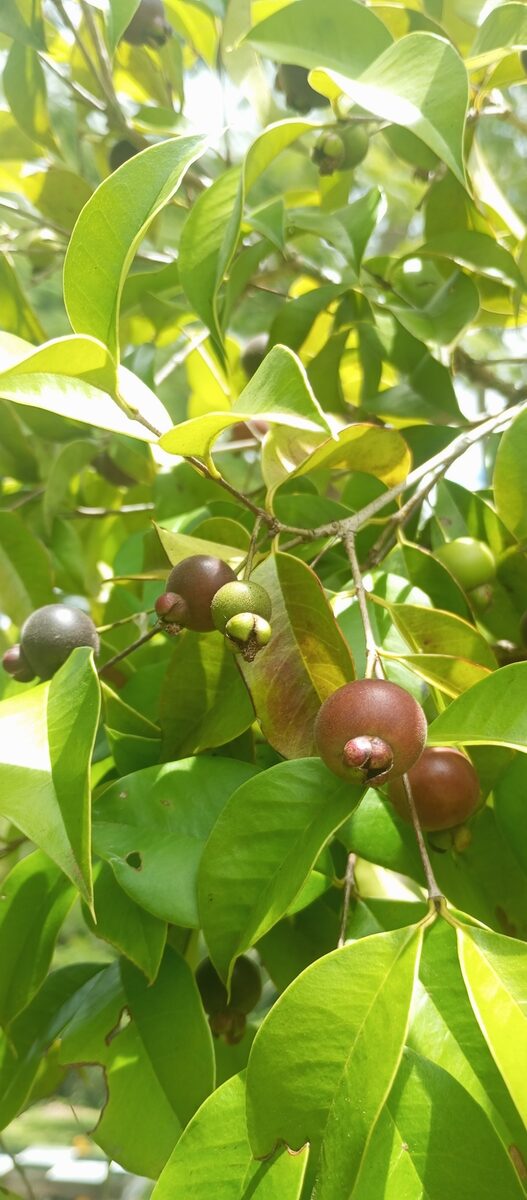
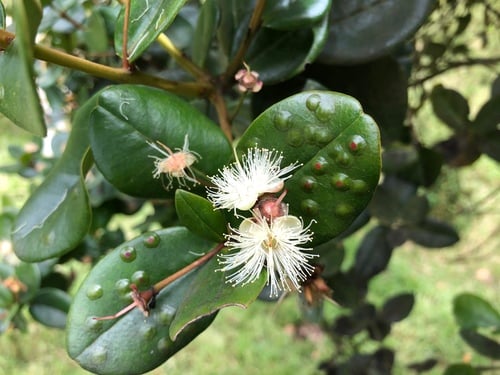
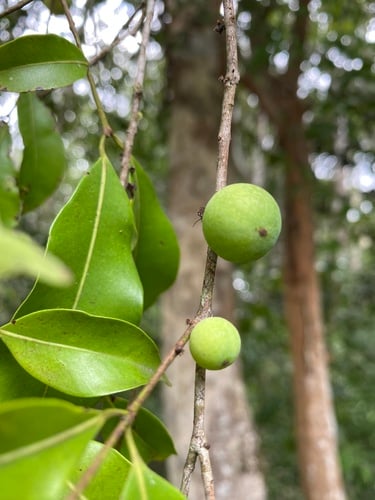
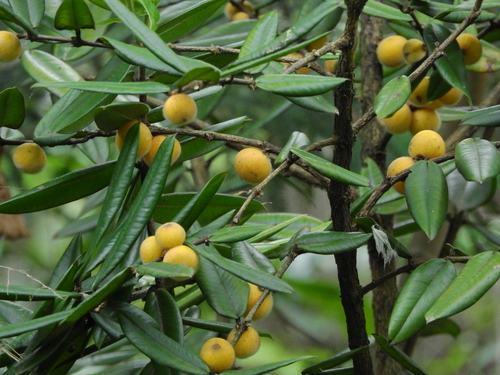
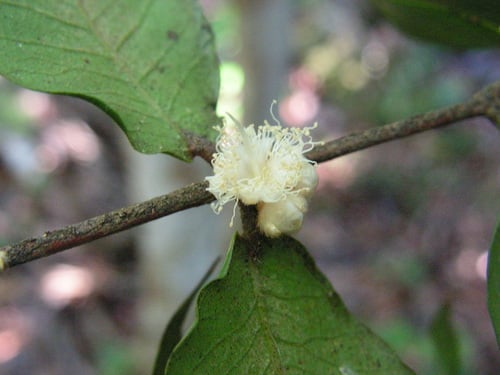
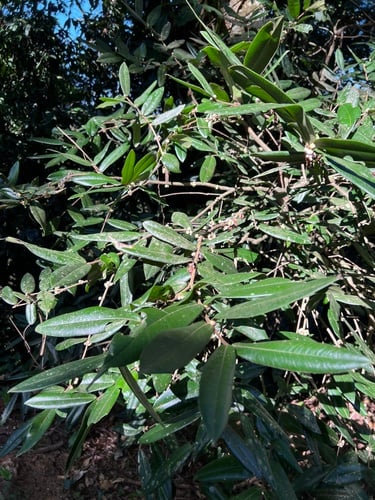
Plinia cauliflora - (Mart.) Kausel
(Mart.) Kausel
Jaboticaba
gbif· cc-by-nc
Gabriel Goes
gbif· cc-by-nc
Gabriel Goes
gbif· cc-by-nc
Gabriel Goes
Description
Plinia cauliflora is an evergreen Tree growing to 13 m (42ft) by 10 m (32ft) at a slow rate. See above for USDA hardiness. It is hardy to UK zone 10. Suitable for: light (sandy), medium (loamy) and heavy (clay) soils and prefers well-drained soil. Suitable pH: mildly acid, neutral and basic (mildly alkaline) soils and can grow in very acid and saline soils. It cannot grow in the shade. It prefers moist soil.
Edible Uses
Drink. The fruit can be eaten raw, made into jellies, syrups and preserves or fermented into wine. The purplish, grape-like fruit has a thick skin with a translucent, juicy pulp and a pleasant vinous flavour. In both taste and appearance they are remarkably like some cultivars of the muscadine grape. The fruit is rich in vitamin C. The fruit begin to ferment 2-4 days after harvest and should be consumed or processed immediately. The skin is usually discarded. The shining-black, globose fruit is up to 35mm in diameter. The jam is marketed in Brazil as 'Brazilian Grape Jelly'.
Medicinal Uses
Vitamin CNone known
Distribution
S. America - eastern Brazil, Bolivia.
Where It Grows
SOUTHERN AMERICA: Brazil, Espírito Santo, Minas Gerais (south), Paraná, Rio de Janeiro, São Paulo,
Cultivation
A plant of the tropics, where it is found at elevations up to 1,700 metres. It grows best in areas where annual daytime temperatures are within the range of 22 - 28°c but can tolerate 10° - 32°c. When dormant, the plant can survive occasional short-lived temperatures down to about -3°c, but young growth can be severely damaged at -1°c. Mature trees have moderate drought tolerance. It prefers a mean annual rainfall in the range of 900 - 1,500mm but tolerates 700 - 1,700mm. Requires a sunny position. Prefers fertile, deep, well-drained, humus-rich, mildly acid soil. Tolerant of moderate levels of salt in the soil. Plants have a high requirement for iron. Prefers a pH in the range of 5.5 - 7.5, tolerating 4.5 - 8. Newly planted young trees are quite slow to establish and grow away. Plants commence fruiting about 6 - 10 years from seed and four years from layering. In warm tropical and subtropical areas with light rainfall, the plant can produce 5 or 6 crops each year. The flowers and fruits are formed on the trunk and branches. Plants have a compact, fibrous root system and transplant well. There is at least one named form.
Propagation
Seed - it has a short viability and so is best sown as soon as it is ripe. Sow in a semi-shaded position in a nursery seedbed. Germination rates can be 90% or more, with the seed sprouting within 20 - 35 days. The seedlings grow quite slowly. Cuttings Side-veneer grafting
Other Uses
Charcoal Fuel Wood Other Uses: The wood is straight-grained, average texture, moderately heavy, but susceptible to wood-eating organisms. It is only used as a fuel and to make charcoal.
Synonyms
Also Known As
Guapuru, Taanumox, Ibapumi, Jabuticabeira, Jabuticaba, Jabuticabeira-preta, Jabuticabeira-rajada, Jabuticabeira-rosea, Jacoticaba de Sao Paulo, Grauda, jaboticabeira.