Syzygium cormiflorum
(F. Muell.) B. Hyland
White apple, Bumpy satinash
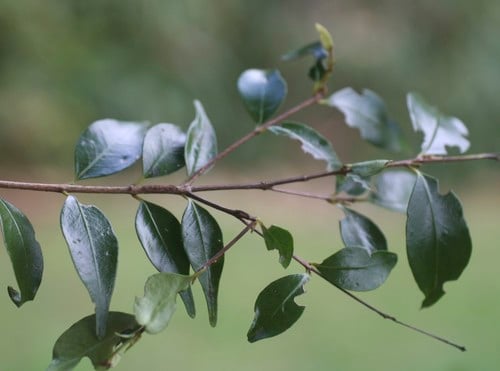
iNaturalist· cc-by-nc
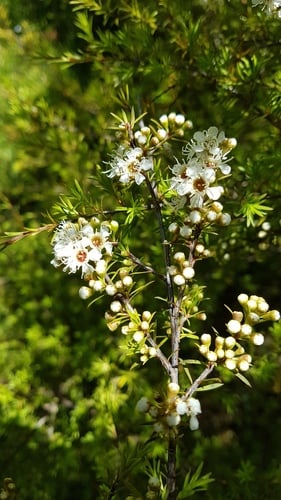
(c) Jo Davey, some rights reserved (CC BY-NC), uploaded by Jo Davey
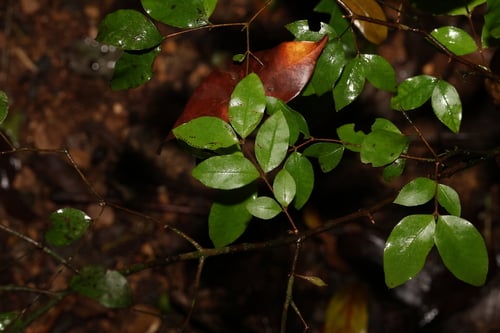
iNaturalist· cc-by-nc
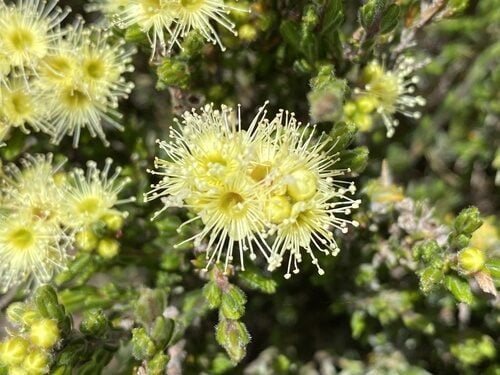
(c) Chris Clarke, some rights reserved (CC BY-NC)
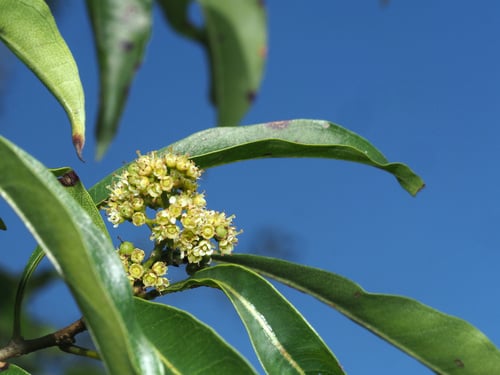
iNaturalist· cc-by-nc
(c) mark, some rights reserved (CC BY-NC)
Summary
Source: WikipediaSyzygium cormiflorum, commonly known as the bumpy satinash, is a species of Syzygium tree endemic to Queensland in northeastern Australia.
Description
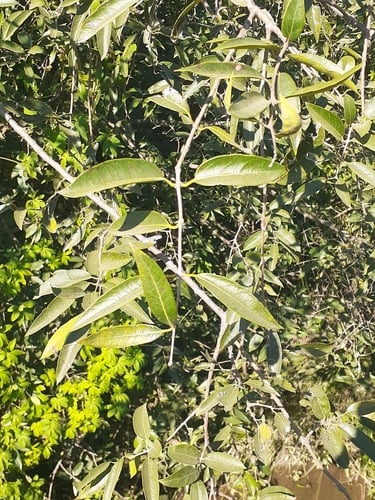
A medium sized tree. It grows up to 10 m tall. It spreads 3-5 m across. It has a rounded crown of leaves. The leaves are large and oval. They are 20 cm long by 11 cm wide and thin textured. The leaves are dark green and shiny. The veins are easy to see. Young leaves are purple. The flowers are cream coloured. They occur in large clusters either on the trunk or on leafless branches. Two different forms occur. The fruit can be white or pink. It becomes more pink when fruit is in a more exposed position. The fruit is up to 6-7 cm across. The fruit is edible. The fruit contains one large round seed.
Edible Uses
The fruits are eaten fresh.
Traditional Uses
The fruit are eaten.
This uses section is brief — help expand it
Distribution
A tropical plant. It grows in warm temperate regions but can grow in the tropics and subtropics. It occurs in north east Queensland in Australia. It grows from the coast to 1200 m above sea level. It is best to provide shade for young plants. It can grow in full sun or light shade. They do not tolerate drought. It needs well drained soil. In the Cairns Botanical Gardens. Melbourne Botanical gardens.
Where It Grows
Australia*,
Cultivation
The plant is grown from fresh seed. Seeds germinate quickly if they are fresh.
Production
Seedlings are fairly slow growing. Flowering and fruiting is irregular. Fruit are often ripe about September to January. Shelter from frost is important for young plants.
Synonyms
References (13)
- Cherikoff V. & Isaacs, J., The Bush Food Handbook. How to gather, grow, process and cook Australian Wild Foods. Ti Tree Press, Australia p 51
- Cooper W & Cooper W T, 1994, Fruits of the Rain Forest. RD Press p 270
- Cooper, W. and Cooper, W., 2004, Fruits of the Australian Tropical Rainforest. Nokomis Editions, Victoria, Australia. p 360
- Hibbert, M., 2002, The Aussie Plant Finder 2002, Florilegium. p 296
- Jackes, B.R., 2001, Plants of the Tropics. Rainforest to Heath. An Identification Guide. James Cook University. p 69
Show all 13 references Hide references
- Jones D, L, 1986, Ornamental Rainforest Plants in Australia, Reed Books, p 77
- Low, T., 1991, Wild Food Plants of Australia. Australian Nature FieldGuide, Angus & Robertson. p 78
- Low, T., 1992, Bush Tucker. Australia’s Wild Food Harvest. Angus & Robertson. p 40
- Molyneux, B. and Forrester, S., 1997, The Austraflora A-Z of Australian Plants. Reed. p 152
- Nicholson, N & H., 1996, Australian Rainforest Plants, Terania Rainforest Publishing. NSW. p 60
- Queensland Forest Service, 1991, Trees and Shrubs. Department of Primary Industries. p 115
- Radke, P & A, Sankowsky, G & N., 1993, Growing Australian Tropical Plants. Frith & Frith, Australia. p 59
- Townsend, K., 1994, Across the Top. Gardening with Australian Plants in the tropics. Society for Growing Australian Plants, Townsville Branch Inc. p 344