Syzygium corynanthum
(F. Muell.) L. Johnson
Sour Cherry, Normanby satinash, Killarney satinash
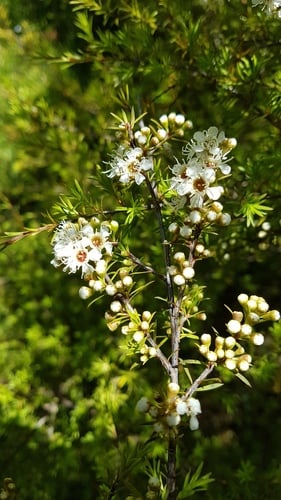
iNaturalist· cc-by
(c) Samuel Frankel, some rights reserved (CC BY)
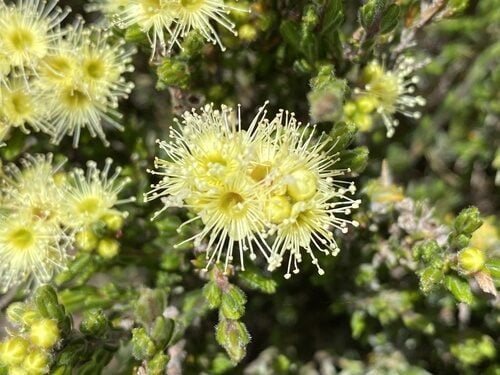
iNaturalist· cc-by
(c) Samuel Frankel, some rights reserved (CC BY)
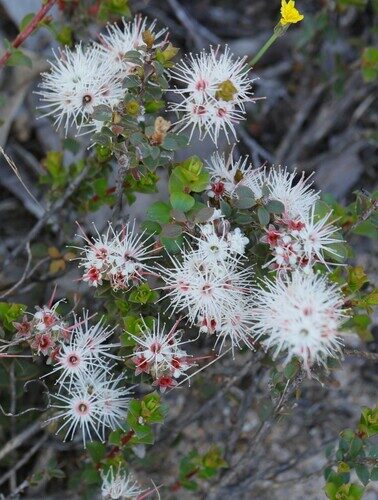
iNaturalist· cc-by-nc
(c) Nicholas John Fisher, some rights reserved (CC BY-NC)
Summary
Source: WikipediaSyzygium corynanthum, commonly known as sour cherry and Killarney satinash, is a common Australian tree which grows in surrounding areas from Taree, New South Wales (31 ° S) to tropical Queensland.The habitat of Syzygium corynanthum is rainforest on basaltic or fertile alluvial soils.
Description
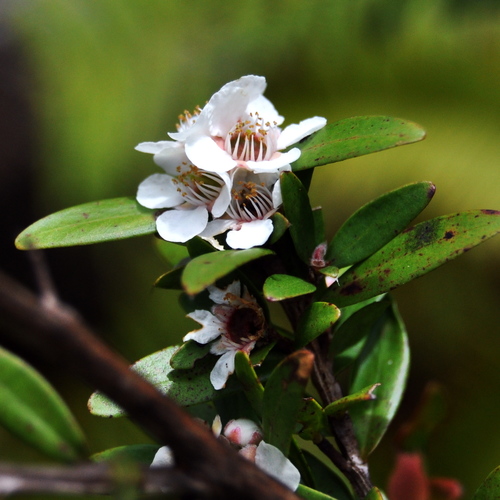
An attractive tree up to 15 m tall. It has a dense crown of leaves. The leaves are fairly thick and 11 cm long by 5 cm wide. They are dark and shiny on top and paler underneath. They have a drawn out blunt tip. The flowers are small and cream coloured. They occur in clusters in the angles of leaves and near the ends of branches. The fruit is pear shaped, fleshy and red. It is about 1.8 cm across. The fruit is edible.
Edible Uses
Fruit - cooked. A succulent flesh. The very sour fruits are often seedless and are sometimes used for jam making. The red, pear-shaped fruits can be 11 - 18mm in diameter, containing a single seed about 6 - 8mm in diameter.
Traditional Uses
The fruit are used for jams and jellies.
This uses section is brief — help expand it
Distribution
A tropical plant. It occurs in eastern Australia in warmer rainforest regions. It grows from the coast to 1,200 m above sea level.
Where It Grows
Asia, Australia*, Malaysia, SE Asia,
Cultivation
The plants are grown from seed. In cooler places many fruit are seedless.
Propagation
Seed - it is readily attacked by insects and very few fruits contain viable seed. If viable seed can be obtained, then it should be sown as soon as it is ripe - even then it can take 2 - 24 months to germinate. Cuttings.
Other Uses
A useful general purpose structural timber. We do not have any more specific information for the wood of this species, but the various species of Syzygium tend to have somewhat similar timber. The general description of syzygium timber is as follows:- The heartwood is a golden brown, greyish brown or brown, with pink or purplish glints; it is not clearly demarcated from the 1 - 4cm wide band of sapwood. The texture is fine; the grain slightly interlocked, sometimes wavy or irregular; there are resin deposits. The wood is heavy; moderately hard; somewhat durable, being moderately resistant to fungi and termites, but susceptible to dry wood borers. It seasons slowly, with a high risk of checking and distortion; once dry it is moderately stable in service. It works well with ordinary tools, nailing and screwing are good so long as the wood is pre-bored; gluing is correct. The wood is used for musical instruments, tool handles, furniture components, ship building, heavy carpentry, flooring, joinery etc.
Production
Young plants are often slow growing.