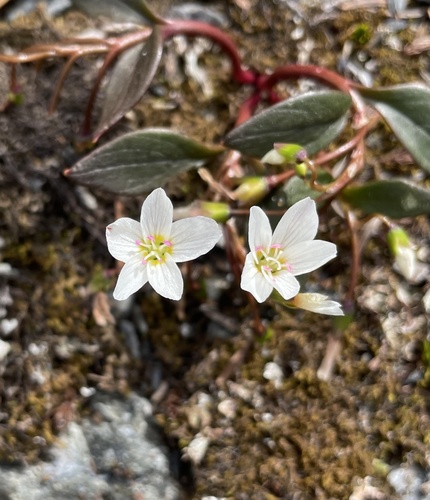
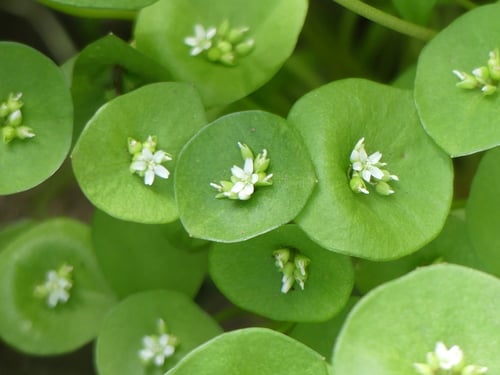
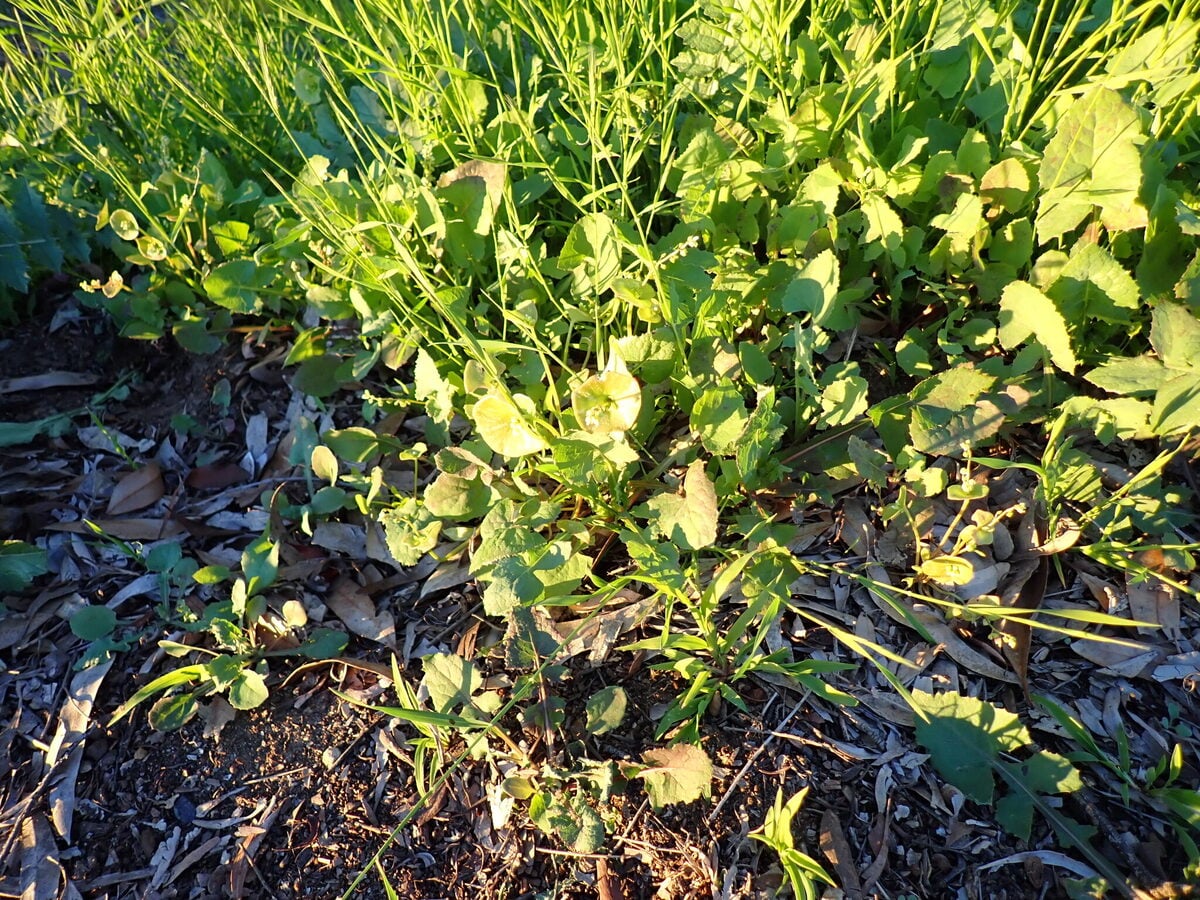
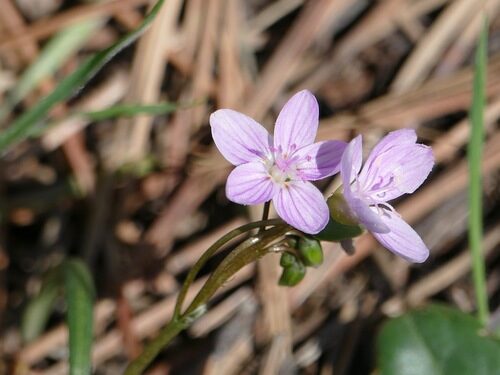
Claytonia parviflora ssp. parviflora
Douglas
Indian Lettuce
gbif· cc-by-nc
Adam Schneider
gbif· cc-by-nc
Adam Schneider
gbif· cc-by-nc
Sue Lindner
Description
Claytonia parviflora ssp. parviflora is a ANNUAL growing to 0.3 m (1ft) by 0.3 m (1ft in) at a fast rate. See above for USDA hardiness. It is hardy to UK zone 5. The flowers are pollinated by Insects. It is noted for attracting wildlife. Suitable for: light (sandy), medium (loamy) and heavy (clay) soils and prefers well-drained soil. Suitable pH: mildly acid, neutral and basic (mildly alkaline) soils. It can grow in semi-shade (light woodland). It prefers moist soil.
Edible Uses
Edible leaves of high quality, best harvested young in spring from moist, shaded habitats, and used fresh or lightly cooked. Edible Uses & Rating: Leaves are the primary edible portion and are safe to eat in quantity in typical culinary amounts. As a wild salad green it rates highly for flavor and tenderness, though not always as high-yield as miner’s lettuce in some habitats. It is an excellent spring vegetable wherever patches are abundant. Taste, Processing & Kitchen Notes: Flavor is mild, fresh, and lettuce-like, with minimal bitterness and no aggressive aromatics. Texture is crisp and succulent when plants are well-watered, and softer when conditions dry. It performs well raw in salads, chopped into sandwiches, or lightly wilted into soups. Because stems can be delicate, gentle washing is best to avoid bruising. If plants are slightly older, a quick blanch can improve tenderness and reduce any emerging bitterness from drought stress. Seasonality (Phenology): Most common from late winter through spring in many western settings, often blooming from roughly February to May, depending on elevation and rainfall. It declines as heat rises and soils dry. Safety & Cautions (Food Use): As with any low-growing spring green, avoid harvesting from contaminated soils, roadsides with heavy spray drift, or areas with pet traffic. Wash thoroughly to remove grit and small insects that shelter in the perfoliate leaf cup. Harvest & Processing Workflow: Harvest entire tender plants or selectively pick the freshest basal leaves and the perfoliate upper leaves. Rinse gently, drain well, and eat fresh soon after harvest for best texture. For cooked use, briefly wilt or blanch and add late to soups. Cultivar/Selection Notes: No common cultivars exist; wild populations vary mainly by moisture and site conditions. Look-Alikes & Confusion Risks: Indian lettuce is easily confused with miner’s lettuce and red lettuce, which are also edible. Confusion among these three is not a safety concern. The distinctive fused upper leaves forming a “cup” greatly reduces confusion with unrelated plants. Traditional / Indigenous Use Summary: Claytonia greens were widely valued as spring vegetables by Indigenous peoples in many western regions. Indian lettuce fits this pattern as a safe, mild, early-season green in moist habitats.
Known Hazards
As with any low-growing spring green, avoid harvesting from contaminated soils, roadsides with heavy spray drift, or areas with pet traffic. Wash thoroughly to remove grit and small insects that shelter in the perfoliate leaf cup.
Distribution
The native range of this subspecies is Aleutian Islands, SW. Canada to Mexico (N. Baja California).
Where It Grows
US.USA. Aleutian Is., Arizona, British Columbia, California, Idaho, Mexico Northwest, Montana, Oregon, Washington.
Cultivation
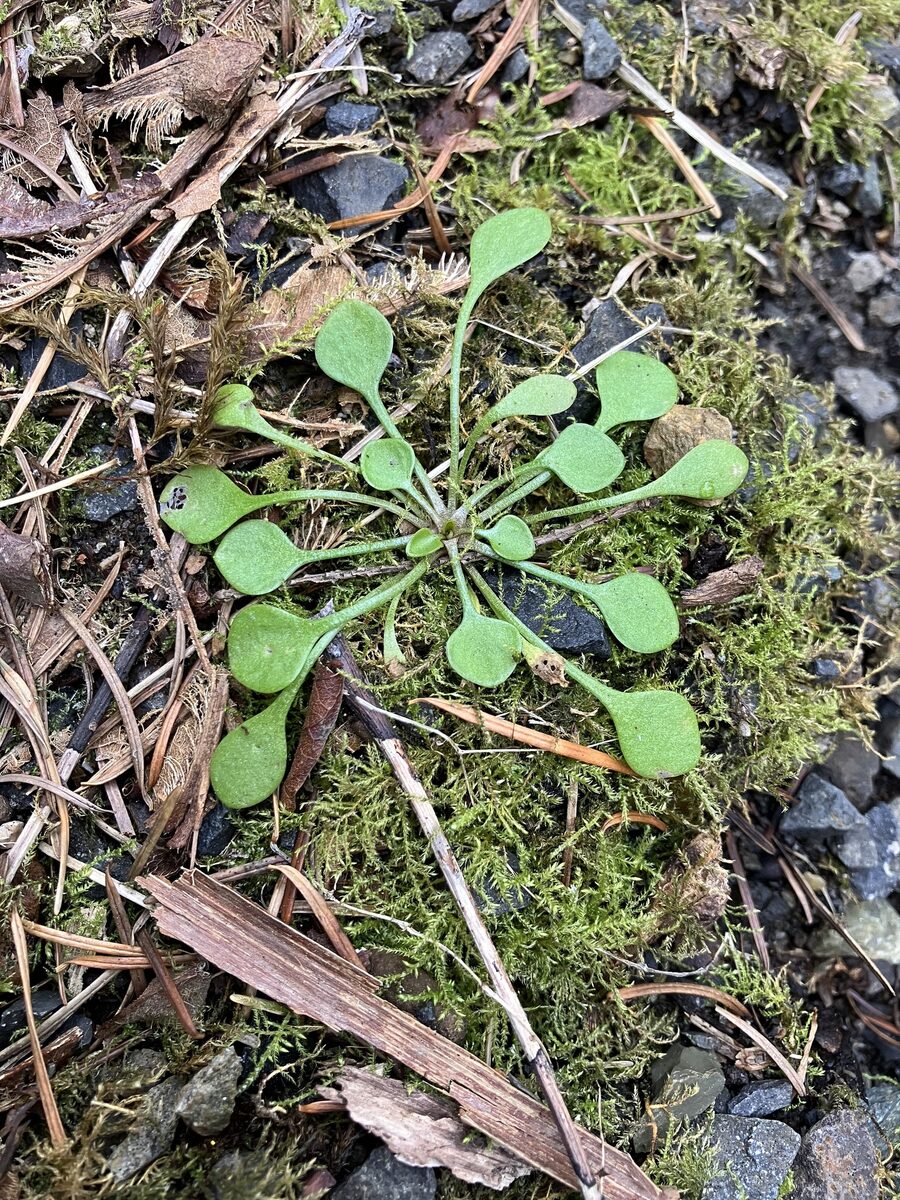
Indian lettuce is one of the best spring greens in the western forager’s toolkit: mild, moist, and easy to use raw or cooked, appearing predictably in the right habitats. Growing Conditions: It thrives in cool, moist, lightly shaded places with good soil moisture: streambanks, seep zones, canyon bottoms, shaded slopes, and beneath deciduous trees during the early season. It is strongly tied to seasonal moisture and disappears quickly in drought. Habitat & Range: Found across much of the western third of the United States, especially in canyons, riparian edges, and spring-moist hillsides where it can form scattered to abundant colonies. Size & Landscape Performance: Plants are small to moderate in height and often form pleasing green patches. In gardens it would behave as a spring annual green that self-seeds where moisture and partial shade are consistent. Cultivation (Horticulture): It can be cultivated similarly to miner’s lettuce, with fall or winter sowing in mild climates and consistent moisture through spring. Partial shade improves leaf quality in warmer regions. Pests & Problems: The most common issues are wilting and toughening as the season dries, and occasional leaf damage from insects. Quality is highest when harvested young and well-hydrated. Pollination: Pollinated by small generalist insects; reliable seed set often occurs in favorable spring conditions. Identification & Habit: Indian lettuce is an annual that produces clustered stems from a fibrous root system. It has both basal leaves and two opposite cauline leaves that are fused around the upper stem to form a perfoliate “cup.” The basal leaves are typically narrower than those of miner’s lettuce. Flowers are small, white to pink, with five petals and two sepals, arranged in racemes, and the plant commonly forms colonies in favorable sites.
Propagation
Propagation is primarily by seed. Seeds mature quickly, and colonies often reappear annually where soils are disturbed lightly and moisture patterns persist.
Other Uses
Its small flowers provide early resources for small insects. The plant’s succulent foliage also contributes moisture and soft plant tissue to spring food webs, including for invertebrates.
Synonyms
Also Known As
Indian lettuce, streambank springbeauty