Empetrum eamesii
Fernald. & Wiegand.
Rockberry
iNaturalist· cc-by-nc-nd
(c) tyler_hoar, some rights reserved (CC BY-NC-ND), uploaded by tyler_hoar
iNaturalist· cc-by-nc
(c) Todd Boland, some rights reserved (CC BY-NC)
Summary
Source: WikipediaEmpetrum eamesii, common name purple crowberry, is a North American species of dwarf evergreen shrub.
Description
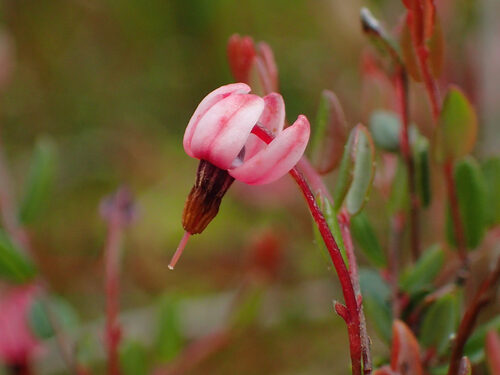
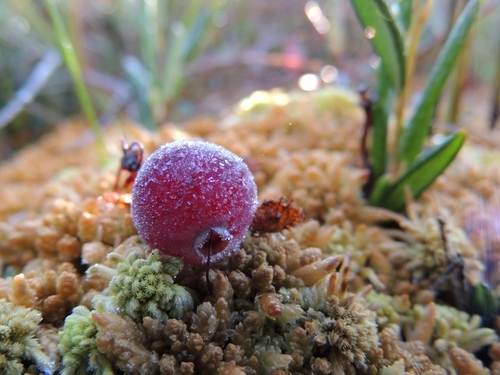
A low lying evergreen shrub. The stems lie along the ground and the plant forms mats. It grows 20 cm tall and spreads 50 cm wide. The leaves are alternate or in rings. The flowers occur singly near the tips of the branches. They have 3 white petals. The fruit are round and red. They are 4 mm across.
Edible Uses
The fruit is edible raw or cooked and measures about 4mm in diameter.
Traditional Uses
The fruit are eaten raw or cooked.
This uses section is brief — help expand it
Medicinal Uses
None known.
Distribution
It is a temperate plant. It suits USDA hardiness zones 3-8.
Where It Grows
Canada, North America, USA,
Cultivation
Prefers a moist sandy peaty soil and some shade. The flowers of this species are usually hermaphrodite, but some female flowers are produced.
Propagation
Seed is best sown as soon as ripe in a cold frame. Germination can be very slow; stored seed requires 5 months of warm stratification followed by 3 months cold stratification at 5°C. Prick seedlings into individual pots once large enough and grow on under glass for at least their first winter, planting out in late spring or early summer after the last expected frosts. Cuttings of half-ripe wood, 3cm with a heel, taken July/August in a frame take about 3 weeks and strike at a good percentage. Cuttings of mature wood from the current year's growth, 3cm with a heel, taken in October in a frame with shade, also give a good percentage.
Other Uses
Works well as a ground cover plant in exposed positions.
References (1)
- Plants for a Future database, The Field, Penpol, Lostwithiel, Cornwall, PL22 0NG, UK. http://www.scs.leeds.ac.uk/pfaf/