Arbutus menziesii
Pursh.
Madrona, Madrone, Pacific madrone
iNaturalist· cc-by-nc
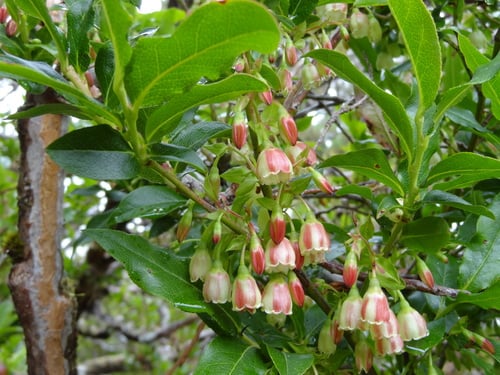
(c) Dee Warenycia, some rights reserved (CC BY-NC)
iNaturalist· cc-by-nc
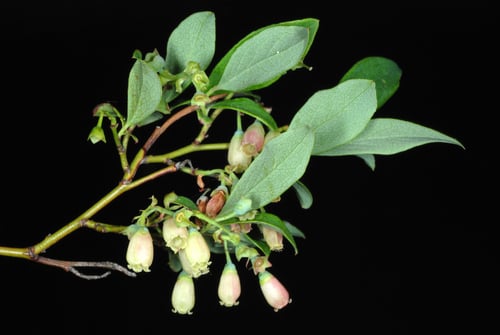
(c) Jamie, some rights reserved (CC BY-NC), uploaded by Jamie
iNaturalist· cc-by
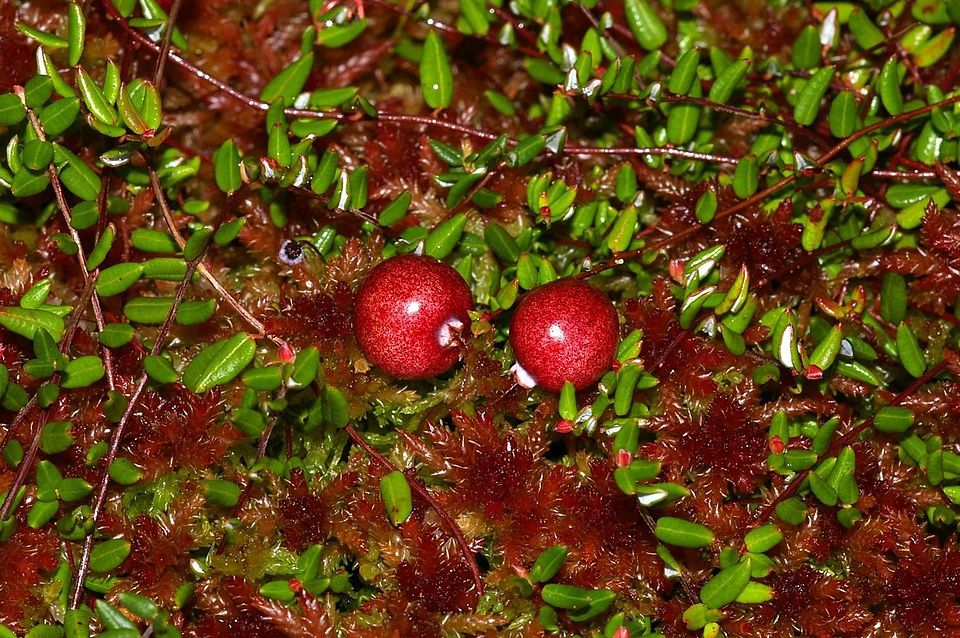
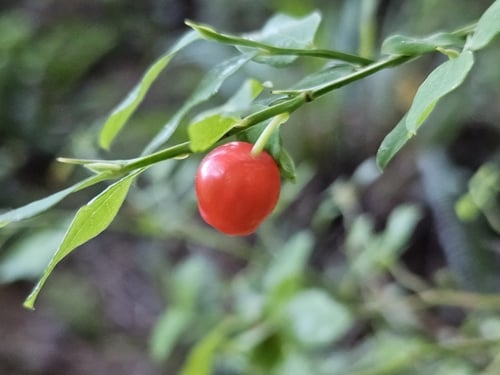
(c) J Straka, some rights reserved (CC BY), uploaded by J Straka
Summary
Source: WikipediaArbutus menziesii, or Pacific madrone (commonly madrone or madrona in the United States and arbutus in Canada), is a species of broadleaf evergreen tree in the family Ericaceae. It has waxy foliage, a contorted growth habit, and flaky bark. It is native to the western coastal areas of North America, from British Columbia to California.
Description
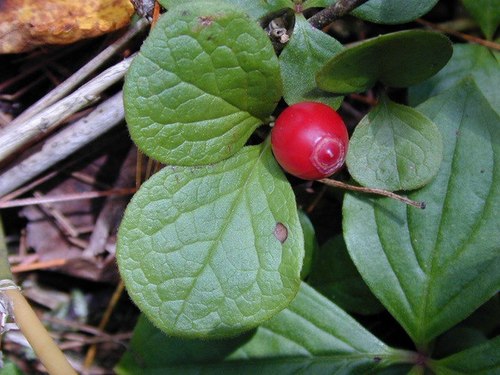
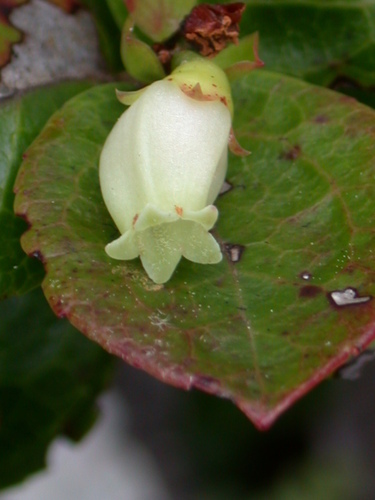
An evergreen tree. It can grow to 20-30 m high. The trunk is 60-100 cm across. It has smooth reddish-brown bark. This peels off in papery flakes. The freshly exposed bark is green. The leaves are oval and 7-12 cm long. The leaves have smooth edges and are glossy green. They are whitish underneath. The male and female flowers are yellow and bell shaped and born on separate trees. The flowers occur in large clusters. They are white. They have a strong honey odour. The fruit are small and orange-red. They are 1 cm across. They have a grainy surface and many seeds.
Edible Uses
Edible Parts: Fruit Edible Uses: Like its relatives, the red bumpy berries are edible when ripe, though large quantities may cause nausea. They are sweet but somewhat bland, soft-seeded, and easy to process into flour, cider, wine, or preserves. Pacific madrone fruits were widely used by Native American groups in its range, often eaten fresh, dried, or brewed into beverages [2-3]. Edibility rating: 3/5 – Palatable fruits, significant ethnobotanical history, but modest flavor [2-3]. Fruit - raw or cooked. A bland taste. Very sour according to another report. After boiling the fruit can be dried for later use. The fruit is about 15mm in diameter.
Traditional Uses
The fruit can be eaten in small quantities. They can be eaten raw or boiled or steamed. After boiling they can be dried and stored for later use. They then need to be soaked in warm water before eating. Caution: The fruit can be high in tannin.
Medicinal Uses
Astringent Miscellany Stomachic Vulnerary The leaves are stomachic and vulnerary. They can be used in the treatment of stomach ache and cramps, colds etc. The leaves can be applied as a poultice to burns. The bitter principles in the bark and leaves can be used as an astringent. An infusion of the bark has been used in the treatment of diabetes and externally to treat sores, cuts and wounds. It has also been used as a gargle for sore throats.
Known Hazards
The berries are considered unpalatable and may be harmful if consumed by people or pets. According to legend, Native Americans ate the berries raw and cooked, but because the berries have a high tannin content and are thus astringent, they more often chewed them or made them into a cider. Overeating causes cramps. Native Americans also use the berries to make necklaces and other decorations, and as bait for fishing (as did the Karuk people to catch steelhead). The bark was often made into tea to be drunk for supposed medicinal purposes. Early Californian settlers may have used charcoal from the species to make gunpowder. The wood is durable and has a warm color after finishing, so it has become more popular as a flooring material, especially in the Pacific Northwest. An attractive veneer can also be made from the wood. However, because large pieces of madrona lumber warp severely and unpredictably during the drying process, they are not used much. Madrone is burned for firewood, though, since it is a very hard and dense wood that burns long and hot, surpassing even oak in this regard. The W̱SÁNEĆ people of British Columbia have a prohibition against burning arbutus due to its salvific role in their creation myths; an arbutus anchored their canoes to the world during the deluge.
Distribution
It is a temperate plant. It is native to North America. It needs acid soil.. It mostly grows in humid areas. It suits hardiness zones 7-9. It needs a dry summer. Tasmanian Arboretum.
Where It Grows
Australia, Canada, North America, Tasmania, USA*,
Cultivation
Requires a lime-free nutrient-rich well-drained moisture-retentive soil in sun or semi-shade and shelter from cold drying winds, especially when young. Succeeds in a limy soil according to another report. Hardy to about -10°c, trees succeed outdoors at Kew but shoots of young plants are apt to be cut back in winter. They grow very well in S.W. England. An ideal plant for the small garden or as a lawn specimen, it has a neat, compact, upright growth habit, retaining its lower leafy branches close to the ground and casting little shade. The flowers have a honey-like fragrance which will pervade the whole garden on calm days. Trees are slow-growing in the wild, living up to 225 years, though they are fairly fast growing in cultivation when young. They dislike being transplanted and should be placed in their final positions as soon as possible. Give them some protection in their first winter outdoors. This species is notably resistant to honey fungus.
Propagation
Seed - best surface sown in a cold frame as soon as it is ripe. Stored seed should be soaked for 5 - 6 days in warm water and then surface sown in a shady position in a greenhouse. Do not allow the compost to become dry. 6 weeks cold stratification helps. The seed usually germinates well in 2 - 3 months at 20°c. Seedlings are prone to damp off, they are best transplanted to individual pots as soon as they are large enough to handle and should be kept well ventilated. Grow them on in a greenhouse for their first winter and then plant out in late spring after the last expected frosts. Basal cuttings in late winter. Cuttings of mature wood of the current season's growth, November/December in a frame. Poor percentage. Layering of young wood - can take 2 years.
Other Uses
Charcoal Dye Miscellany Tannin Wood Fruits were traditionally dried or fermented into cider. The tree provides habitat and food for birds and mammals, while its hard wood was used for fuel and small wooden items. Pacific madrone is also planted ornamentally for its dramatic bark and evergreen character. The inner bark was sometimes used by native North American Indians to make dresses. The leaves can be used to test the temperature of pitch that is being used to waterproof canoes. When the leaves turn black the pitch is ready to use. A brown dye is obtained from the bark, it does not need a mordant. Use in spring or summer. The bark is a rich source of tannin, it is used medicinally. The tannin is also used as a preservative on wood, ropes etc. Wood - very hard, brittle, durable in water, close grained, heavy, strong. The wood does not split when it dries and so has been used for carving. It is also sometimes used for making furniture, it also produces a fine grade of charcoal. Special Uses Scented Plants
Production
It can live for 200 years.
Notes
There are 14 Arbutus species.
Synonyms
Also Known As
Pacific Madrone (Arbutus menziesii Pursh)
References (19)
- Bircher, A. G. & Bircher, W. H., 2000, Encyclopedia of Fruit Trees and Edible Flowering Plants in Egypt and the Subtropics. AUC Press. p 37
- Bocek, B. R., 1984, Ethnobotany of Costanoan Indians, California, Based on Collections by John P. Harrington. Economic Botany 38(2): 240-255
- Coombes, A.J., 2000, Trees. Dorling Kindersley Handbooks. p 142
- Cundall, P., (ed.), 2004, Gardening Australia: flora: the gardener's bible. ABC Books. p 173
- Etherington, K., & Imwold, D., (Eds), 2001, Botanica's Trees & Shrubs. The illustrated A-Z of over 8500 trees and shrubs. Random House, Australia. p 100
Show all 19 references Hide references
- Facciola, S., 1998, Cornucopia 2: a Source Book of Edible Plants. Kampong Publications, p 95
- Farrar, J.L., 1995, Trees of the Northern United States and Canada. Iowa State University press/Ames p 396
- Fl. Amer. sept. 1:282. 1813-1814
- Grandtner, M. M., 2008, World Dictionary of Trees. Wood and Forest Science Department. Laval University, Quebec, Qc Canada. (Internet database http://www.WDT.QC.ca)
- Hedrick, U.P., 1919, (Ed.), Sturtevant's edible plants of the world. p 67
- Hibbert, M., 2002, The Aussie Plant Finder 2002, Florilegium. p 31
- Joyce, D., 1998, The Garden Plant Selector. Ryland, Peters and Small. p 107
- Lamberton, K (Ed.), 2004, The Australian gardening encyclodepia. Murdoch Books, NSW Australia. p 173
- Lord, E.E., & Willis, J.H., 1999, Shrubs and Trees for Australian gardens. Lothian. p 47
- MacKinnon, A., et al, 2009, Edible & Medicinal Plants of Canada. Lone Pine. p 74
- Plants for a Future database, The Field, Penpol, Lostwithiel, Cornwall, PL22 0NG, UK. http://www.scs.leeds.ac.uk/pfaf/
- Russell, T., Cutler, C., & Walters, M., 2005, The Illustrated Encyclopedia of Trees of the Americas. Lorenz Books. p 148
- Ryan, S., 2008, Dicksonia. Rare Plants Manual. Hyland House. p 8
- Young, J., (Ed.), 2001, Botanica's Pocket Trees and Shrubs. Random House. p 100