Arbutus arizonica
(A. Gray) Sarg.
Arizona maderone
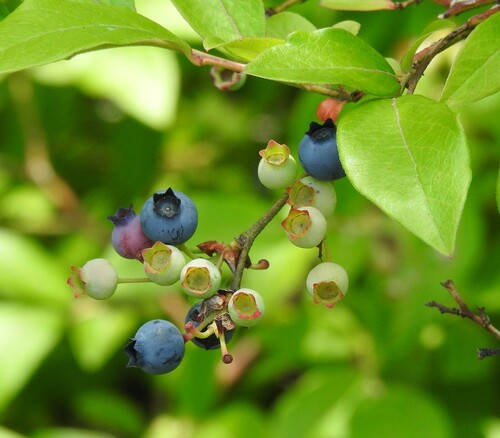
iNaturalist· cc-by-nc
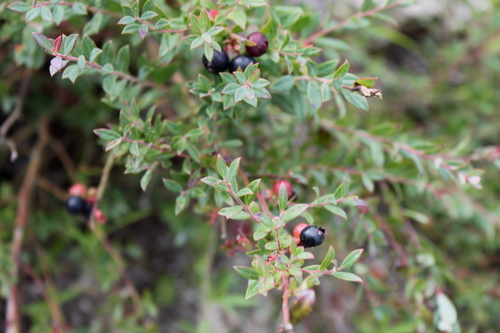
(c) Ilja Fescenko, some rights reserved (CC BY-NC), uploaded by Ilja Fescenko
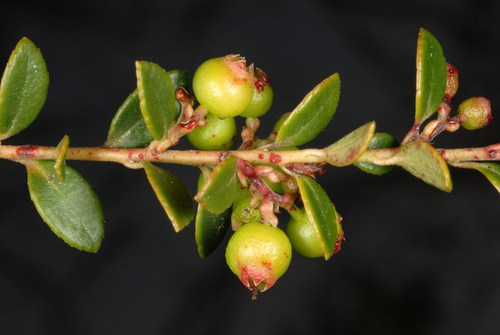
iNaturalist· cc-by-nc
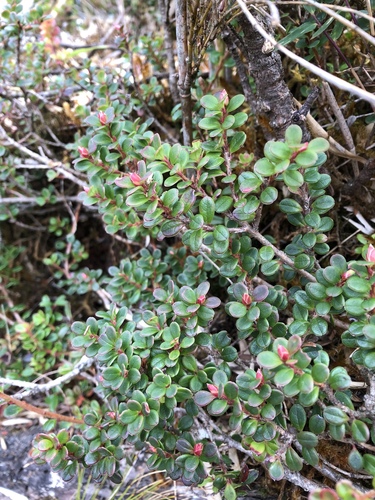
(c) Nathan Taylor, some rights reserved (CC BY-NC), uploaded by Nathan Taylor
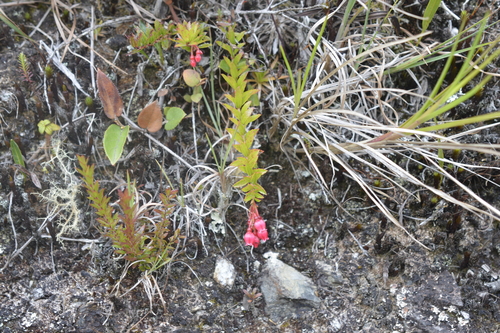
iNaturalist· cc-by-nc
(c) Christian Schwarz, some rights reserved (CC BY-NC), uploaded by Christian Schwarz
Summary
Source: WikipediaArbutus arizonica, commonly known as Arizona madrone, is a tree species in the heath family that is native to the southwestern United States and northwestern Mexico. Its range extends along the Sierra Madre Occidental cordillera from the Madrean Sky Islands of southeastern Arizona and southwestern New Mexico south as far as Jalisco. It has been found in Sonora, Chihuahua, Durango, and Sinaloa, with one isolated population in Tamaulipas. Arbutus arizonica is a tree that grows up to 45 ft (14 m), and has pinkish-brown bark. The fruit is an orange-red berry. The fruits are edible by humans and used by some indigenous peoples.
Description
A small tree. It keeps its leaves throughout the year. On young trees the bark is thin, smooth and dark red. It peels in long stripes. Older trees has thicker bark with long cracks. The leaves are thin and slender. They are sword shaped and pointed at the tip. The flowers are in loose clusters. The fruit are small and like strawberries. The ripen to dark orange-red. They are sweet and edible.
Edible Uses
Edible Parts: Fruit Edible Uses: The berries are edible fresh, though overconsumption may cause nausea or vomiting. Ripe fruits are pleasantly sweet with a bland aftertaste, containing about half flesh and half delicately crunchy seeds. Unlike manzanita, the seeds are soft and do not require removal, making them easy to process. Berries can be dried for flour or used to make cider, wine, or jelly. Unripe green fruits taste awful and should be avoided. Timing is crucial—fruits mature from July to October and often fall soon after ripening, sometimes littering the ground in a vibrant red carpet[2-3]. Fruit - raw. The fruit is about 8mm in diameter with a thin sweetish flesh.
Medicinal Uses
Astringent The bitter principles in the bark and leaves can be used as an astringent.
Known Hazards
Overconsumption of berries may cause nausea or vomiting.
Distribution
It is a temperate plant. It grows in dry gravel areas. It grows up to 2,500 m altitude in mountains in Arizona in the USA.
Where It Grows
Mexico, North America, USA,
Propagation
Seed - best surface sown in a cold frame as soon as it is ripe. Stored seed should be soaked for 5 - 6 days in warm water and then surface sown in a shady position in a greenhouse. Do not allow the compost to become dry. 6 weeks cold stratification helps. The seed usually germinates well in 2 - 3 months at 20°c. Seedlings are prone to damp off, they are best transplanted to individual pots as soon as they are large enough to handle and should be kept well ventilated. Grow them on in a greenhouse for their first winter and then plant out in late spring after the last expected frosts. Basal cuttings in late winter. Cuttings of mature wood of the current season's growth, November/December in a frame. Poor percentage. Layering of young wood - can take 2 years.
Other Uses
Charcoal Wood Wood - heavy, soft, close-grained, brittle. It produces a fine grade of charcoal. The fruits can be fermented or dried into a storable food. The tree’s red bark and evergreen foliage make it highly ornamental. Its fruit and flowers provide resources for wildlife, and traditional uses include making drinks such as cider. Special Uses
Notes
There are 14 Arbutus species.
Also Known As
Urusi
References (6)
- Bircher, A. G. & Bircher, W. H., 2000, Encyclopedia of Fruit Trees and Edible Flowering Plants in Egypt and the Subtropics. AUC Press. p 37
- Camou-Guerrero, A., et al, 2008, Knowledge and use Value of Plant Species in a Raramuri Community: A Gender Perspective for Conservation. Human Ecology, 36:259-272
- Gard. & Forest. 4:317, fig. 54. 1891
- Kermath, B. M., et al, 2014, Food Plants in the Americas: A survey of the domesticated, cultivated and wild plants used for Human food in North, Central and South America and the Caribbean. On line draft. p 81
- Plants for a Future database, The Field, Penpol, Lostwithiel, Cornwall, PL22 0NG, UK. http://www.scs.leeds.ac.uk/pfaf/
Show all 6 references Hide references
- Russell, T., Cutler, C., & Walters, M., 2005, The Illustrated Encyclopedia of Trees of the Americas. Lorenz Books. p 149