Arbutus andrachne
L.
Grecian strawberry tree, Greek strawberry tree, Eastern strawberry tree
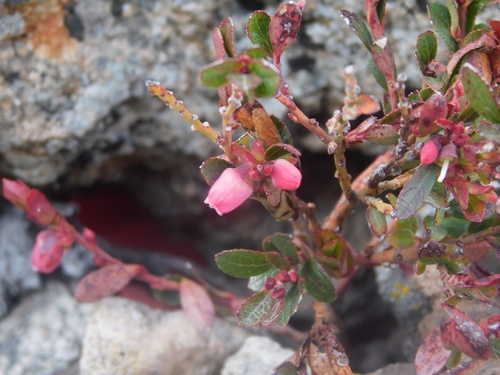
iNaturalist· cc-by-nc
(c) Thanasis Papanikolaou, some rights reserved (CC BY-NC), uploaded by Thanasis Papanikolaou
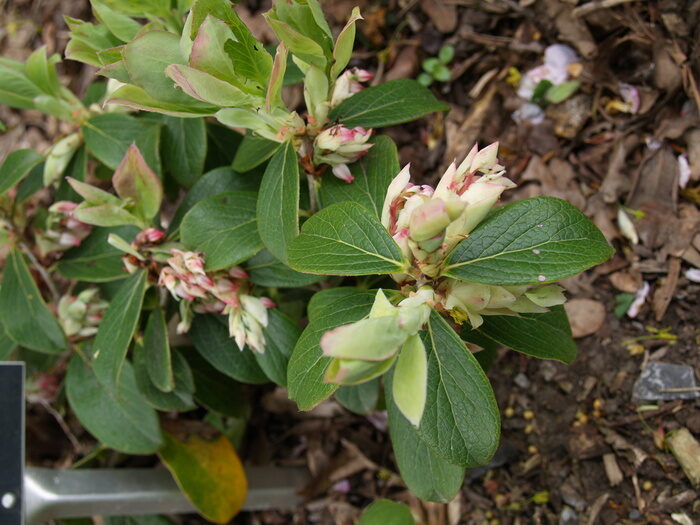
iNaturalist· cc-by-nc
(c) appleberry, some rights reserved (CC BY-NC)
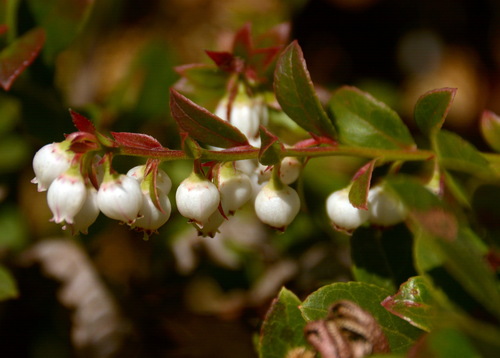
iNaturalist· cc-by
(c) Daniel Cahen, some rights reserved (CC BY), uploaded by Daniel Cahen
Summary
Source: WikipediaArbutus andrachne, commonly called the Greek strawberry tree, is an evergreen shrub or small tree in the family Ericaceae, native to the Mediterranean region and the Middle East.
Description
An evergreen tree. It grows 10 m tall. It can spread 6 m across. The bark is red-brown and peels in thin strips. The freshly exposed bark is orange-brown. The leaves are oval and 10 cm long by 5 cm wide. Sometimes they have teeth. They are glossy green above and paler underneath. They are smooth. The flowers are small and urn shaped. They are 6 mm long. They are green but white when they open. They are in upright clusters 10 cm long on the shoots. The fruit is a fairly smooth, rounded, orange-red berry. They are 1 cm across.
Edible Uses
Edible Parts: Fruit Edible Uses: Fruit - raw or cooked[2, 22, 46, 105, 183, K]. A luscious, juicy texture with a sweet but insipid flavour. Many people do not like eating more than a few of the raw fruits, though I find them very acceptable. They make a good cooked fruit in preserves etc. The fruit is about 15mm in diameter.
Traditional Uses
The ripe fruit are eaten raw. They are also used for jam.
This uses section is brief — help expand it
Medicinal Uses
None known
Distribution
It is a temperate plant. It is native to SE Europe and SW Asia. It grows in woods, thickets and on rocky slopes. It suits hardiness zones 6-9.
Where It Grows
Albania, Asia, Australia, Balkans, Cyprus, Europe, Greece, Israel, Jordan, Lebanon, Macedonia, Mediterranean, Middle East, Syria, Turkey, Türkiye,
Cultivation
Requires a nutrient-rich well-drained moisture-retentive soil in a sunny position with shelter from cold drying winds, especially when young. Requires a lime-free soil according to some reports, but it thrives on a limy soil according to other reports. Established plants are drought tolerant. Plants are hardy to about -15°c. The flowers are sweetly scented. Dislikes being transplanted, it should be placed in its final position whilst young, giving some protection in its first winter outdoors. Plants are very slow growing. Most plants cultivated under this name are in fact A. x andrachnoides 'Serratula'.
Propagation
Seed - best surface sown in a cold frame as soon as it is ripe. Stored seed should be soaked for 5 - 6 days in warm water and then surface sown in a shady position in a greenhouse. Do not allow the compost to become dry. 6 weeks cold stratification helps. The seed usually germinates well in 2 - 3 months at 20°c. Seedlings are prone to damp off, they are best transplanted to individual pots as soon as they are large enough to handle and should be kept well ventilated. Grow them on in a greenhouse for their first winter and then plant out in late spring after the last expected frosts. Basal cuttings in late winter. Cuttings of mature wood of the current season's growth, November/December in a frame. Poor percentage. Layering of young wood - can take 2 years.
Other Uses
Hedge Hedge Wood Plants can be grown as a hedge, they are tolerant of some trimming. Wood - hard, close-grained. Special Uses Hedge Hedge Scented Plants
Notes
There are 14 Arbutus species. This one can cross with Arbutus unedo.
Also Known As
Ağaç çileği, Ayı üzümü, Dağ çileği, Davulgu, Kaykab, Katlab, Qaiqab, Sandal ağacı
References (20)
- Al-Qura'n, S. A., 2010, Ethnobotanical and Ecological Studies of Wild Edible Plants in Jordan. Libyan Agriculture Research Center Journal International 1(4):231-243
- Bircher, A. G. & Bircher, W. H., 2000, Encyclopedia of Fruit Trees and Edible Flowering Plants in Egypt and the Subtropics. AUC Press. p 37
- Blamey, M and Grey-Wilson, C., 2005, Wild flowers of the Mediterranean. A & C Black London. p 166
- Cundall, P., (ed.), 2004, Gardening Australia: flora: the gardener's bible. ABC Books. p 172
- Davis, S.D., Heywood, V.H., & Hamilton, A.C. (eds), 1994, Centres of plant Diversity. WWF. Vol 2. p 340
Show all 20 references Hide references
- Ertug, F, Yenen Bitkiler. Resimli Türkiye Florası -I- Flora of Turkey - Ethnobotany supplement
- Etherington, K., & Imwold, D., (Eds), 2001, Botanica's Trees & Shrubs. The illustrated A-Z of over 8500 trees and shrubs. Random House, Australia. p 100
- Hedrick, U.P., 1919, (Ed.), Sturtevant's edible plants of the world. p 67
- Hibbert, M., 2002, The Aussie Plant Finder 2002, Florilegium. p 31
- Kargioglu, M. et al, 2010, Traditional Uses of Wild Plants in the Middle Aegean Region. Human Ecology 38:429-450
- Lord, E.E., & Willis, J.H., 1999, Shrubs and Trees for Australian gardens. Lothian. p 47
- Oran, S. A. S., 2015, Selected Wild Aromatic Plants in Jordan. International Journal of Medicinal Plants. Photon 108 (2015) 686-699
- Özdemir, E. and Kültür, S., 2017, Wild Edible Plants of Savaştepe District (Balıkesir, Turkey), Marmara Pharm J 21/3: 578-589
- Plants for a Future database, The Field, Penpol, Lostwithiel, Cornwall, PL22 0NG, UK. http://www.scs.leeds.ac.uk/pfaf/
- Rivera, D. et al, 2006, Gathered Mediterranean Food Plants - Ethnobotanical Investigations and Historical Development, in Heinrich M, Müller WE, Galli C (eds): Local Mediterranean Food Plants and Nutraceuticals. Forum Nutr. Basel, Karger, 2006, vol 59, pp 18–74
- Sfikas, G., 1984, Trees and shrubs of Greece. Efstathiadis Group. Athens. p 172
- Sinclair, V., 1992, The Floral Charm of Cyprus. Interworld Publications. p 134
- Syst. Ed. 10. 1024. 1759
- Tukan, S. K., et al, 1998, The use of wild edible plants in the Jordanian diet. International Journal of Food Sciences and Nutrition. 49:225-235
- World Checklist of Useful Plant Species 2020. Royal Botanic Gardens, Kew