Arbutus canariensis
Veill. ex Duhamel.
Canary Island strawberry tree, Canary madrona
iNaturalist· cc-by-nc
(c) Claudia Fernández Bagan, some rights reserved (CC BY-NC), uploaded by Claudia Fernández Bagan
iNaturalist· cc-by-nc
(c) Adrián Martínez Martínez, some rights reserved (CC BY-NC), uploaded by Adrián Martínez Martínez
iNaturalist· cc-by-nc
(c) javiercasadocuyas, some rights reserved (CC BY-NC)
Summary
Source: WikipediaArbutus canariensis, known in Spanish as madroño canario; in English as Canary Islands strawberry tree, is a species of shrub or tree in the heath family. It is endemic to the Canary Islands of Spain, specifically Tenerife, La Gomera, Gran Canaria, El Hierro, and La Palma. It is threatened by habitat loss.
Description
A tree. It has a neat round crown. It grows to 4.5 m high. It spreads to 3.5 m wide. It can grow 15 m tall. The bark is flaky and reddish-brown. The flowers are small and pink and occur in clusters which hang downwards. The fruit are soft and green. These occur in large bunches. The fruit are about 12 mm across. They turn red when the are ripe.
Edible Uses
Edible Parts: Fruit Edible Uses: The fruit is made into a sweetmeat.
Medicinal Uses
None known
Distribution
It is a warm temperate plant. They suit cool, humid conditions. They can grow in peaty, acid or alkaline soils. They need a fertile, humus-rich and well-drained soil. It does best in full sun. It grows in cloud forest in the Canary Islands. It suits hardiness zones 8-10. Arboretum Tasmania. National Arboretum Canberra.
Where It Grows
Australia, Canary Island*, Tasmania,
Cultivation
Requires a lime-free nutrient-rich well-drained moisture-retentive soil in sun or semi-shade and shelter from cold drying winds, especially when young. This species is not hardy in the colder areas of the country, it tolerates temperatures down to between -5 and -10°c.
Propagation
Seed - best surface sown in a cold frame as soon as it is ripe. Stored seed should be soaked for 5 - 6 days in warm water and then surface sown in a shady position in a greenhouse. Do not allow the compost to become dry. 6 weeks cold stratification helps. The seed usually germinates well in 2 - 3 months at 20°c. Seedlings are prone to damp off, they are best transplanted to individual pots as soon as they are large enough to handle and should be kept well ventilated. Grow them on in a greenhouse for their first winter and then plant out in late spring after the last expected frosts. Basal cuttings in late winter. Cuttings of mature wood of the current season's growth, November/December in a frame. Poor percentage. Layering of young wood - can take 2 years.
Other Uses
None known Special Uses
Notes
There are 14 Arbutus species.
Also Known As
Madrono
References (13)
- Bircher, A. G. & Bircher, W. H., 2000, Encyclopedia of Fruit Trees and Edible Flowering Plants in Egypt and the Subtropics. AUC Press. p 37
- Bodkin, F., 1991, Encyclopedia Botanica. Cornstalk publishing, p 95
- Cundall, P., (ed.), 2004, Gardening Australia: flora: the gardener's bible. ABC Books. p 173
- Etherington, K., & Imwold, D., (Eds), 2001, Botanica's Trees & Shrubs. The illustrated A-Z of over 8500 trees and shrubs. Random House, Australia. p 100
- Flowerdew, B., 2000, Complete Fruit Book. Kyle Cathie Ltd., London. p 171
Show all 13 references Hide references
- Hedrick, U.P., 1919, (Ed.), Sturtevant's edible plants of the world. p 67
- Hibbert, M., 2002, The Aussie Plant Finder 2002, Florilegium. p 31
- Jardin, C., 1970, List of Foods Used In Africa, FAO Nutrition Information Document Series No 2.p 121
- Marinelli, J. (Ed), 2004, Plant. DK. p 94
- Plants for a Future database, The Field, Penpol, Lostwithiel, Cornwall, PL22 0NG, UK. http://www.scs.leeds.ac.uk/pfaf/
- Ryan, S., 2008, Dicksonia. Rare Plants Manual. Hyland House. p 7
- Traite arb. arbust. nouv. ed., 1:80. 1800-1803
- Young, J., (Ed.), 2001, Botanica's Pocket Trees and Shrubs. Random House. p 99
More from Ericaceae
Vaccinium andringitrense
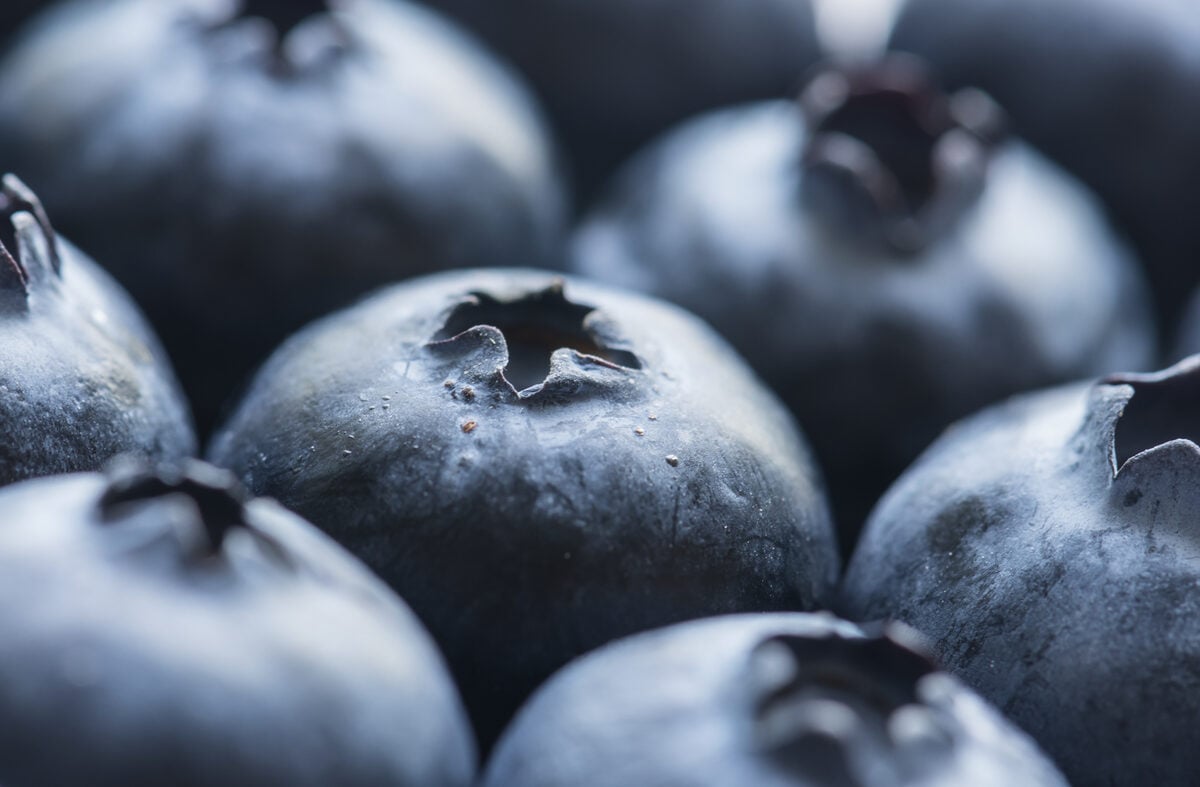
Vaccinium angustifolium
Low-bush blueberry
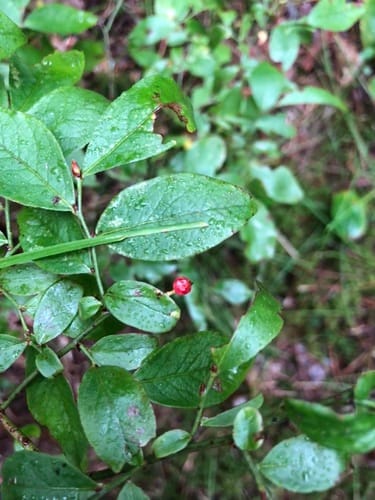
Vaccinium angustifolium f. leucocarpum
Vaccinium angustifolium laevifolium
Low Sweet Blueberry
Vaccinium angustifolium subsp. laevifolium
Low sweet blueberry
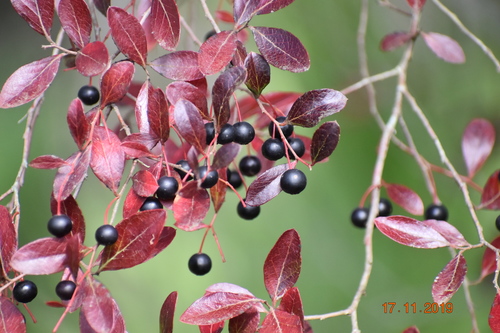
Vaccinium arboreum
Tree sparkleberry, Farkleberry, Sparkleberry, Tree-huckleberry