Dracontomelon duperreanum
Pierre
Asian pheasant tree
iNaturalist· cc-by-sa
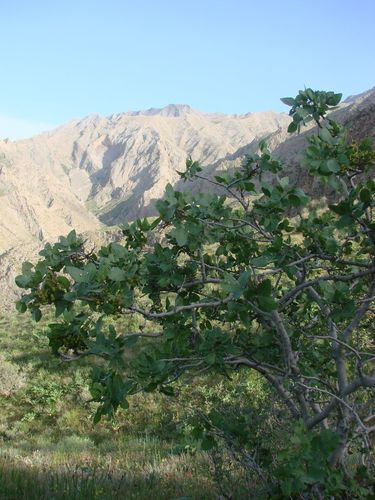
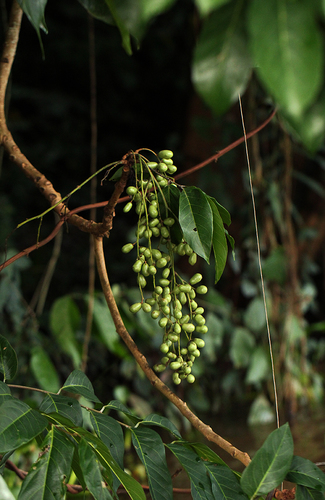
(c) Nguyễn Thanh Quang, some rights reserved (CC BY-SA)
iNaturalist· cc-by-nc
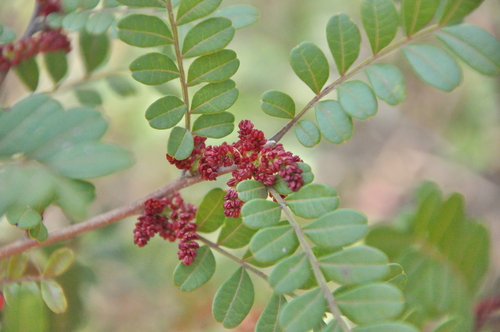
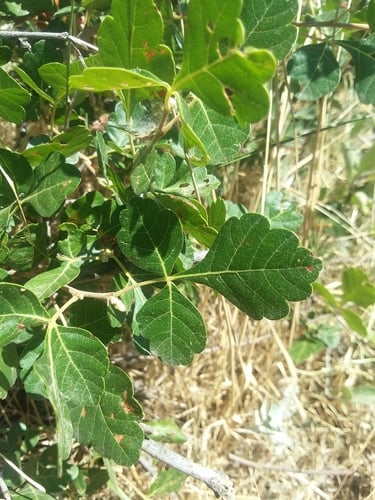
(c) discoverymike, some rights reserved (CC BY-NC)
Summary
Source: WikipediaDracontomelon duperreanum or Indochina Dragonplum is a tree species Anacardiaceae, with no subspecies listed in the Catalogue of Life. It is found in southern China (Yunnan, Guangxi, Guangdong) and Vietnam (especially in the north - centre); its name in Vietnamese is long cóc, sấu trắng or simply sấu.
Description
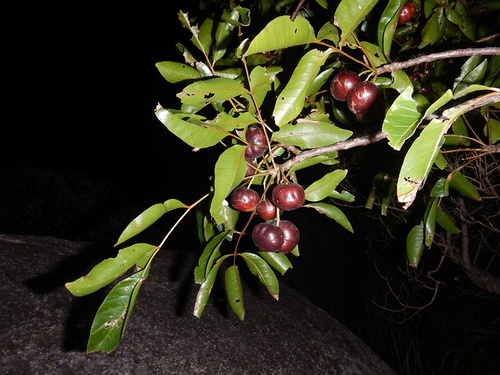
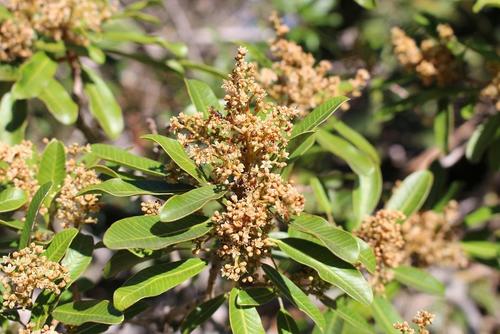
A large tree. It has strong buttresses near the base. It grows 10-20 m high. The crown is dense and round. The bark is fairly smooth. The young branches are softly hairy. The leaves are large. They are 30-45 cm long. The leaves have 7-15 pairs of leaflets. These are 6-12 cm long by 3-4 cm wide. The flowers are white and in short panicles. The fruit is fleshy. It is yellow and has 5 cells. The stones are unequal and flattened.
Edible Uses
The fruits of the Indochina Dragonplum tree are used in Vietnamese cuisine, often preserved with souring agents or cooked with duck. After being preserved in sugar, it can be used to make a cooling drink in summer.
Traditional Uses
The ripe fruit are eaten raw. They are also preserved in sugar.
This uses section is brief — help expand it
Distribution
A tropical plant. It grows in seasonal rain forest between 120-600 m altitude. In XTBG Yunnan.
Where It Grows
Asia, China, Indochina, Myanmar, SE Asia, Vietnam*,
Cultivation
A plant of low elevations in the tropics and subtropics. It grows in areas with a short dry season.
Other Uses
We do not have any specific information on the wood of this species. However, the following is a general description of the wood from plants in this genus:- The heartwood varies from light brown, grayish, greenish-yellow to reddish-brown, often with irregular dark brown to nearly black banding; the wide band of sapwood is pinkish, or grayish. The texture is moderately fine to coarse; the grain straight to interlocked and irregular, with a decorative figure if quarter cut; the wood is lustrous; there is no distinctive odour or taste. The heartwood is not durable and is not resistant to termite attack. The wood is easy to work; glues satisfactorily; takes a good finish and polish; veneers well. It is used for purposes such as furniture and cabinetwork, paneling, decorative veneers (walnut-like in appearance), gunstocks, flooring, joinery.
Production
In China plants flower in April to May and fruit June to November.
Other Information
It is cultivated in China and Vietnam.
Nutrition
| Part | Moisture | kJ | kcal | Protein | Vit A | Vit C | Iron | Zinc |
|---|---|---|---|---|---|---|---|---|
| Leaves | 65.4 | 122 | 29 | 1 | — | 2 | — | — |
Synonyms
Also Known As
A zi ren a, Magu, Nga-su, Sau
References (9)
- Jin, Chen et al, 1999, Ethnobotanical studies on Wild Edible Fruits in Southern Yunnan: Folk Names: Nutritional Value and Uses. Economic Botany 53(1) pp 2-14
- Fl. Forest. Cochinch. 4(fasc. 24): t. 374. 1898
- Hu, Shiu-ying, 2005, Food Plants of China. The Chinese University Press. p 516
- Luo, B., et al, 2019, Wild edible plants collected by Hani from terraced rice paddy agroecosystem in Honghe Prefecture, Yunnan, China. Journal of Ethnobiology and Ethnomedicine 15:56
- Mot So Rau Dai an Duoc O Vietnam. Wild edible Vegetables. Ha Noi 1994, p 212
Show all 9 references Hide references
- Sang, D. T., & Mizoue, K. O. N., 2012, Use of Edible Forest Plants among Indigenous Ethnic Minorities in Cat Tien Biosphere Reserve, Vietnam. Asian Journal of Biodiversity Vol. 3 (1), p 23-49
- Verheij, E. W. M. and Coronel, R.E., (Eds.), 1991, Plant Resources of South-East Asia. PROSEA No 2. Edible fruits and nuts. Pudoc Wageningen. p 330
- Walter, A. & Sam C., 2002, Fruits of Oceania. ACIAR Monograph No. 85. Canberra. p 158
- World Checklist of Useful Plant Species 2020. Royal Botanic Gardens, Kew