Pistacia weinmannifolia
J. Poiss. ex Franch.
iNaturalist· cc-by-nc
(c) Lukasz Madrzynski 孟巨石, some rights reserved (CC BY-NC)
iNaturalist· cc-by-nc
(c) pppepper, some rights reserved (CC BY-NC)
iNaturalist· cc-by-nc
(c) 黑乎乎君, some rights reserved (CC BY-NC)
Description
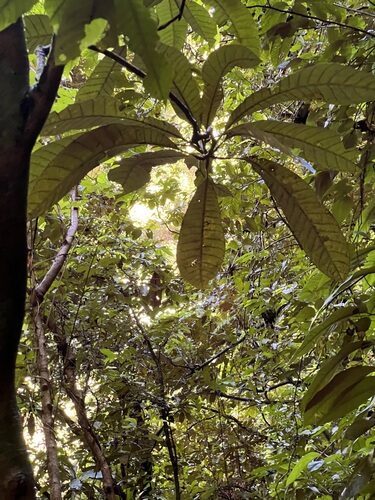
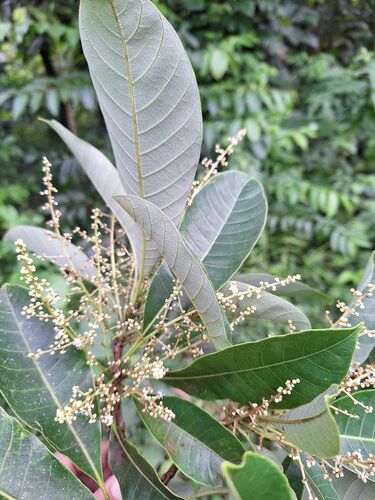
An evergreen shrub or small tree. It grows 2-8 m tall. The leaves have leaflets along the stalk. There are 6-8 pairs of opposite leaflets. The leaflets are oblong and 1-4 cm long by 1-2 cm wide. They are wedge shaped at the base and rounded at the tip. Male and female flowers are separate. The fruit is fleshy and 5-6 mm across.
Edible Uses
The fruit are eaten fresh and are commonly consumed.
Traditional Uses
The fruit are eaten fresh.
This uses section is brief — help expand it
Distribution
It is a subtropical plant. It grows in hill and mountain forests on limestone between 500-2,700 m above sea level. It grows in Yunnan in China.
Where It Grows
Asia, China, Myanmar, SE Asia, Tibet,
Production
In Yunnan the fruit are available for harvest in August and September.
Other Information
It is a commonly eaten fruit.
Also Known As
Yizhu, Li
References (2)
- Geng, Y., et al, 2016, Traditional knowledge and its transmission of wild edibles used by the Naxi in Baidi Village, northwest Yunnan province. Journal of Ethnobiology and Ethnomedicine. 12:10
- Ju, Y., et al, 2013, Eating from the wild: diversity of wild edible plants used by Tibetans in Shangri-la region, Yunnan, China, Journal of Ethnobiology and Ethno medicine 9:28