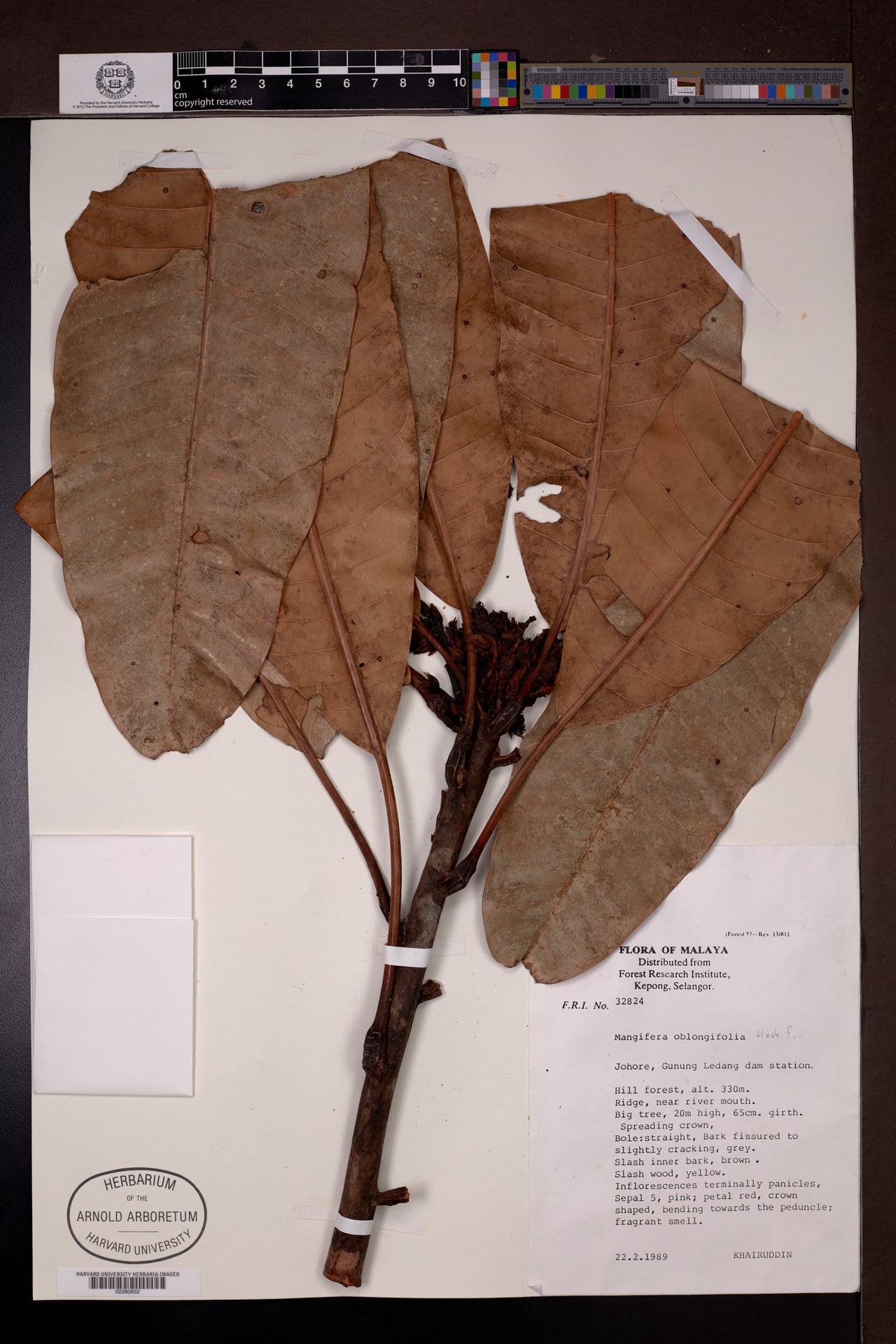
Pistacia vera
L.
Pistachio nut
iNaturalist· cc-by-nc
(c) Наталья Бешко, some rights reserved (CC BY-NC), uploaded by Наталья Бешко
iNaturalist· cc-by-nc
(c) Σάββας Ζαφειρίου (Savvas Zafeiriou), some rights reserved (CC BY-NC), uploaded by Σάββας Ζαφειρίου (Savvas Zafeiriou)
iNaturalist· cc-by-nc
(c) bonama, some rights reserved (CC BY-NC)
Summary
Source: WikipediaA deciduous tree growing to 10m tall at a medium rate. Hardy to UK zone 9. Dioecious, requiring both male and female plants for seed production. Noted for attracting wildlife. Grows in light sandy and medium loamy soils, preferring well-drained conditions and tolerating nutritionally poor soil. Adapts to mildly acid through very alkaline soils. Requires full sun, tolerates both dry and moist conditions, and is drought-tolerant.
Description
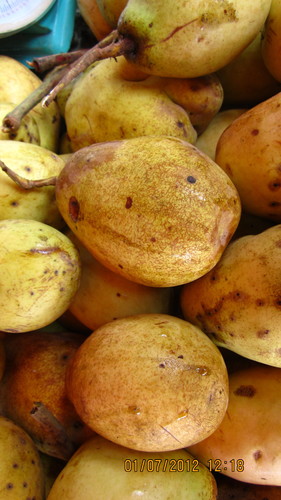
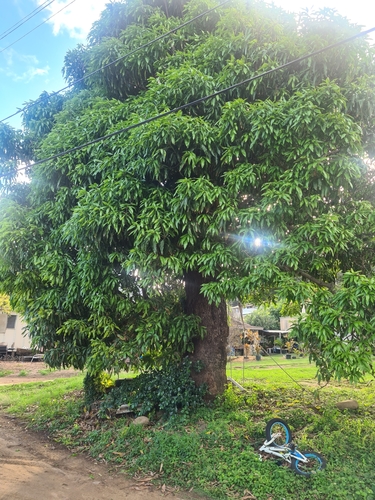
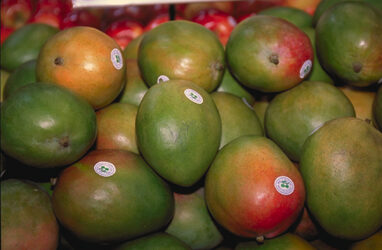
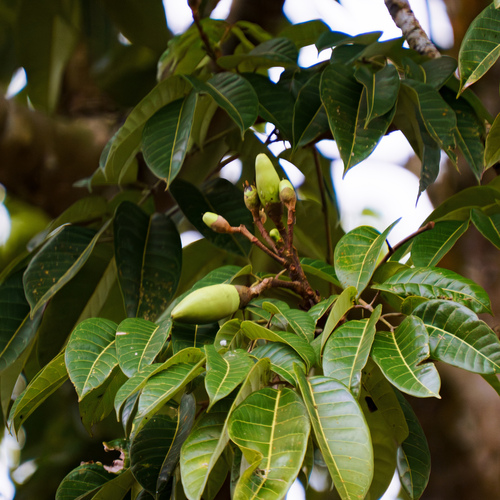
A small deciduous tree up to about 10 metres tall. It can have one or several trunks. Trees tend to droop and spread. Leaves are large and greyish. They have 3-5 leaflets. These are roundish and 5-10 cm long. Trees produces clusters of small green nuts. Male and female flowers are borne on different trees. Male and female flowers occur on separate trees. The fruit are red and wrinkled. The kernel is 3 cm long by 1.5 cm wide. It is protected by a thin shell. The seed is edible. There are several named cultivated varieties.
Edible Uses
The seed is rich in oil and has a pleasant, mild flavour — delicious eaten raw and widely used in confectionery, ice cream, cakes and pies. An edible oil can be obtained from the seed, though it is not produced commercially due to the high price of the seed. The fruits can also be made into a flavourful marmalade.
Traditional Uses
The nuts are eaten after roasting and salting. They can be eaten raw. They are used in confectionery, ice cream, cakes, pies, soups etc. An edible oil can be produced from the seed. The fruits can be used for marmalade. Caution: It contains urushiol that can cause allergic reactions in some people.
Medicinal Uses
In China, the plant is used to treat abdominal ailments, abscesses, amenorrhoea, bruises, chest ailments, circulation problems, dysentery, gynecopathy, pruritus, rheumatism, sclerosis of the liver, sores and trauma. The seed is considered sedative and tonic.
Distribution
It is a warm temperate and Mediterranean climate plant. It suits hot dry places. They do well in light calcareous soils. They need fertile, well-drained soils. They can tolerate drought. Winters need to be cool to break bud dormancy. Trees need 600 to 1,500 hours of chilling below 6°C. Trees do not do well in areas with high humidity. They grow in places with temperatures from -10°C in the winter to 40°C in the summer. In western Asia they grow to 1500 m altitude. They do best with a pH of 7-7.8. It suits hardiness zones 8-10.
Where It Grows
Afghanistan*, Africa, Asia, Australia, Azerbaijan, Balkans, Bangladesh, Caucasus, Central Asia, China, Cyprus, Europe, France, Georgia, Greece, India, Iran, Iraq, Israel, Italy, Kazakhstan, Kyrgyzstan, Lebanon, Macedonia, Mediterranean, Mexico, Middle East, Myanmar, North Africa, North America, Pacific, Pakistan, Palestine, Papua New Guinea, PNG, Philippines, SE Asia, Serbia, South Africa, Southern Africa, Spain, Syria*, Tajikistan, Tunisia, Turkey, Türkiye, Turkmenistan*, Uzbekistan, USA,
Cultivation
Mostly grown from seed. The seed should be presoaked in alkalized water or for 3-4 days in warm water before sowing. Germination can be slow and irregular. Cuttings of half ripe wood from young trees can be used. Trees can be grown by layering. Because male and female flowers occur on separate trees both male and female trees must be present. One male tree to 5 female trees is suitable. It is possible to graft a male branch onto a female tree. The pollen is carried by wind. The flowers are small and green in clusters in the axils of leaves. The nuts are normally knocked off the trees then harvested off the ground.
Propagation
Pre-soak the seed for 16 hours in alkalized water, or for 3–4 days in warm water, and sow in late winter in a cold frame or greenhouse. Two months of cold stratification may speed up germination, so sowing in early winter may be preferable. Germination is variable and can be slow. Prick out seedlings into individual pots when large enough to handle and grow on for at least their first winter under glass. Plant out into permanent positions in early summer, with some protection from winter cold advisable for the first year or two. Cuttings of half-ripe wood from juvenile trees can be taken in July and rooted in a frame. Layering is also possible.
Other Uses
The seed yields up to 40% of a non-drying oil, though this is not exploited commercially given the high value of the seed as food. Male trees produce a small quantity of a high-grade resin used in paints and lacquers. Pistachio trees are also valued in agroforestry for soil stabilization, erosion control, and improving soil fertility through nitrogen fixation. They provide habitat for various wildlife species, with the seeds eaten by birds and mammals, and the bark and leaf litter offering shelter to invertebrates.
Production
It is slow growing. Seedlings take 8 years to bear. Budded and grafted trees can bear in 4 years. Peak production is reached after about 20 years. Trees can live for centuries under suitable conditions. The fruit take several months to mature.
Other Information
It is cultivated.
Notes
It forms hybrids with Pistacia khinjuk and Pistacia atlantica.
Nutrition
| Part | Moisture | kJ | kcal | Protein | Vit A | Vit C | Iron | Zinc |
|---|---|---|---|---|---|---|---|---|
| Seed | 5.9 | 2598 | 622 | 17.6 | 55 | 7 | 7.3 | 2.2 |
Also Known As
Kalliki fistiga, Pesta, Pista, Pista-thee-bin, Pistache, Pistachero, Snow lotus seed, Xue lian zi
References (42)
- Arora, R. K., 2014, Diversity in Underutilized Plant Species - An Asia-Pacific Perspective. Bioversity International. p 96
- Bianchini, F., Corbetta, F., and Pistoia, M., 1975, Fruits of the Earth. Cassell. p 198
- Blamey, M and Grey-Wilson, C., 2005, Wild flowers of the Mediterranean. A & C Black London. p 127
- Bodkin, F., 1991, Encyclopedia Botanica. Cornstalk publishing, p 805
- Bremness, L., 1994, Herbs. Collins Eyewitness Handbooks. Harper Collins. p 74
Show all 42 references Hide references
- Cheifetz, A., (ed), 1999, 500 popular vegetables, herbs, fruits and nuts for Australian Gardeners. Random House p 220
- Cundall, P., (ed.), 2004, Gardening Australia: flora: the gardener's bible. ABC Books. p 1053
- Ertug, F, Yenen Bitkiler. Resimli Türkiye Florası -I- Flora of Turkey - Ethnobotany supplement
- Facciola, S., 1998, Cornucopia 2: a Source Book of Edible Plants. Kampong Publications, p 172
- FAO, 1995, Edible Nuts. Non Wood Forest Products 5.
- Flora of Pakistan. www.eFloras.org
- Flowerdew, B., 2000, Complete Fruit Book. Kyle Cathie Ltd., London. p 202
- French, B.R., 1986, Food Plants of Papua New Guinea, A Compendium. Asia Pacific Science Foundation p 194
- Glowinski, L., 1999, The Complete Book of Fruit Growing in Australia. Lothian. p 106
- Haq, N., Anthony, K., Sarwar, M., and Ahmad, Z. (eds.), 1998, Underutilized Crops of Pakistan. Plant Genetic Resources Institute. p 13
- Hedrick, U.P., 1919, (Ed.), Sturtevant's edible plants of the world. p 502
- Hibbert, M., 2002, The Aussie Plant Finder 2002, Florilegium. p 235
- Hu, Shiu-ying, 2005, Food Plants of China. The Chinese University Press. p 518
- Janick, J. & Paul, R. E. (Eds.), 2008, The Encyclopedia of Fruit & Nuts. CABI p 20
- Jardin, C., 1970, List of Foods Used In Africa, FAO Nutrition Information Document Series No 2.p 35
- Kaya, O. M., et al, 2020, An ethnobotanical research in Sanhurfa central district and attached Villages (Turkey). Indian Journal of Traditional Knowledge. Vol. 19(1) pp 7-23
- Khojimatov, O. K. et al, 2015, Some wild growing plants in traditional foods of Uzbekistan. Journal of Ethnic Foods. 2 (2015) 25-28
- Kiple, K.F. & Ornelas, K.C., (eds), 2000, The Cambridge World History of Food. CUP p 433, 1835
- Lazarides, M. & Hince, B., 1993, Handbook of Economic Plants of Australia, CSIRO. p 191
- Lentini, F. and Venza, F., 2007, Wild food plants of popular use in Sicily. J Ethnobiol Ethnomedicine. 3: 15
- Lyle, S., 2006, Discovering fruit and nuts. Land Links. p 328
- Macmillan, H.F. (Revised Barlow, H.S., et al) 1991, Tropical Planting and Gardening. Sixth edition. Malayan Nature Society. Kuala Lumpur. p 316
- Menninger, E.A., 1977, Edible Nuts of the World. Horticultural Books. Florida p 53
- Mulherin, J., 1994, Spices and natural flavourings. Tiger Books, London. p 112
- Plants for a Future database, The Field, Penpol, Lostwithiel, Cornwall, PL22 0NG, UK. http://www.scs.leeds.ac.uk/pfaf/
- Rexhepi, B., et al, 2018, Ethnobotanical Study of Wild Edible Plants in Pelagonia Region (Southwestern Macedonia) International Journal of Advances in Science Engineering and Technology, Vol. 6 (1) p 57
- Segura, S. et al, 2018, The edible fruit species in Mexico. Genet Resour Crop Evol (2018) 65:1767–1793
- Small, E., 2009, Top 100 Food Plants. The world's most important culinary crops. NRC Research Press. p 432
- Smith, P.M., 1979, Cashew, in Simmonds, N.W., (ed), Crop Plant Evolution. Longmans. London. p 302
- Sp. pl. 2:1025. 1753
- USDA, ARS, National Genetic Resources Program. Germplasm Resources Information Network - (GRIN). [Online Database] National Germplasm Resources Laboratory, Beltsville, Maryland. Available: www.ars-grin.gov/cgi-bin/npgs/html/econ.pl (10 April 2000)
- van Wyk, B., 2005, Food Plants of the World. An illustrated guide. Timber press. p 299
- Wickens, G.E., 1995, Edible Nuts. FAO Non-wood forest products. FAO, Rome. p 16, 107
- Wiersema, J. H. & Leon, B., 2013, World Economic Plants. A Standard Reference CRC Press. 2nd Ed. p 536
- World Checklist of Useful Plant Species 2020. Royal Botanic Gardens, Kew
- www.ethnobiomed.com
- Zeven, A. C. & de West, J. M. J., 1982, Dictionary of cultivated plants and their regions of diversity. Wageningen. p 80