Protorhus longifolia
(Bernh.) Engl.
Red beech
iNaturalist· cc-by-sa
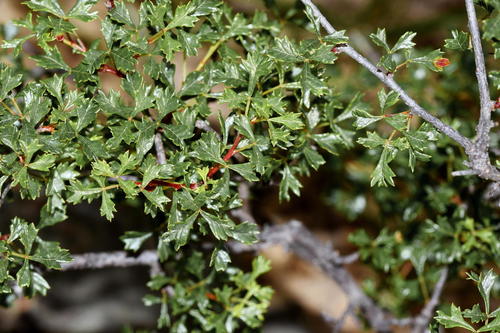
(c) Brian du Preez, some rights reserved (CC BY-SA), uploaded by Brian du Preez
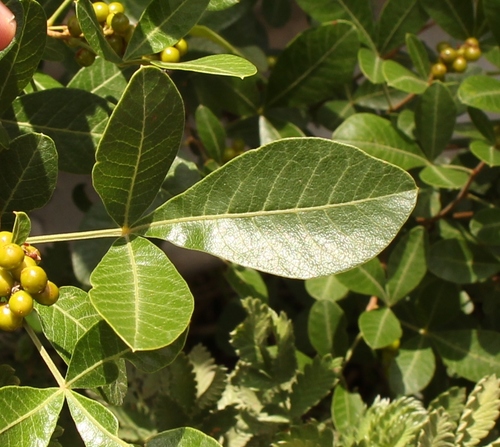
iNaturalist· cc-by-nc
(c) Luc Strydom, some rights reserved (CC BY-NC)
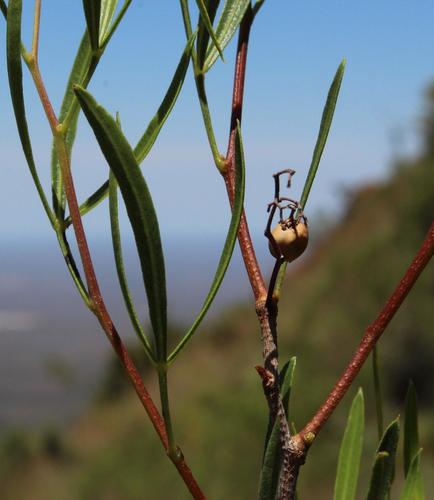
iNaturalist· cc-by-nc
(c) c, some rights reserved (CC BY-NC)
Summary
Source: WikipediaProtorhus longifolia, commonly known as red beech, is a medium to large, mostly dioecious species of tree in the family Anacardiaceae. It is native to South Africa and Eswatini, where it occurs in well-watered situations from coastal elevations to 1,250 m. The leafy, evergreen trees have rounded crowns and usually grow between 6 and 10 m tall, but regularly taller in forest.
Description
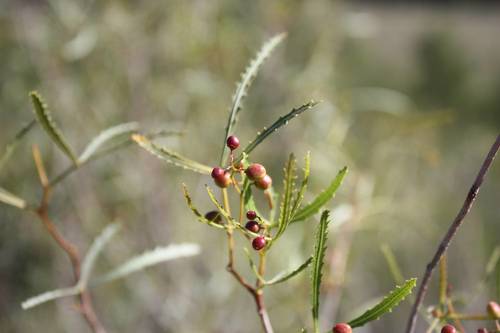
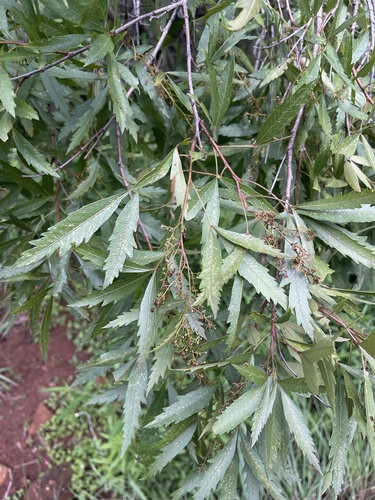
An evergreen tree. It grows 15 m tall. It has a dense rounded crown. The bark is dark brown, rough and cracked. The leaves are simple and opposite. The leaves are dark and glossy on the upper surface with lighter veins. They are more pale underneath. The edges are wavy. The flowers are red to pink and 4 mm across. They are in sprays 15 cm long. They can be in the axils of leaves or at the ends of branches. Often male and female flowers are on separate trees. The fruit are small and kidney shaped and fleshy. They are purple when ripe.
Edible Uses
The leaves are boiled and eaten; the fruit is also edible. They are known as a famine food.
Traditional Uses
The leaves are eaten boiled.
This uses section is brief — help expand it
Medicinal Uses
The leaves have traditional uses.
Distribution
It is a subtropical plant. It is very drought tolerant. It can stand light frosts. It can grow in arid places.
Where It Grows
Africa, East Africa, Eswatini, Mozambique, South Africa, Southern Africa, Swaziland,
Cultivation
It is grown from seed.
Production
It grows quickly.
Other Information
They are a famine food.
Also Known As
Fuco, Ikhubalo, Infuce, Isifico, Rooiboekenhout, Umhlangoti, Umkhomuso, Umpupati
References (5)
- Fox, F. W. & Young, M. E. N., 1982, Food from the Veld. Delta Books. p 75
- Long, C., 2005, Swaziland's Flora - siSwati names and Uses http://www.sntc.org.sz/flora/
- Royal Botanic Gardens, Kew (1999). Survey of Economic Plants for Arid and Semi-Arid Lands (SEPASAL) database. Published on the Internet; http://www.rbgkew.org.uk/ceb/sepasal/internet [Accessed 28th March 2011]
- Shava, S., 2000, The Use of Indigenous Plants as Food by a Rural Community in the Eastern Cape: an Educational Exploration. Masters Thesis Rhodes University. p 66
- World Checklist of Useful Plant Species 2020. Royal Botanic Gardens, Kew