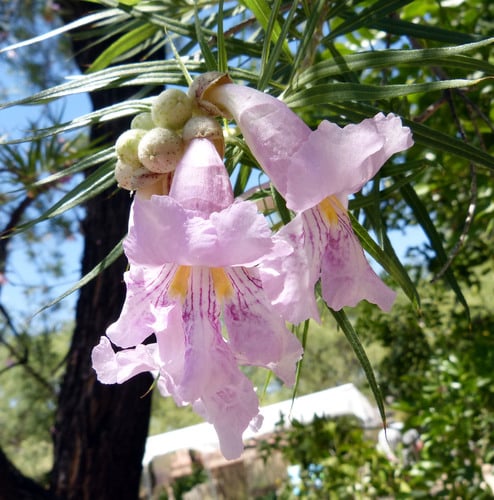
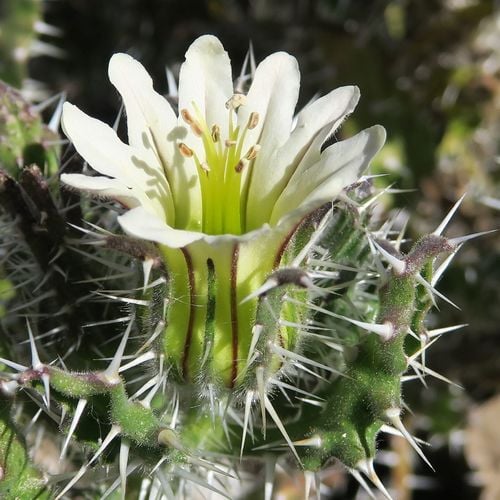
Dolichandrone spathacea
(L. f.) K. Schum.
Mangrove trumpet tree
iNaturalist· cc-by-nc
(c) John Howes, some rights reserved (CC BY-NC), uploaded by John Howes
iNaturalist· cc-by-nc
(c) Colour Blind Flora Enthusiast, some rights reserved (CC BY-NC)
Summary
Source: WikipediaDolichandrone spathacea, also known as tui or mangrove trumpet tree, is a species of plant in the family Bignoniaceae.
Description
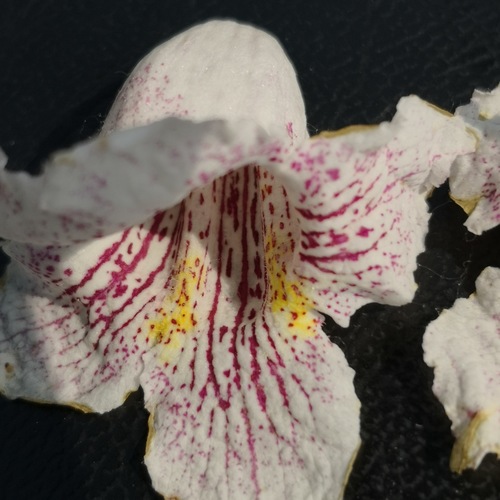
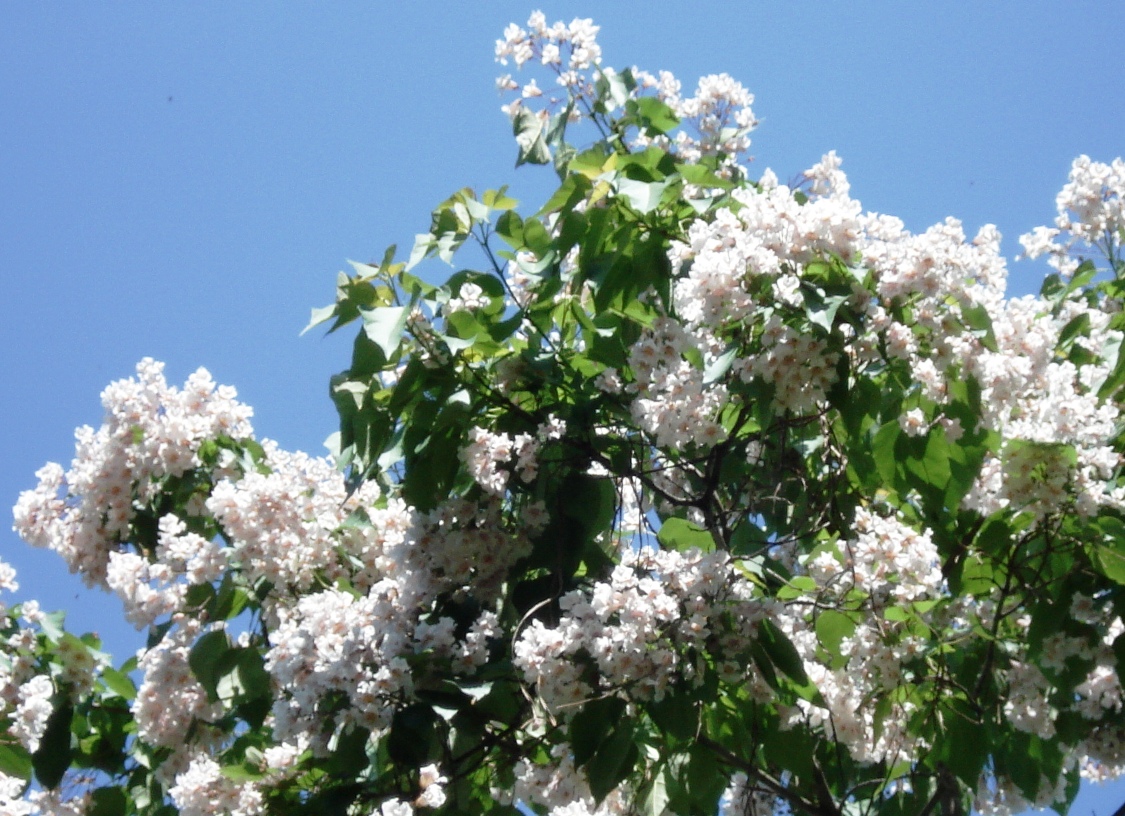
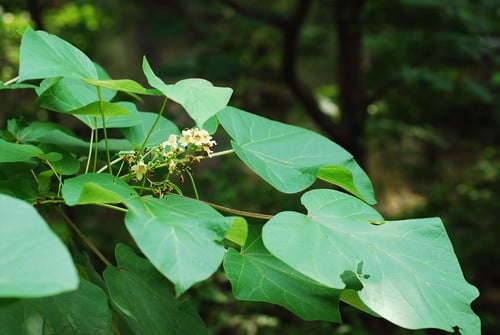
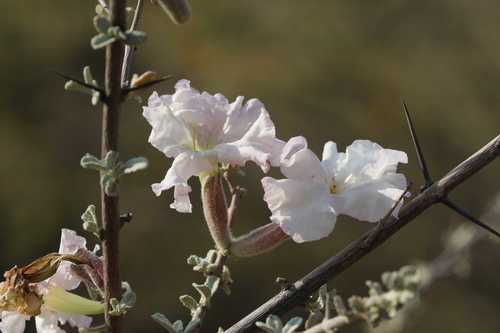
A medium sized tree which loses its leaves. It is smooth and up to 5 to 25 m high. The leaves are opposite and leathery. They are 35 cm long. They are divided into leaflets along the stalk. These are oblong and glossy. There are 7-9 leaflets are they are oval and 15 cm long. The flower clusters have few flowers and are short and at the end of stalks. The flowers are 15 cm long. The flowers are white or yellow on 2 or 3 cm long fleshy spikes. The flowers are trumpet shape. They come out at night. The seed envelope is as long as the leaves and slightly squashed. It is usually pointed and curved. There are many seeds and they are winged.
Edible Uses
The young flowers and fruit are cooked and eaten as a vegetable. The leaves are chewed as a substitute for betel pepper and used as a flavouring.
Traditional Uses
The young flowers and fruit are cooked and eaten as a vegetable. The leaves are chewed as a substitute for betel pepper.
This uses section is brief — help expand it
Medicinal Uses
The flower is edible and it is part of Thai cuisine, where it is known as dok khae thale or dok khae pa, being sometimes confused with Markhamia stipulata—also having the alternative name แคป่า dok khae pa in Thai. The Dolichandrone spathacea flower, however, is white and not yellowish or red and looks thinner. It is usually eaten sauteed or in Kaeng som. In Southeast Asia, the leaves and barks are used as traditional herbal medicine which is used to treat bacterial infections such as oral thrush, bronchitis, and gastrointestinal diseases.
Distribution
A tropical plant. It is native to tropical Asia and the Pacific. It grows in mangroves. They are found along the coast and in marshy places inland throughout the Philippines. It is tolerant to salt. It needs full sun. It needs fertile soil. It suits plant hardiness zones 10-11.
Where It Grows
Andamans, Asia, Australia, East Timor, Hawaii, India, Indochina, Indonesia, Laos, Malaysia, Myanmar, New Caledonia, North America, Pacific, Palau, Papua New Guinea, PNG, Philippines, SE Asia, Solomon Islands, Sri Lanka, Thailand, Timor-Leste, USA, Vanuatu,
Cultivation
Plants are grown from fresh seed.
Other Uses
A blackish, coarse fibre is obtained from the bark. The pale, white wood is durable, light in weight, soft and easily worked. It is used for small household goods, toys, floats and wooden shoes. The wood is used for fuel.
Production
It is fast growing.
Notes
There are 9 Dolichandrone species. The grow in tropical locations. It is used in medicine.
Synonyms
Also Known As
Daun tuwai, Gorshingiah, Hihivora, Hingut, Kanbillai, Kapeng kapal, Kayu jaran, Kayu pelok, Ke ket tawa, Kelaju, Ke pung mu, Ke, Ki jaran, Nirpponalyam, Pohon kelaju, Pohon tuwi, Pokok keloh, Rriu, Thakut, Thakut-ma, Tui, Tuih, Virbadiri
References (21)
- Ambasta, S.P. (Ed.), 2000, The Useful Plants of India. CSIR India. p 181
- Arora, K., Indigenous Forest Management in the Andaman and Nicobar Islands, India.
- Barwick, M., 2004, Tropical and Subtropical Trees. A Worldwide Encyclopedic Guide. Thames and Hudson p 153
- Burkill, I.H., 1966, A Dictionary of the Economic Products of the Malay Peninsula. Ministry of Agriculture and Cooperatives, Kuala Lumpur, Malaysia. Vol 1 (A-H) p 863
- Cabalion, P. and Morat, P., 1983, Introduction le vegetation, la flore et aux noms vernaculaires de l'ile de Pentcoste (Vanuatu), In: Journal d'agriculture traditionnelle et de botanique appliquee JATBA Vol. 30, 3-4
Show all 21 references Hide references
- Cooper, W. and Cooper, W., 2004, Fruits of the Australian Tropical Rainforest. Nokomis Editions, Victoria, Australia. p 88
- Cowie, I, 2006, A Survey of Flora and vegetation of the proposed Jaco-Tutuala-Lore National Park. Timor-Lests (East Timor) www.territorystories.nt/gov.au p 45
- Dobriyal, M. J. R. & Dobriyal, R., 2014, Non Wood Forest Produce an Option for Ethnic Food and Nutritional Security in India. Int. J. of Usuf. Mngt. 15(1):17-37
- Facciola, S., 1998, Cornucopia 2: a Source Book of Edible Plants. Kampong Publications, p 49 (As Dolichandrone rheedii)
- Kitalong, A. H., DeMeo, R. A., & Holm, T., 2013, A Field Guide to the Native Trees of Palau. 2nd edition. USDA p66
- Llamas, K.A., 2003, Tropical Flowering Plants. Timber Press. p 137
- Monsalud, M.R., Tongacan, A.L., Lopez, F.R., & Lagrimas, M.Q., 1966, Edible Wild Plants in Philippine Forests. Philippine Journal of Science. p 445
- Reis, S. V. and Lipp, F. L., 1982, New Plant Sources for Drugs and Foods from the New York Botanical Garden herbarium. Harvard. p 277
- K. M. Schumann & U. M. Hollrung, Fl. Kais. Wilh. Land. 123. 1889
- Slik, F., www.asianplant.net
- Soepadmo, E. & Wong, K. M., (Eds.), 1995, Tree Flora of Sabah and Sarawak. Volume One. ITTO, Govt. Malaysia. p 37
- Srichaiwong, P., et al, 2014, A Study of the Biodiversity of Natural Food Production to Support Community Upstream of Chi Basin, Thailand. Asian Social Science 10 (2):
- Staples, G.W. and Herbst, D.R., 2005, A tropical Garden Flora. Bishop Museum Press, Honolulu, Hawaii. p 190
- Sukarya, D. G., (Ed.) 2013, 3,500 Plant Species of the Botanic Gardens of Indonesia. LIPI p 247
- Tanaka,
- Trimanto, & Hapsari L., 2016, Botanical survey in thirteen montane forests of Bawean Island Nature Reserve, East Java Indonesia: Conservation status, bioprospecting and potential tourism. Biodiversitas 17: 832-846.