Jacaranda copaia
(Aubl.) D. Don
Wekineo
iNaturalist· cc-by
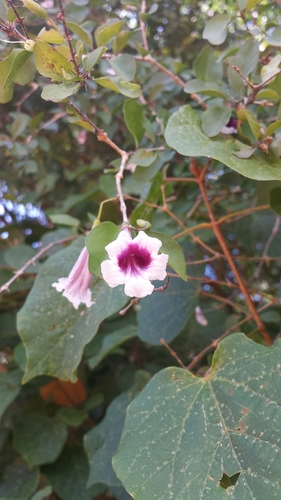
(c) Daniel A. Monsalve Ortiz, some rights reserved (CC BY), uploaded by Daniel A. Monsalve Ortiz
iNaturalist· cc-by-nc
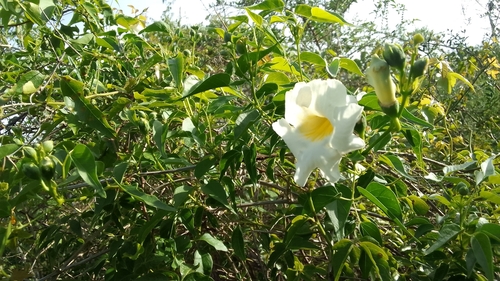
(c) William Milliken, some rights reserved (CC BY-NC)
iNaturalist· cc-by-nc
(c) Flávio Mendes, some rights reserved (CC BY-NC)
Summary
Source: WikipediaJacaranda copaia is a flowering pioneer tree belonging to the genus Jacaranda. It is native to Central America and northern South America.
Description
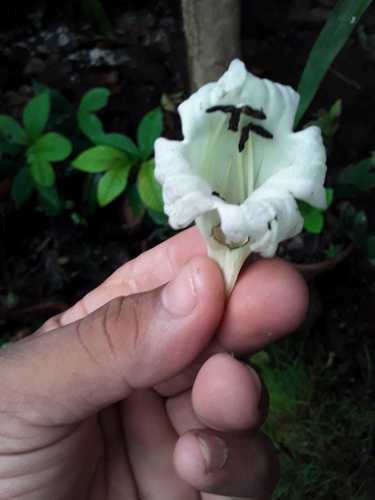
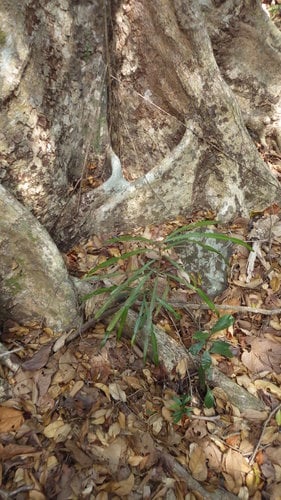
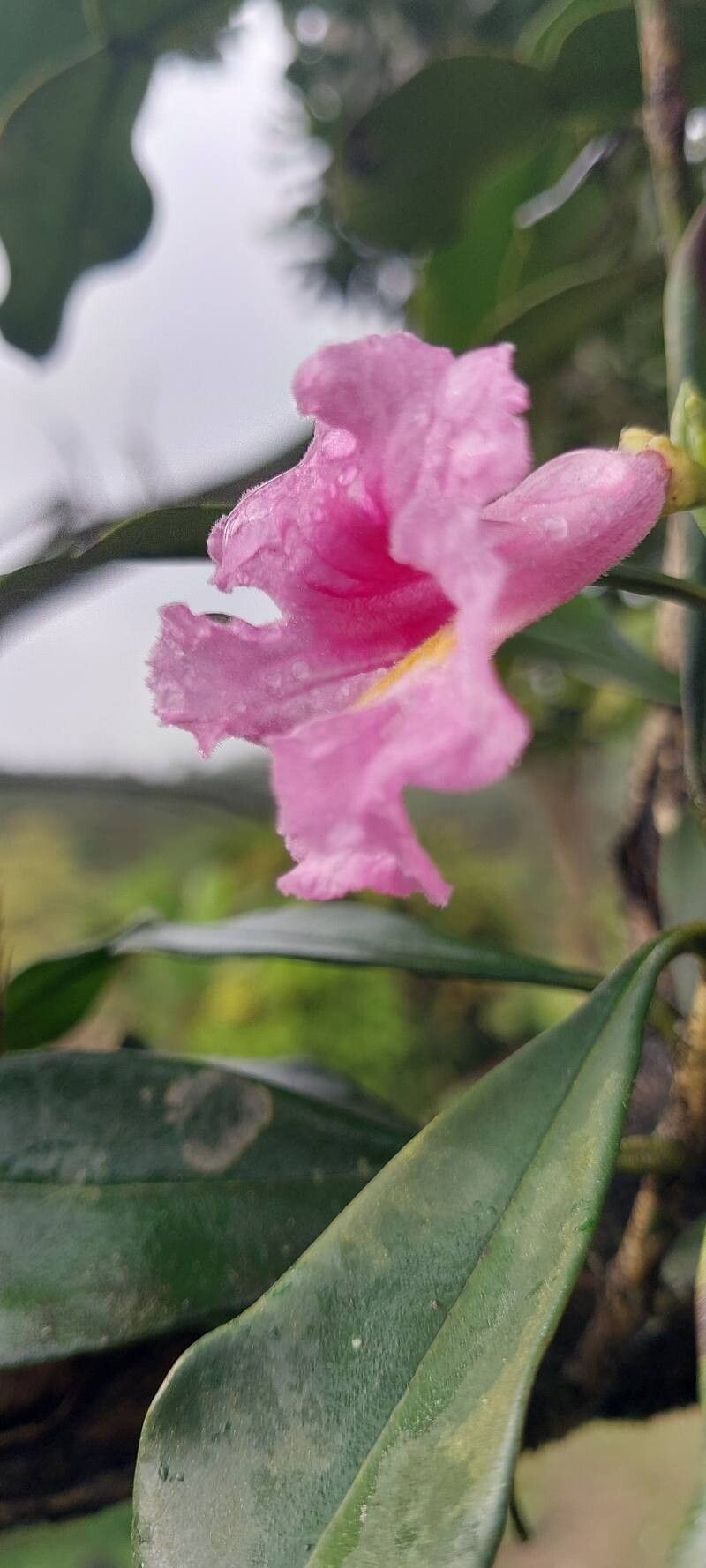
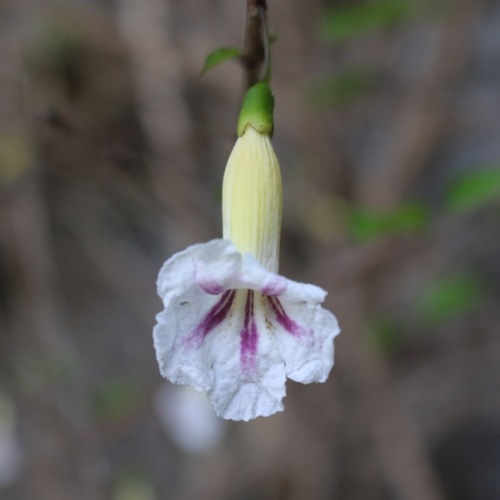
A tall forest tree. The bark is yellow and with narrow cracks. There are small buttresses with wrinkles across them. The leaves are large and opposite. They can be 1 m long. The leaves are compound. There are leaflets with smaller leaflets. The flowers are purple.
Edible Uses
The wood is chewed for its sweet taste.
Traditional Uses
The wood is chewed for its sweet taste.
This uses section is brief — help expand it
Medicinal Uses
During the dry season, the leafy branches are burned as a way to repel biting insects. The bark has been used as a laxative and to treat dysentery and syphilis. The leaves have been used to treat leishmaniasis, fevers, yaws and ringworm. The Guyana Patamona use the juice of young leaves to treat persistent sores. The native people in Kurupukari, Guyana, also use parts of the tree for treating ulcers and sores.
Distribution
A tropical plant.
Where It Grows
Amazon, Belize, Bolivia, Brazil, Central America, Colombia, Costa Rica, Ecuador, French Guiana, Guianas, Guyana, Honduras, Nicaragua, Panama, South America, Suriname, Venezuela,
Cultivation
Prefers a sunny position. A fast-growing tree in open areas. Young trees are unbranched with a cluster of giant leaves at their top.
Propagation
Seed - best sown as soon as it is ripe in a partially shaded position in a nursery seedbed. A high germination rate can be expected, with the seed sprouting within 14 - 21 days. When they are 5 - 6cm tall, transplant the seedlings into individual containers. They should be ready to plant out into their permanent positions 5 - 6 months later. Cuttings of half-ripe wood with a heel.
Other Uses
The leaves and wood are burnt to produce smoke which acts as an insect repellent, especially against mosquitoes. The seed pods (capsule valves) are used as a tool for shaping pottery. The heartwood is oatmeal-coloured to pinky-white or dingy white; it is not demarcated from the sapwood. The texture is coarse; the grain straight; lustre somewhat satiny; there is no distinctive odour or taste. The wood is very light in weight; very soft but firm; not durable, being susceptible to fungi, dry wood borers and termites. It seasons rapidly with only a slight risk of checking and distortion; once dry it is very stable to moderately stable in service. The wood is very easy to cut; saws woolly when green; finishes smoothly if tools are kept very sharp; nailing and screwing are poor; gluing is correct. The wood has some of the properties of white pine (Pinus strobus), and is suitable for light interior construction, cabinet making, boxes, crates, etc. It is used by local people to add buoyancy to rafts made of heavier timbers. The wood is pulped for paper manufacture. The wood is widely used for fuel. The species is able to regenerate in open and deforested areas. Juvenile trees can be extremely abundant in second growth situations and are one of the characteristic elements of wet forest second growth. The plant also has the potential to become a large, emergent tree in the forest. Thus it could be used as a pioneer tree within its native range, being allowed to grow to maturity and potentially then providing useful timber.
Synonyms
Also Known As
Jacaranda, Pata de elefante
References (3)
- Etkin, N. L. (Ed.), 1994, Eating on the Wild Side, Univ. of Arizona. p 155
- Edinburgh Philos. J. 9:267. 1823
- Kew Plants of the World Online