Mansoa alliacea
(Lam.) A. H. Gentry
Garlic vine
iNaturalist· cc-by-nc-sa
(c) Danielle Aube, some rights reserved (CC BY-NC-SA)
iNaturalist· cc-by-nc
(c) Steve Maldonado Silvestrini, some rights reserved (CC BY-NC)
iNaturalist· cc-by-nc
(c) Steve Maldonado Silvestrini, some rights reserved (CC BY-NC)
Summary
Source: WikipediaMansoa alliacea, or garlic vine, is a species of tropical liana in the family Bignoniaceae. It is native to Northern South America, and has spread to Central America and Brazil.
Description
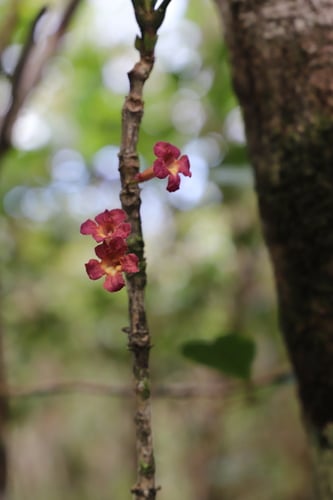
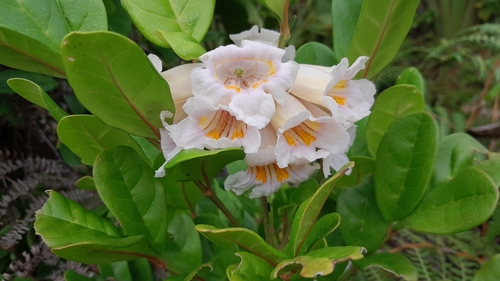
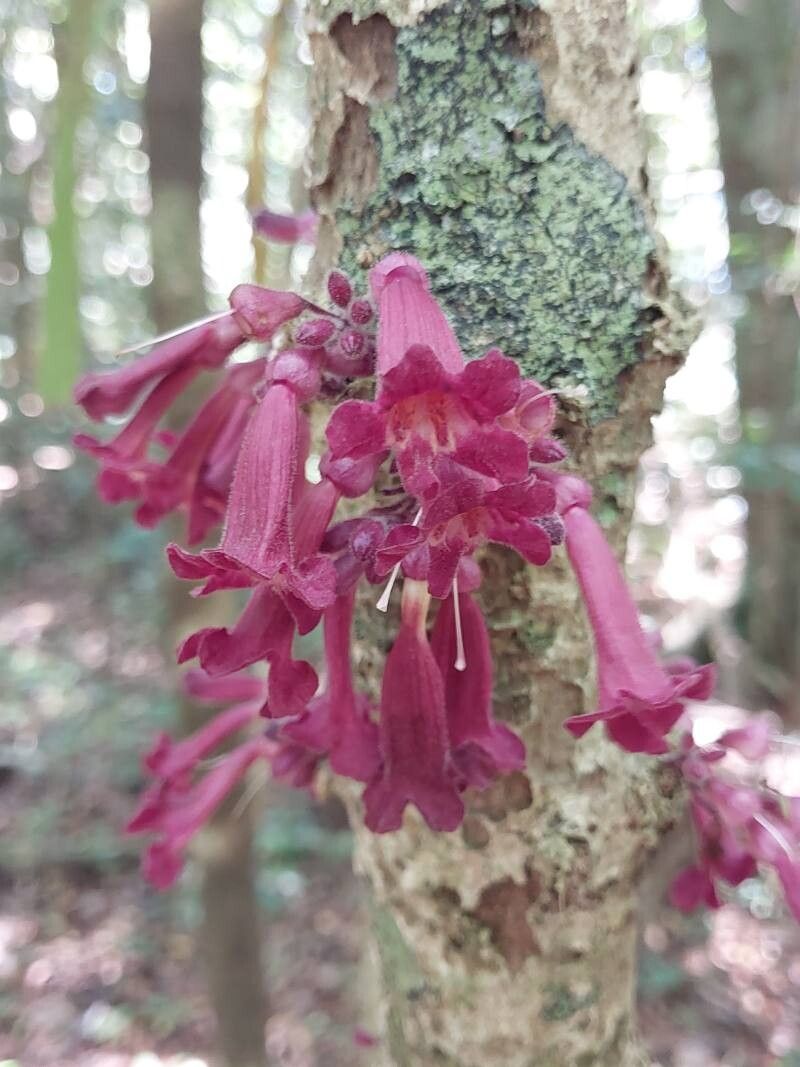
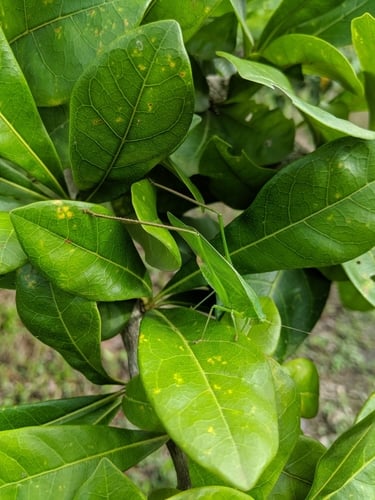
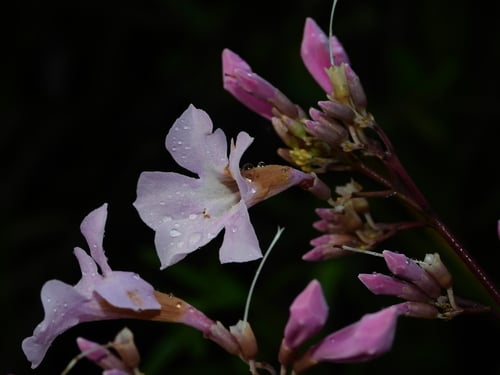
A climber. It produces several woody vines from the root. It grows 2-3 m tall. It smells or garlic when crushed. The stem is 4 angled. The leaves have 3 leaflets. The end leaflets develops into a long tendril divided into 3 prongs. The leaves are bright green and 15 cm long. The flowers are purple with a white throat. They are funnel shaped. They fade with age.
Edible Uses
The leaves and stems are used as a condiment or spice for their garlic flavour and odour. The bark and dried leaves are used as a seasoning that is added to salt meals.
Traditional Uses
The garlic flavoured leaves and stems are used as flavouring.
This uses section is brief — help expand it
Medicinal Uses
It is a plant remedy in the Amazon for pain and inflammation from arthritis and rheumatism, as well as colds, flu, fever, diarrhea and skin ulcers. The bark is used in ayahuasca preparations. Some capsule and leaf products are sold in stores in Brazil and Peru, and can be found as an ingredient in several other multi-herb formulas for cold, flu, and pain.
Distribution
It is a tropical plant. In XTBG Yunnan.
Where It Grows
Amazon*, Asia, Brazil, China, Dominican Republic, FSM, Guyana, India, Myanmar, Peru, Pohnpei, Puerto Rico, SE Asia, South America, West Indies,
Cultivation
A plant of the tropical rainforests. Prefers a moisture-retentive, humus-rich soil. The crushed foliage smells strongly of garlic.
Propagation
Seed - Cuttings of ripe wood.
Other Uses
The stem has a garlic odour and is used as an incense and an insect repellent. The smoke from burning leaves is used as a fumigant in order to repel bats. This plant is being tested as a method of controlling shoot borers (Hypsipyla sp.) when planted in association with timber species such as Cedrela and Swietenia.
Synonyms
Also Known As
Aaxux ts'aah, Ajp sacha, Boens, Cipo d'alho, Kyet-thun-phyu-nwe, Nia boens
References (7)
- Ann. Mag. Nat. Hist. ser. 3, 7:394. 1861 (As Adenocalymna alliaceum)
- Englberger, L., et al, 2006, Documentation of the traditional food system of Pohnpei. Indigenous People's food systems. Chp 6 p 119
- Kermath, B. M., et al, 2014, Food Plants in the Americas: A survey of the domesticated, cultivated and wild plants used for Human food in North, Central and South America and the Caribbean. On line draft. p 522
- Martin, F.W. & Ruberte, R.M., 1979, Edible Leaves of the Tropics. Antillian College Press, Mayaguez, Puerto Rico. p 178 (As Adenocalymna alliaceum)
- Omawale, 1973, Guyana's edible plants. Guyana University, Georgetown p 67 (As Pseudocalymma alliaceum)
Show all 7 references Hide references
- Seidemann J., 2005, World Spice Plants. Economic Usage, Botany, Taxonomy. Springer. p 6 (As Adenocalymna alliaceum)
- Terra, 1966, (As Adenocalymna alliaceum)