Diospyros fasciculosa
(F. Muell.) F.Muell.
Grey Ebony, Clustered persimmon
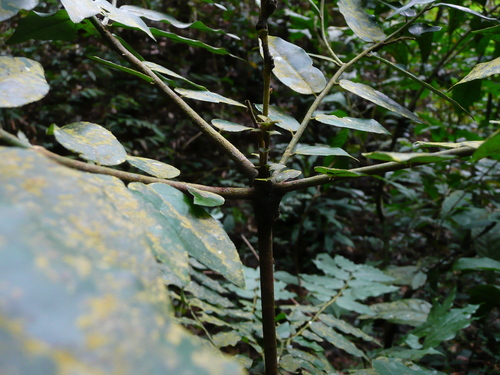
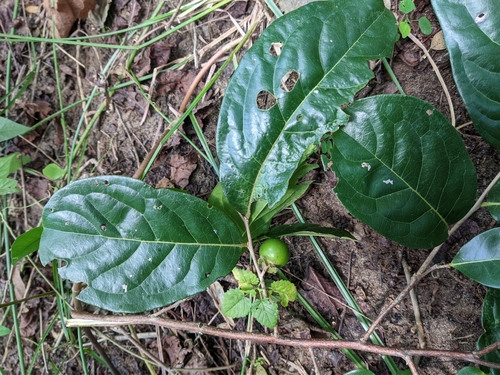
iNaturalist· cc-by-nc
(c) Nicholas John Fisher, some rights reserved (CC BY-NC), uploaded by Nicholas John Fisher
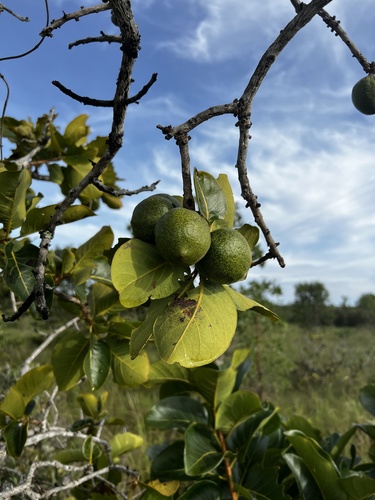
iNaturalist· cc-by-nc
(c) juju98, some rights reserved (CC BY-NC), uploaded by juju98
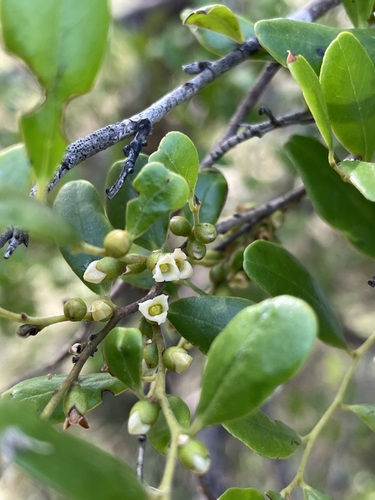
iNaturalist· cc-by-nc
(c) ccofficers, some rights reserved (CC BY-NC)
Summary
Source: WikipediaDiospyros fasciculosa, is a rainforest tree in the ebony family. Australian common names include grey ebony, clustered persimmon, ebony and Long Tom. The specific epithet fasciculus refers to a “little bundle”, as the flowers and fruits are in clusters.
Description
A medium sized tree. It grows 6-15 m high. The leaves are oval and leathery. They are shiny green on top and paler underneath. The leaves are 7-13 cm long by 2-4 cm wide. The flowers are separately male and female. These occur on separate trees. The female flowers are yellow and 0.6 cm across. The are produced in clusters in the axils of leaves. The fruit are round and orange-red. They are fleshy and about 1.2 cm across. The calyx is large and curves backwards. There are 2-6 shiny seeds inside.
Edible Uses
The soft, juicy fruit are eaten fresh.
Traditional Uses
The fruit are eaten when soft and juicy.
This uses section is brief — help expand it
Distribution
A tropical plant. It grows naturally in rainforests in Queensland and New South Wales in Australia. It grows from tropical to warm temperate regions. It does best in acid soil which is well drained and rich in humus.
Where It Grows
Australia*, Fiji, Indonesia, Malesia, New Caledonia, Pacific, SE Asia,
Cultivation
Plants can be grown from seed. Seed should be sown fresh. The flesh is removed before sowing. Plants need protection when young.
Production
Plants are slow growing.
Notes
There are about 485 species of Diospyros mostly in the tropics.
Synonyms
Also Known As
Long tom
References (9)
- Anon., 2003, Native Plants for the Fitzroy basin. Society for Growing Australian Plants Inc. (Rockhampton Branch) p 46
- Cherikoff V. & Isaacs, J., The Bush Food Handbook. How to gather, grow, process and cook Australian Wild Foods. Ti Tree Press, Australia p 199
- Cooper, W. and Cooper, W., 2004, Fruits of the Australian Tropical Rainforest. Nokomis Editions, Victoria, Australia. p 154
- Elliot, W.R., & Jones, D.L., 1984, Encyclopedia of Australian Plants suitable for cultivation. Vol 3. Lothian. p 284
- Lazarides, M. & Hince, B., 1993, Handbook of Economic Plants of Australia, CSIRO. p 82
Show all 9 references Hide references
- Melzer, R. & Plumb, J., 2011, Plants of Capricornia. Belgamba, Rockhampton. p 104
- Smith, A.C., 1981, Flora Vitiensis Nova: A New flora of Fiji, Hawai Botanical Gardens, USA Vol 2 p 740
- Townsend, K., 1994, Across the Top. Gardening with Australian Plants in the tropics. Society for Growing Australian Plants, Townsville Branch Inc. p 162
- Williams, J.B., Harden, G.J., and McDonald, W.J.F., 1984, Trees and shrubs in rainforests of New South Wales and Southern Queensland. Univ. of New England, Armidale. p 79, 95