Diospyros canaliculata
De Wild.
Flint bark
gbif· cc-by-nc-sa
MBG
gbif· cc-by-nc-sa
MBG
gbif· cc-by-nc-sa
MBG
Description
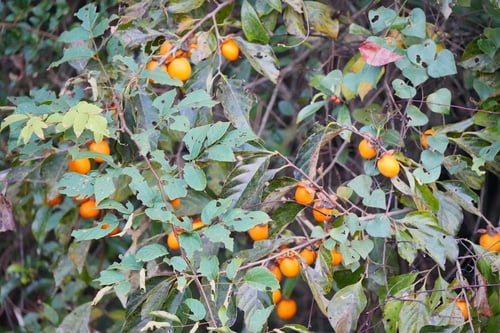
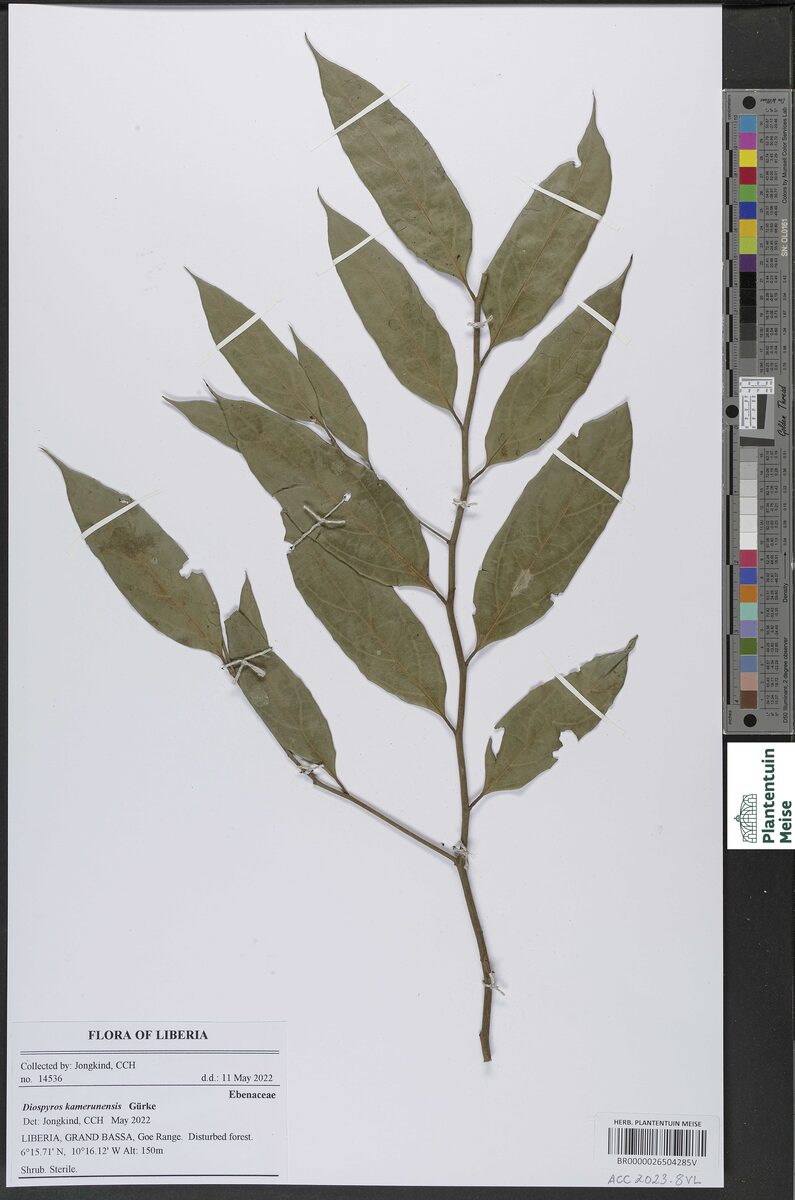
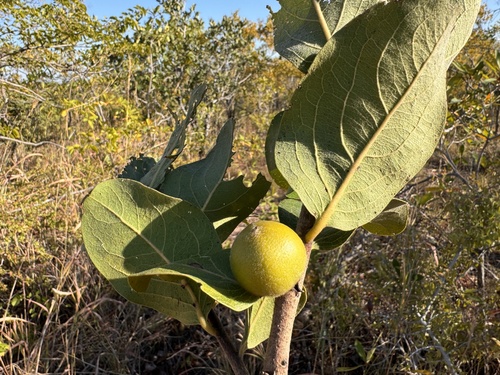
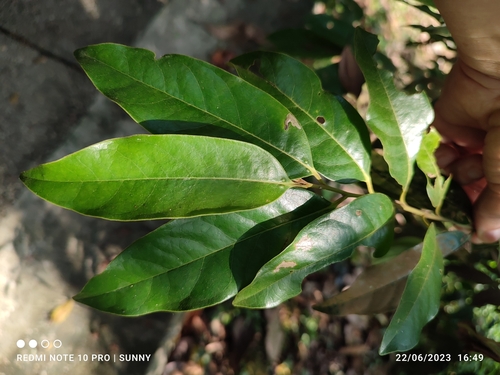
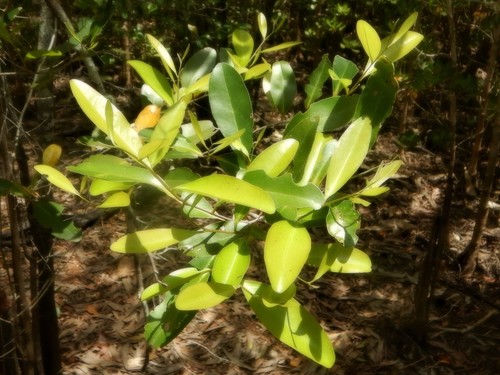
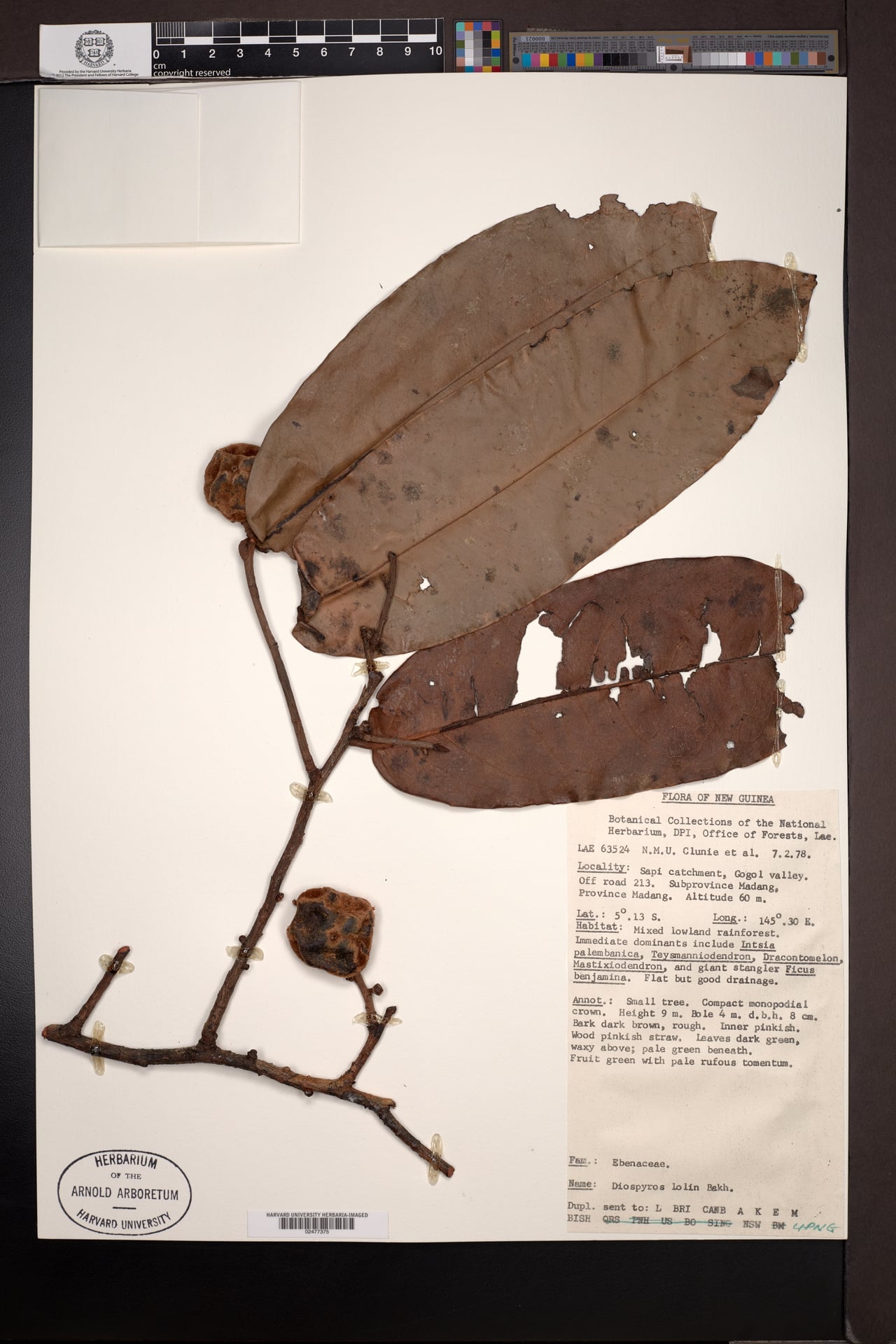
A small tree. It grows 15-20 m high. The trunk is 25 cm across. The crown is spreading and heavy. The bark is smooth. The leaves are simple and alternate. They are 25 cm long by 10 cm wide. There are 8-11 pairs of side veins. The flowers are white. They are produced on the trunk and large branches. The fruit have 4 ribs towards the top.
Edible Uses
The fruit is eaten, though the skin is caustic and must be removed.
Traditional Uses
CAUTION. The skin of the fruit is caustic.
This uses section is brief — help expand it
Medicinal Uses
The bark-extract is strongly vesicant. The freshly pulped bark is used in the treatment of leprosy - its application causes a sharp blistering and the disappearance of the leprous maculae. Experimental work has not confirmed the efficacy of this, however. The bark is torrified and pounded with rock-salt and palm-oil to a paste which is then applied to points of pain over the ribs after scarification. A bark infusion from the twigs has been shown to inhibit the growth of Staphylococcus, and has an antibiotic activity comparable with that of penicillin. The bark is also active against Streptococcus and the diphtheria bacillus at a dilution of 1 - 2%. The active substance is plumbagine (hydroxy-methyl-naphthoquinone) present at 2.25% in the trunk-bark and 0.12% in the leaves. A tannin, a saponin and a substance identical with scopoletol are also reported present. Bark-infusions have been shown to kill Paramecium, cause excitation and paralysis in fish, death in mice and hypertension in dogs. The action of the leaf-extract is similar but less marked. A trace of alkaloid has been detected in the bark of Nigerian material. A root-decoction is taken in the treatment of constipation.
Known Hazards
The bark-extract is strongly vesicant. It is a standard ingredient of arrow-poison mixtures in eastern Ivory Coast, and produces gangrene in the flesh around the wound facilitating penetration of other poisons in the mixture, especially of Mansonia spp (Sterculiaceae). The yellow fruit-pulp is caustic, oily and blackening in air. When rubbed on the skin it causes a burning sensation and turns the skin yellow. In Central African Republic it is put into arrow-poison compounds. A mixture of the fruit and leaves, combined with the root of Parquetina nigrescens, is cooked to a syrup to put on arrow and spear heads for elephant hunting. Death is said to be rapid. The antidote to this poison is to apply ground-nuts crushed with young shoots of tamarind in a poultice. The fruit and sap are used as a fish-poison; the bark and seeds are similarly used.
Distribution
It is a tropical plant. In Nigeria it has been recorded at 220 m and 1,440 m above sea level.
Where It Grows
Africa, Angola, Cameroon, Central Africa, Central African Republic, CAR, Congo DR, Liberia, Nigeria, West Africa,
Cultivation
Plants can be grown from seeds.
Propagation
Seed - in general the seed of Diospyros species has a very short viability and so should be sown as soon as possible. The flesh should be removed since this contains germination inhibitors. Sow the seed in a shady position in a nursery seedbed. The sowing media for ebony uses soil and fine sand at the ratio 3:1. The seed is planted horizontally or vertically with the radicle end down, with a sowing depth of 1 - 1½ times the thickness of seed. Distance between the seeds is 3 - 5cm. Seeds are very sensitive to desiccation during germination and early growth, so must be regularly watered at this time. Normally the seed will germinate after one week. As a rule fresh seeds have a high percentage of fertility. The seedlings develop long taproots at an early stage, often before any appreciable elongation of the shoot takes place. The growth of the seedling is decidedly slow .
Other Uses
The yellow fruit-pulp is caustic, oily and blackening in air. When rubbed on the skin it causes a burning sensation and turns the skin yellow, but nevertheless is used in Ubangi for tracing patterns on the skin which can last for several months. The wood is light yellow or slightly pink when first cut, turning bright yellow upon exposure. It is hard and heavy. It is used for building and pit-props, and its resilience leads to its use as spear-shafts. The outer layers of bark are jet black, very hard and brittle. The inner bark is yellowish and when freshly cut emits a smell of egg-yolk, turning in the course of time to violet.
Production
In Central African Republic plants flower in September and fruit from January to June.
Notes
There are about 485 species of Diospyros mostly in the tropics.
Synonyms
Also Known As
Evindi
References (4)
- Chapman, J. D. & Chapman, H. M., 2001, The Forest Flora of Taraba and Andamawa States, Nigeria. WWF & University of Canterbury. p 174
- Jardin, C., 1970, List of Foods Used In Africa, FAO Nutrition Information Document Series No 2.p 132
- Keay, R.W.J., 1989, Trees of Nigeria. Clarendon Press, Oxford. p 383
- Vivien, J., & Faure, J.J., 1996, Fruitiers Sauvages d'Afrique. Especes du Cameroun. CTA p 141