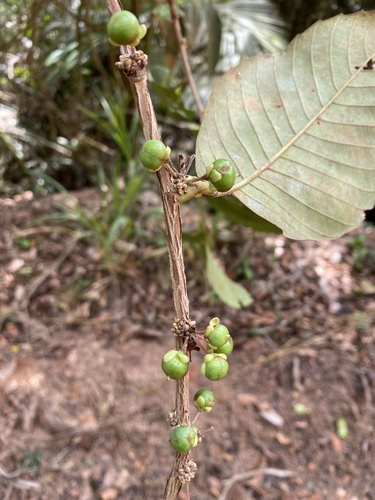
Dillenia alata
(R. Br. ex DC.) Martelli
Red beech, Golden Guinea Tree, Queensland red beech
iNaturalist· cc-by-nc
(c) sworboys, some rights reserved (CC BY-NC), uploaded by sworboys
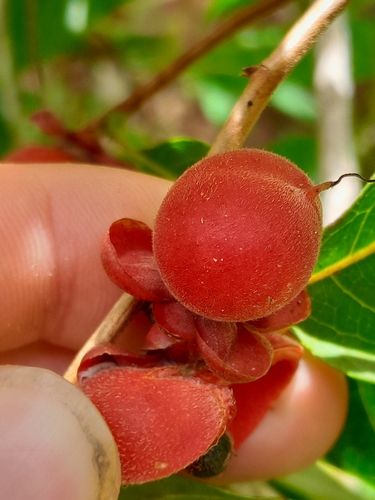
iNaturalist· cc-by-nc
(c) Colour Blind Flora Enthusiast, some rights reserved (CC BY-NC), uploaded by Colour Blind Flora Enthusiast
iNaturalist· cc-by-nc
(c) mistysea, some rights reserved (CC BY-NC)
Summary
Source: WikipediaDillenia alata, commonly known as red beech, golden guinea flower or golden guinea tree, is a tree in the Dilleniaceae family, found in New Guinea, and the Northern Territory and Queensland in Australia. It has found some popularity as an ornamental for tropical parks and large gardens due to its colourful flowers and fruit.
Description
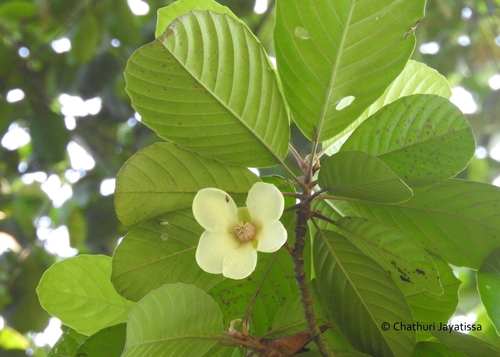
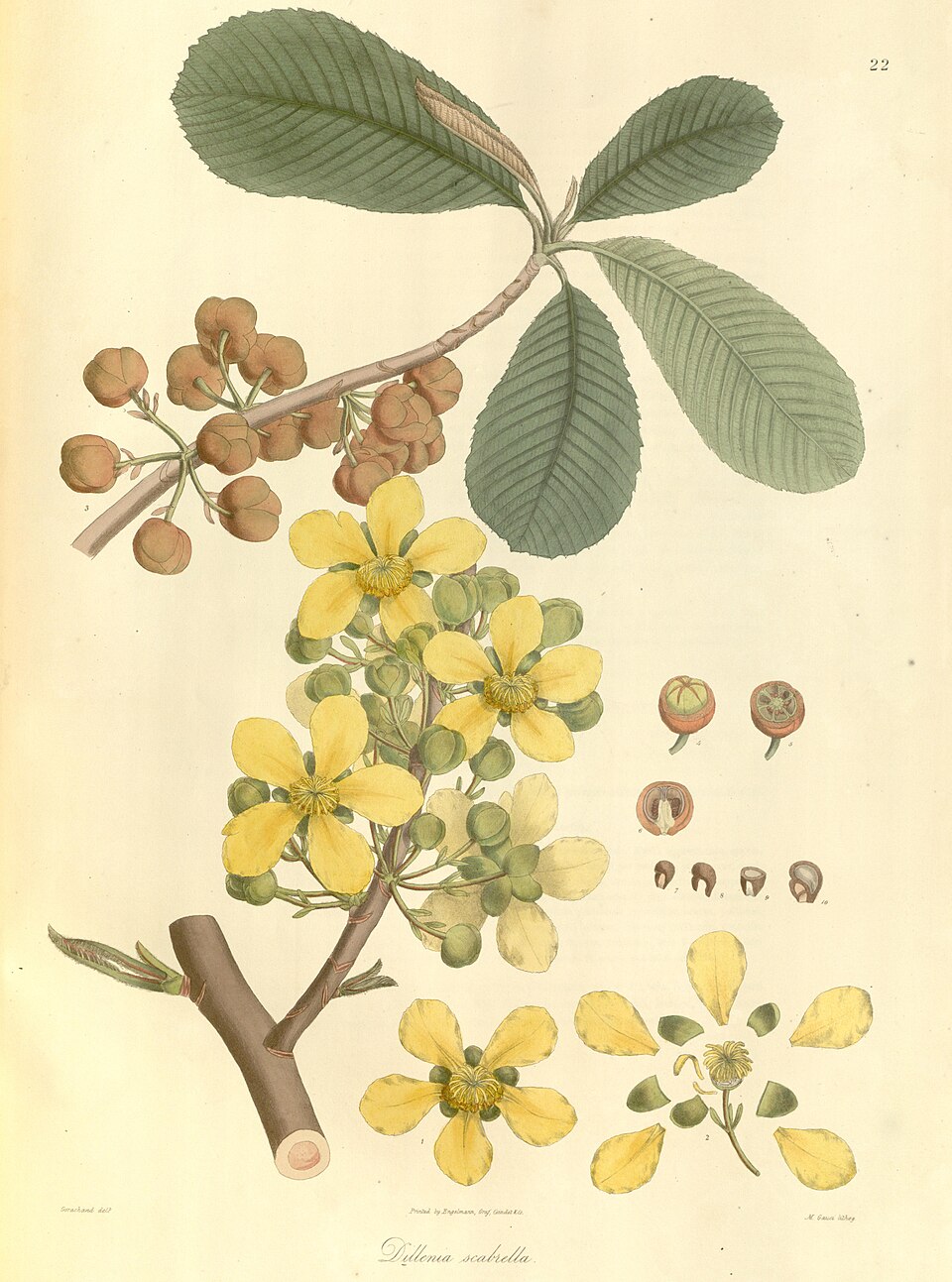
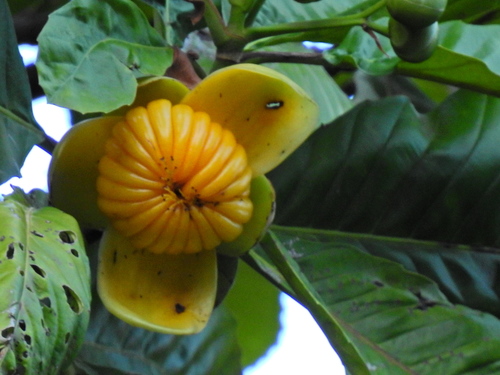
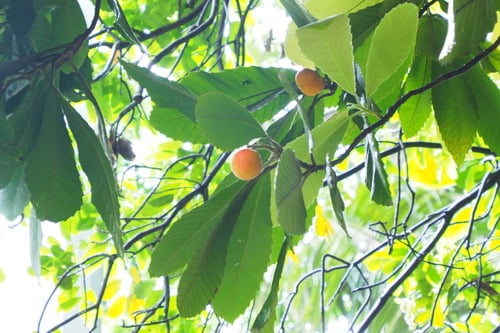
A small to medium sized tree. It grows to 10-18 m high and spreads to 4-10 m across. The trunk is smoothly round. It has a dense rounded evergreen crown. The bark is loose and flaky. It is reddish brown and bright in colour. The leaves are smooth and produced one after another along the stem. They are often grouped into rings around the stem. They are a rich glossy green. They are broadly oval with a lobe at the base. The leaf blade is 13-25 cm long by 8-12 cm wide. The veins show up clearly and they are raised underneath the leaf. The tip of the leaf is rounded. The leaf stalk has prominent wings and is 5.5 cm long. The flowers are bright yellow. They have 5 petals and 5 spreading lobes. The flowers are 5-8 cm across. There are usually 2-4 flowers together in a cluster at the end of a branch. The fruit is smooth, open, flat and fleshy. They are 4-4.5 cm across. There are 6-8 segments. These open out in a spreading fashion. The fruit are pinkish red when ripe. The fruit contain small brown seeds in a white seed layer. The seed are 5 mm across.
Edible Uses
The white fleshy aril layer of the fruit can be eaten raw, and the small brown seeds are eaten raw, especially by children.
Traditional Uses
The seeds are eaten raw especially by children. The white fleshy part of the fruit (aril) can be eaten.
This uses section is brief — help expand it
Distribution
A tropical plant. It occurs in dense coastal monsoon forest near freshwater streams. It needs adequate moisture and a well drained soil. It suits a humid place. It is drought and frost tender. In the Cairns Botanical Gardens. It suits hardiness zones 10-12.
Where It Grows
Australia*, Malaysia, Malesia, Pacific, Papua New Guinea, PNG, SE Asia,
Cultivation
It can be grown from fresh seeds. It can also be grown from cuttings.
Production
It is a fast growing tree. In Australia flowering is in October to January and fruit occur in October to November. (September to February).
Other Information
The seeds are eaten especially by children.
Notes
There are about 60 Dillenia species.
Synonyms
References (25)
- Barwick, M., 2004, Tropical and Subtropical Trees. A Worldwide Encyclopedic Guide. Thames and Hudson p 145
- Beasley, J., 2011, Plants of Tropical North Queensland - the compact guide. Footloose publications. p 25
- Bodkin, F., 1991, Encyclopedia Botanica. Cornstalk publishing, p 343
- Brock, J., 1993, Native Plants of Northern Australia, Reed. p 138
- Cherikoff V. & Isaacs, J., The Bush Food Handbook. How to gather, grow, process and cook Australian Wild Foods. Ti Tree Press, Australia p 199
Show all 25 references Hide references
- Cooper W & Cooper W T, 1994, Fruits of the Rain Forest. RD Press p 92
- Cooper, W. and Cooper, W., 2004, Fruits of the Australian Tropical Rainforest. Nokomis Editions, Victoria, Australia. p 150
- Cronin, L., 1989, The Concise Australian Flora. Reed. p 151
- Cundall, P., (ed.), 2004, Gardening Australia: flora: the gardener's bible. ABC Books. p 501
- Elliot, W.R., & Jones, D.L., 1984, Encyclopedia of Australian Plants suitable for cultivation. Vol 3. Lothian. p 275 (Photo)
- Etherington, K., & Imwold, D., (Eds), 2001, Botanica's Trees & Shrubs. The illustrated A-Z of over 8500 trees and shrubs. Random House, Australia. p 262
- Hearne, D.A., & Rance, S.J., 1975, Trees for Darwin and Northern Australia. AGPS, Canberra p 52
- Hibbert, M., 2002, The Aussie Plant Finder 2002, Florilegium. p 87
- Hinton, B & B., 1982, A Wilderness in Bloom. Wildflowers of tropical Australia. p 60
- Holliday, I., 1989, A Field Guide to Australian Trees. Hamlyn. p 118
- Jackes, B.R., 2001, Plants of the Tropics. Rainforest to Heath. An Identification Guide. James Cook University. p 50
- Jones D, L, 1986, Ornamental Rainforest Plants in Australia, Reed Books, p 211
- Lazarides, M. & Hince, B., 1993, Handbook of Economic Plants of Australia, CSIRO. p 81
- Morley, B.D., & Toelken, H.R., (Eds), 1983, Flowering Plants in Australia. Rigby. p 88
- Nicholson, N & H., 1996, Australian Rainforest Plants 2, Terania Rainforest Publishing. NSW. p 25
- Levitt, D., 1981, Plants and people. Aboriginal uses of plants on Groote Eylandt. Australian Institute of Aboriginal Studies, Canberra. p 91
- Radke, P & A, Sankowsky, G & N., 1993, Growing Australian Tropical Plants. Frith & Frith, Australia. p 32
- Scarth-Johnson, V., 2000, National Treasures. Flowering Plants of Cooktown and Northern Australia. Vera Scarth-Johnson Gallery Association. Cooktown, Australia. p 56
- Townsend, K., 1994, Across the Top. Gardening with Australian Plants in the tropics. Society for Growing Australian Plants, Townsville Branch Inc. p 159
- World Checklist of Useful Plant Species 2020. Royal Botanic Gardens, Kew