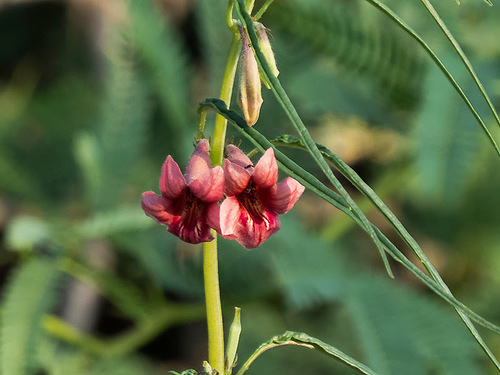
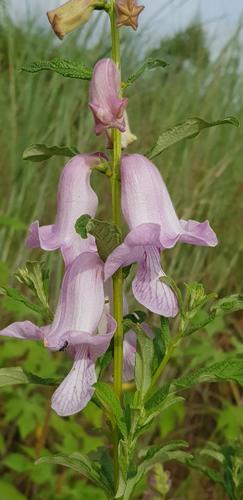
Dicerocaryum zanguebarium
(Lour.) Merr.
Boot protectors
iNaturalist· cc-by-nc
(c) Moira FitzPatrick, some rights reserved (CC BY-NC), uploaded by Moira FitzPatrick
iNaturalist· cc-by-nc
(c) Pete Woodall, some rights reserved (CC BY-NC), uploaded by Pete Woodall
iNaturalist· cc-by-nc
(c) Tony Benn, some rights reserved (CC BY-NC), uploaded by Tony Benn
Description
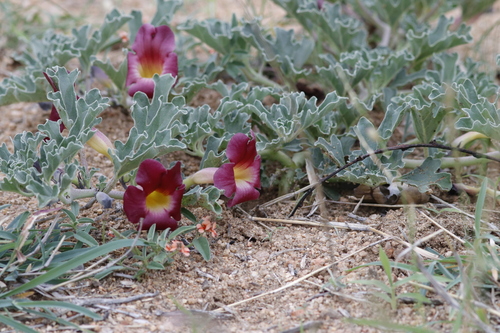
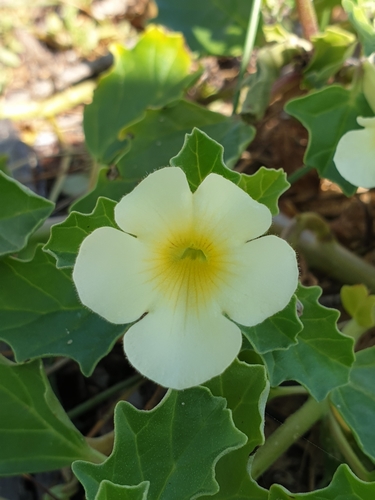
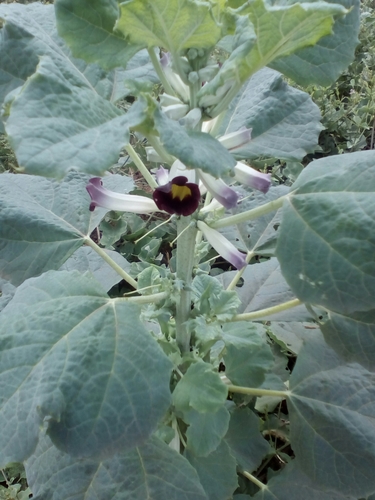
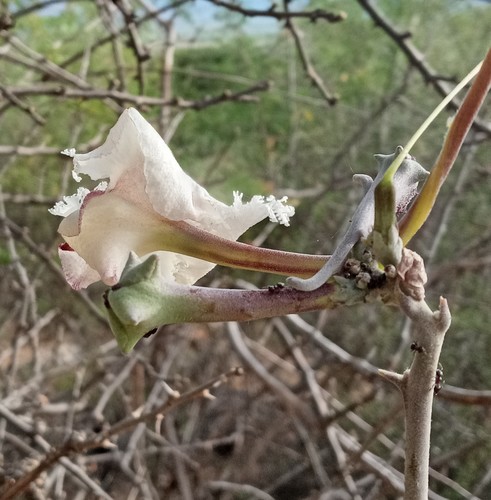
A trailing annual herb. It can grow 2 m long. It has a thick woody rootstock. The leaves are opposite and lobed. They are green above and silvery white underneath. The flowers are tube shaped with 2 lips. They occur singly in the axils of the leaves. The are erect above the main stem. They are reddish. The fruit is a flattened disk. It has 2 hard prongs on the upper surface.
Edible Uses
The leaves are cooked and eaten.
Traditional Uses
The leaves are cooked and eaten.
This uses section is brief — help expand it
Distribution
A tropical plant. It grows in the sandveld. It is often on poor soils. In Zimbabwe it grows between 1,470-1,650 m above sea level.
Where It Grows
Africa, Angola, Botswana, Central Africa, East Africa, Malawi, Mozambique, South Africa, Southern Africa, Tanzania, Zambia, Zimbabwe,
Also Known As
Inkunane, Liseto, Ruredzo, Unembwe
References (3)
- Fowler, D. G., 2007, Zambian Plants: Their Vernacular Names and Uses. Kew. p 52
- Tredgold, M.H., 1986, Food Plants of Zimbabwe. Mambo Press. p 7
- www.zimbabweflora.co.zw 2011