Dendrocalamus strictus
(Roxb.) Nees
Male Bamboo, Calcutta stricta
iNaturalist· cc-by-nc-sa
(c) Dinesh Valke, some rights reserved (CC BY-NC-SA)
iNaturalist· cc-by-nc
(c) Rodriguez Ariel, some rights reserved (CC BY-NC)
iNaturalist· cc-by-nc
(c) SONU KUMAR, some rights reserved (CC BY-NC)
Summary
Source: WikipediaDendrocalamus strictus is a bamboo species belonging to the Dendrocalamus genus. The culms (stems) are often solid. Common names include male bamboo, solid bamboo, and Calcutta bamboo.
Description
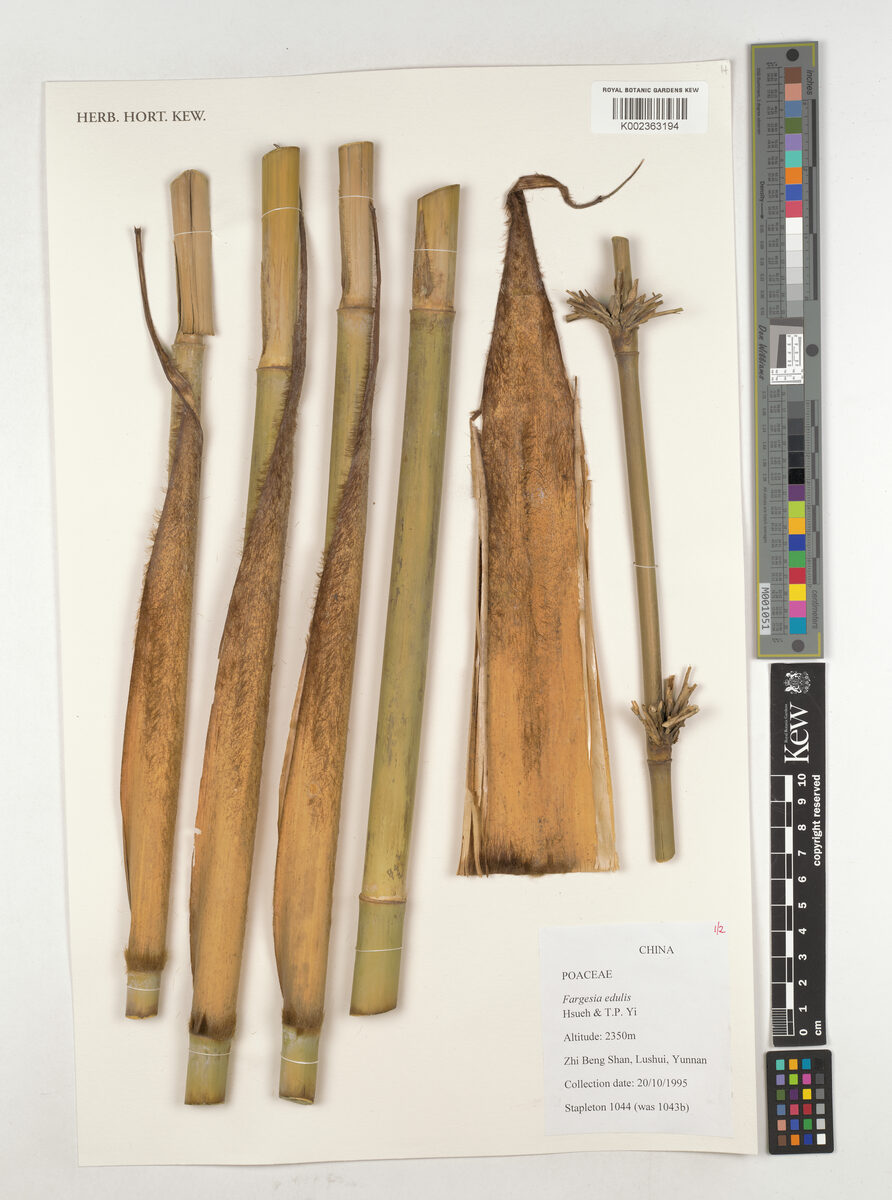
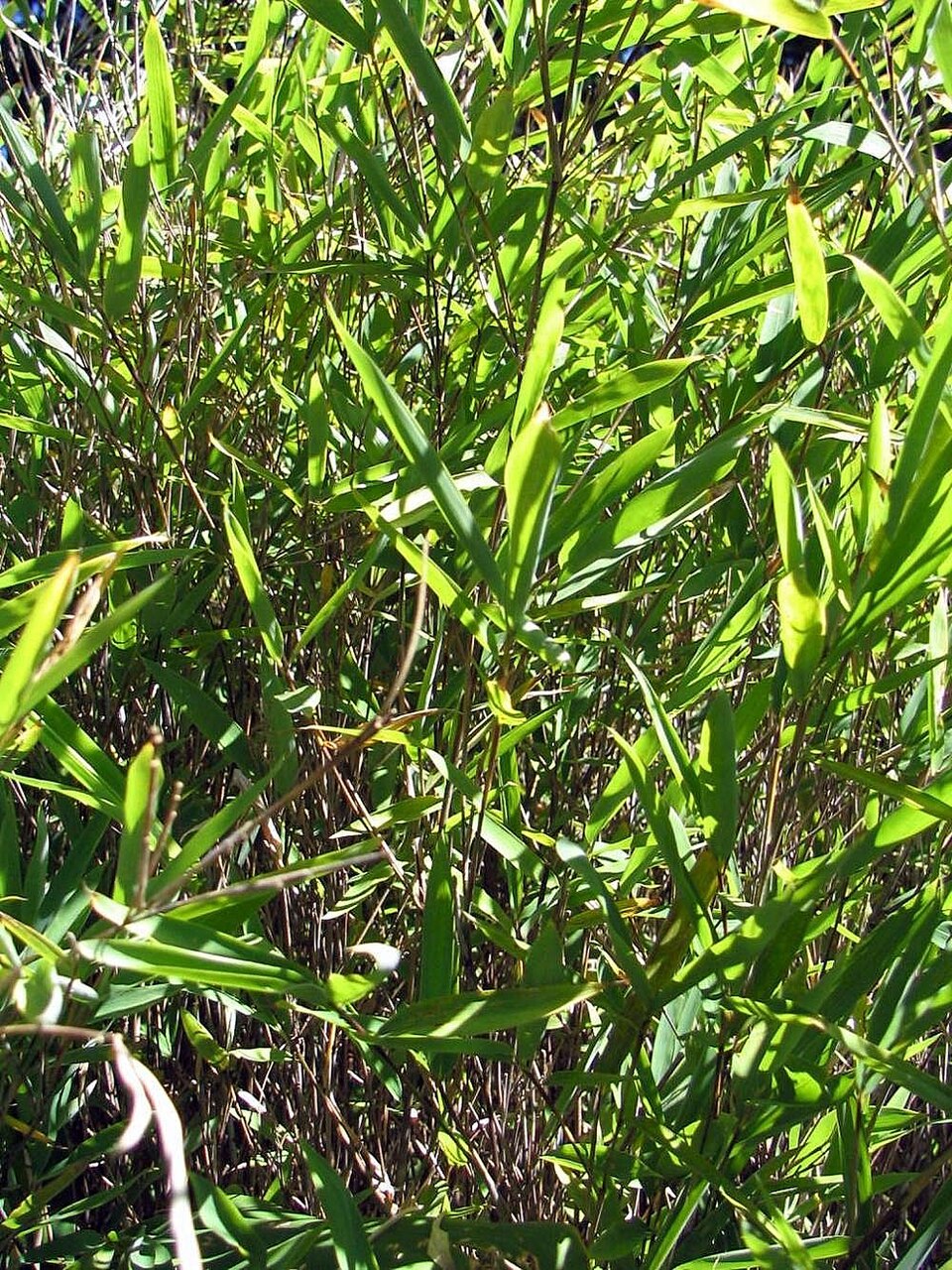
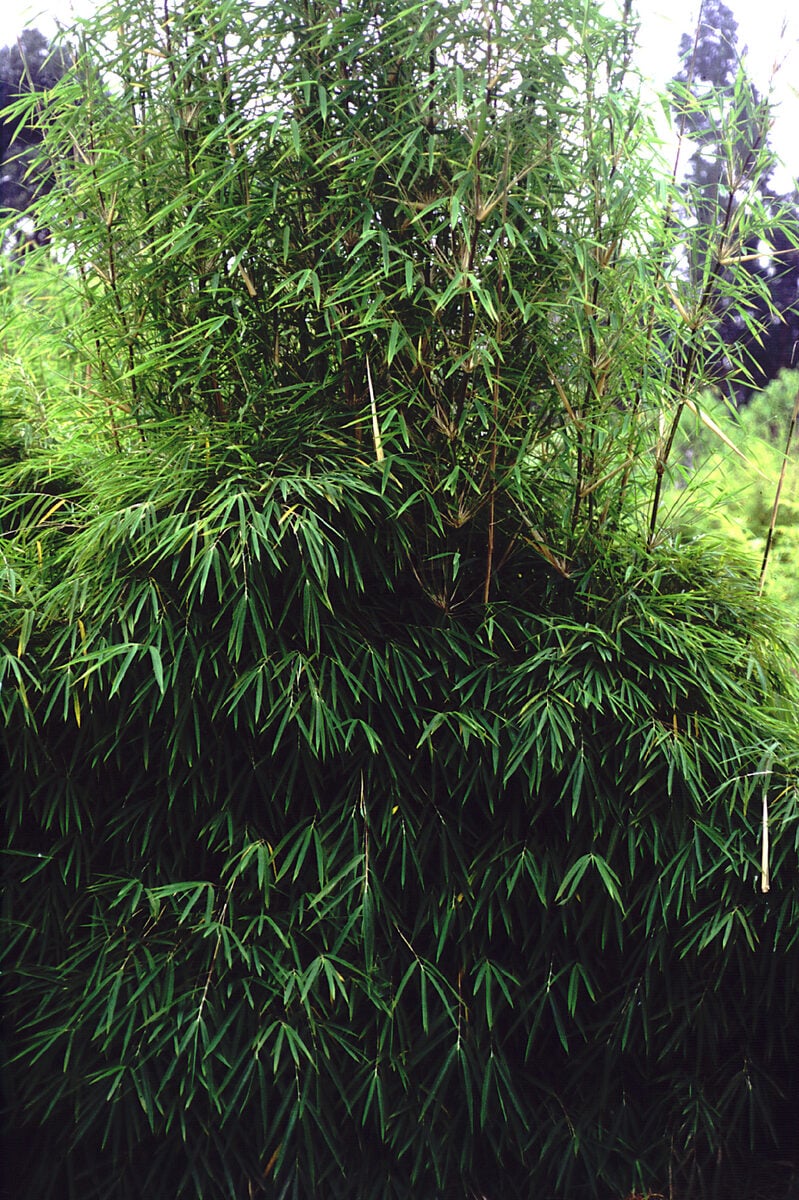
A bamboo. It is densely tufted. In moist areas it keeps its leaves and in dry areas it loses them. It grows about 8-16 m high. The stems are 4-10 cm across. They are often curved. The nodes are swollen. The lower nodes often root. The internodes are 30-45 cm long. The stem sheath is hairless. The leaves are narrowly sword shaped. It is 25 cm long by 3 cm wide. They have fine hairs on both surfaces. The flowers are brown in round heads. The fruit is a grain.
Edible Uses
Young stems are cooked and eaten as a vegetable. The stems are 6–10 cm in diameter. The seed is also edible.
Traditional Uses
Young shoots are cooked as a vegetable or pickled. They are cut into pieces and boiled then cooked with rice. The seeds are also roasted and eaten. There is also an edible manna that develops on this plant. The roots are pounded into a powder.
Medicinal Uses
A decoction of the leaves, nodes, and siliceous matter is used in traditional medicine.
Distribution
A tropical plant. t grows in tropical and subtropical places. The best annual temperature is between 20-30°C. It can stand temperatures down to -5°C and up to 45°C. A rainfall between 1000-3000 mm is best. It can tolerate drought and does best with lower humidity. It can grow up to 1,200 m altitude. It does best on sandy soils with a pH of 5.5-7.5. In the Cairns Botanical Gardens. I
Where It Grows
Africa, Asia, Australia, Bangladesh, Bhutan, Caribbean, Central America, China, Cuba, East Africa, Ghana, Guam, Himalayas, India*, Indochina, Indonesia, Laos, Malaysia, Myanmar, Nepal, Northeastern India, NW India, Pacific, Pakistan, Philippines, Puerto Rico, SE Asia, Sikkim, Sri Lanka, Taiwan, Thailand, USA, Vietnam, West Africa, West Indies, Zimbabwe,
Cultivation
Plants are grown from seeds or by splitting the rhizome. It can also be grown with difficulty from culm or stem cuttings and by tissue culture. Seed need to be planted fresh. They lose their viability is 3 months. Seed once dried and stored in cool conditions can be kept for 3 years.
Propagation
Seed in this genus is generally short-lived and should be sown within 2–3 months of harvest. Sow in containers in a lightly shaded position, barely covering the seed. Germination usually takes place readily. Prick seedlings out into individual pots as soon as they are large enough to handle, and plant out into permanent positions when 20 cm tall. Plants may remain in a low-growing juvenile state for several years — cutting culms to ground level can stimulate taller adult growth. Rhizome, culm, and branch cuttings can also be used. Propagules are raised in a nursery until rooted, then planted out in the field before or during the first half of the rainy season.
Other Uses
The plant is suitable for reclaiming ravine land. The stems are put to a wide range of uses including scaffolding, bridges, poles, agricultural implements, and other large bamboo structures. They are also split for making walking sticks, furniture, and baskets, and are extensively used as a raw material in paper mills. Culm harvesting may begin 3–4 years after a clump has started producing culms of maximum size. Only culms older than 3 years are suitable for harvest, and cutting should never take place during the growing season. Culms should be cut no lower than 30 cm above ground level and not below the 2nd node. Debris and cut branches must be removed completely after harvesting.
Production
They take 6-13 years to produce a mature clump. The new rhizomes bend downwards before curving up to produce new shoots. Clumps deepen and widen. Up to 20 new culms can be produced each year from a large clump. Up to 200 can be produced from very large clumps. Only a few culms may die after flowering and not the whole clump. The time till flowering can be 20-65 years.
Other Information
It is a cultivated food plant. Shoots are sold in markets.
Notes
There are about 29 Dendrocalamus species. Chemical composition 100 g edible portion. Shoots: Water 90 g, Protein 2.9 g, Fat 0.3 g, carbohydrate 2 g, fibre 1 g, ash 1 g, Ca 15 mg, Fe 0.6 mg, P 46 mg, Vit A 133 IU, Vit C 0.2 mg.
Nutrition
| Part | Moisture | kJ | kcal | Protein | Vit A | Vit C | Iron | Zinc |
|---|---|---|---|---|---|---|---|---|
| Seeds | — | — | 13.5 | — | — | — | — | — |
| Leaves | — | — | — | — | 2.4 | 2.9 | — | — |
| Shoots | 70.4 | — | — | 2.4 | — | 2 | — | — |
Synonyms
Also Known As
An-kuang, Bambu besi, Bambu batu, Bans Ka Ban, Bans kaban, Bans khurd, Basa, Bhariyel, Bidiru, Bidiru kalale, Biru mad, Buloh batu, Calcutta bamboo, Delea bance, Heedi, Hmyin-wa, Iudo, Kal, Kali musali, Kalmungil, Karai bans, Karail, Kavil, Keltha, Kiri bidiru, Lathi bans, Manwal, Mungil, Myinwa, Nakor vans, Nakur bans, Narbans, Phai-sang, Phai sang dam, Ranj, S'ang, Sadanapa veduru, Salia bhanso, Salimbo bhanso, Solid bamboo, Tama bans, Vansha, Vans nibhaaji, Vaste, Veddur, Veduru, Velu
References (57)
- Abbiw, D.K., 1990, Useful Plants of Ghana. West African uses of wild and cultivated plants. Intermediate Technology Publications and the Royal Botanic Gardens, Kew. p 42
- Ambasta, S.P. (Ed.), 2000, The Useful Plants of India. CSIR India. p 166
- Anderson, E. F., 1993, Plants and people of the Golden Triangle. Dioscorides Press. p 209
- Bandyopadhyay, S. et al, 2009, Wild edible plants of Koch Bihar district, West Bengal. Natural Products Radiance 8(1) 64-72
- Behera K. K., et al, 2008, Wild Edible Plants of Mayurbhanj District, Orissa, India. J. Econ. Taxon. Bot. Vol. 32 (Suppl.) pp 305-314
Show all 57 references Hide references
- Bhogaonkar, P. Y. & Devarkar, V. D., 2018, Inventory for ethnovegetable knowledge of the tribals of Satpura hill area-Melghat, Dist. Amravati (India), Plantae Scientia, 2018; Vol. 01 Issue 01: 01-08
- Bodkin, F., 1991, Encyclopedia Botanica. Cornstalk publishing, p 335
- Burkill, I.H., 1966, A Dictionary of the Economic Products of the Malay Peninsula. Ministry of Agriculture and Cooperatives, Kuala Lumpur, Malaysia. Vol 1 (A-H) p 794
- Chandrakumar, P., et al, 2015, Ethnobotanical studies of wild edible plants of Gond, Halba and Kawar tribes of Salekasa Taluka, Gondia District, Maharashtra State, India. International Research Journal of Pharmacy 6(8)
- Chauhan, S. H., et al, 2018, Consumption patterns of wild edibles by the Vasavas: a case study from Gujarat, India. Journal of Ethnobiology and Ethnomedicine (2018) 14:5
- Dangol, D. R. et al, 2017, Wild Edible Plants in Nepal. Proceedings of 2nd National Workshop on CUAOGR, 2017.
- Dey, A. & Mukhererjee, A., 2015, Living and Survival Amidst Hunger: Wild Edible Botanicals as a Prime Forest Productivity in the Rural Purulia District, West Bengal, India from Colonial to Present. Research Journal of Forestry 9(3): 71-86
- Dobriyal, M. J. R. & Dobriyal, R., 2014, Non Wood Forest Produce an Option for Ethnic Food and Nutritional Security in India. Int. J. of Usuf. Mngt. 15(1):17-37
- Dransfield, S. & Widjaja, EA., 1995, Plant Resources of South East Asia. PROSEA No. 7 Bamboos. Leiden. p 93
- Facciola, S., 1998, Cornucopia 2: a Source Book of Edible Plants. Kampong Publications, p 46
- Hibbert, M., 2002, The Aussie Plant Finder 2002, Florilegium. p 84
- http://www.plantnames.unimelb.edu.au/sorting/Bamboos_Edible.html
- Jadhav, R., et al, 2015, Forest Foods of Northern Western Ghats: Mode of Consumption, Nutrition and Availability. Asian Agri-History Vol. 19, No. 4: 293-317
- Joshi, N., et al, 2007, Traditional neglected vegetables of Nepal: Their sustainable utilization for meeting human needs. Tropentag 2007. Conference on International Agricultural Research for Development.
- Kar, A., et al, 2013, Wild Edible Plant Resources used by the Mizos of Mizoram, India. Kathmandu University Journal of Science, Engineering and Technology. Vol. 9, No. 1, July, 2013, 106-126
- Khan, M. & Hussain, S., 2014, Diversity of wild edible plants and flowering phenology of district Poonch (J & K) in the northwest Himalaya. Indian Journal of Sci, Res. 9(1): 032-038
- Kiran, K. C., et al, 2019, Diversity and Seasonal Availability of Potential Wild Edible Plants from Vidarbha Region of Maharashtra State, India. Int.J.Curr.Microbiol.App.Sci (2019) 8(2): 1434-1446
- Kumar, G. M. P & Nagayya, W., et al, 2016, Nutritional Analysis of Edible Wild Plants use by Hakki Pikki Tribes of Hassan District, Karnataka, India, Int J Pharm Pharm Sci, Vol 8, Issue 8, 390-393
- LAL et al,
- Linnaea 9:476. 1834
- Maheshwari, J.K., & Singh, J.P., 1984, Contribution to the Ethnobotany of Bhoxa Tribe of Bijnor and Pauri Garhwal Districts, U.P. J. Econ. Tax. Bot. Vol.5. No.2 pp 253-
- Manandhar, N.P., 2002, Plants and People of Nepal. Timber Press. Portland, Oregon. p 194
- Masoodi, H. U. R. & Sundriyal, R. C., 2020, Richness of non-timber forest products in Himalayan communities—diversity, distribution, use pattern and conservation status. Journal of Ethnobiology and Ethnomedicine 16:56
- Menninger, E.A., 1977, Edible Nuts of the World. Horticultural Books. Florida p 147
- Mishra, S. & Chaudhury, S. S., 2012, Ethnobotanical flora used by four major tribes of Koraput, Odisha, India. Genetic Resources Crop Evolution 59:793-804
- Pandy, R. K. & Saini, S. K., 2007, Edible plants of tropical forests among tribal communities of Madhya Pradesh. Indian Journal of Traditional Knowledge. 6(1), pp 185-190
- Prabha, Y. P., et al, 2010, Documentation of Wild Edible Plants of Melghat Forest, Dist. Amravati, Maharashtra State, India. Ethnobotanical Leaflets 14: 751-58, 2010.
- Pradhan, R., et al, 2020, Potential Wild Edible Plants and its Significance in Livelihood of Indigenous People of Male Mahadeshwara Hills, Karnataka. Economic Affairs Vol. 64, No. 4 pp. 01-14
- Prafulla, S., 2017, Wild Food Diversity of Nawegaon-Nagzira Tiger Reserve in Gondia-Bhandara district of Maharashtra, India. Int. J. of Life Sciences, 2017, Vol. 5 (4): 620-626
- Prashanth Kumar, G.M. and Shiddamallayya, N., 2015, Ethnobotanical Study of Less Known Wild Edible Plants of Hakki Pikki Tribes of Angadihalli, Hassan District, Karnataka. Journal or Medicinal Plants Studies 3(5):80-85
- PROSEA (Plant Resources of South East Asia) handbook, Volume 2, 1991, Edible fruits and nuts.
- Purseglove, J.W., 1972, Tropical Crops. Monocotyledons. Longmans p 133
- Radha, B., et al, 2013, Wild Edible Plant Resources of the Lohba Range of Kedarnath Forest Division (KFD), Garhwal Himalaya, India. Int. Res J. Biological Sci. Vol. 2 (11), 65-73
- Ray, A., et al, 2020, How many Wild Edible Plants do we Use. Frontiers in Sustainable Food Systems. 4:56 p 12
- Reddy, B. M., 2012, Wild edible plants of Chandrapur district, Maharashtra, India. Indian Journal of Natural Products and Resources. 3(1) pp 110-117
- Reddy, K. N. et al, 2007, Traditional knowledge on wild food plants in Andhra Pradesh. Indian Journal of Traditional Knowledge. Vol. 6(1): 223-229
- Rijal, A., 2011, Surviving on Knowledge: Ethnobotany of Chepang community from mid-hills of Nepal. Ethnobotany Research & Applications 9:181-215
- Sahni, K.C., 2000, The Book of Indian Trees. Bombay Natural History Society. Oxford. p 189
- Saidulu, P. et al, 2015, Ethnobotanical Knowledge Studied in Pocharam Wildlife Sanctuary, Telangana, India. Not Sci Biol, 2015, 7(2):164 -170
- Setiya, A. V., et al, 2016, Exploration and documentation of some wild edible plants used by the aboriginals from Gadchiroli District (M.S.) India. International Advanced Research Journal in Science, Engineering and Technology. 3(7)
- Singh, H.B., Arora R.K.,1978, Wild edible Plants of India. Indian Council of Agricultural Research, New Delhi. p 84
- Singh, V. and Singh, P., 1981, Edible Wild Plants of Eastern Rajasthan. J. Econ. Tax. Bot. Vol 2 pp 197-207
- Srichaiwong, P., et al, 2014, A Study of the Biodiversity of Natural Food Production to Support Community Upstream of Chi Basin, Thailand. Asian Social Science 10 (2):
- Sukarya, D. G., (Ed.) 2013, 3,500 Plant Species of the Botanic Gardens of Indonesia. LIPI p 841
- Toppo, P. et al, 2016, Wild edible plants of Dhamtari district of Chhattisgarh, India. Van Sangyan Vol. 3, No. 4
- USDA, ARS, National Genetic Resources Program. Germplasm Resources Information Network - (GRIN). [Online Database] National Germplasm Resources Laboratory, Beltsville, Maryland. Available: www.ars-grin.gov/cgi-bin/npgs/html/econ.pl (10 April 2000)
- WATT,
- Wiersema, J. H. & Leon, B., 2013, World Economic Plants. A Standard Reference CRC Press. 2nd Ed. p 239
- Wild edible plants of Himachal Pradesh
- World Checklist of Useful Plant Species 2020. Royal Botanic Gardens, Kew
- Yadav, D. K., 2011, Study on Biodiversity and Edible Bioresources of Betla National Park, Palamu, Jharkhand (India). The 2011 Las Vegas International Academic Conference.
- Zeven, A. C. & de West, J. M. J., 1982, Dictionary of cultivated plants and their regions of diversity. Wageningen. p 53 (As Bambusa strictus)