Dahlia pinnata
Cav.
Dahlia, Garden dahlia
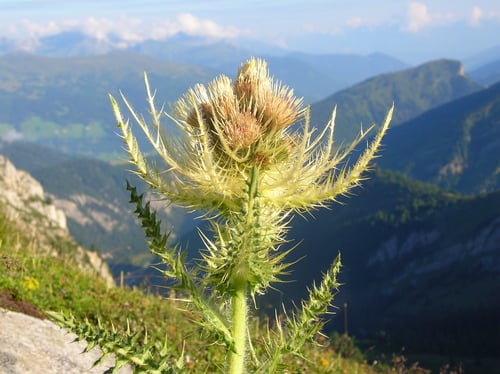
iNaturalist· cc-by-nc
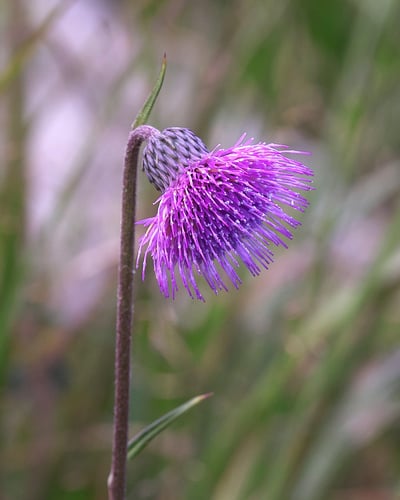
(c) cabierer, some rights reserved (CC BY-NC)
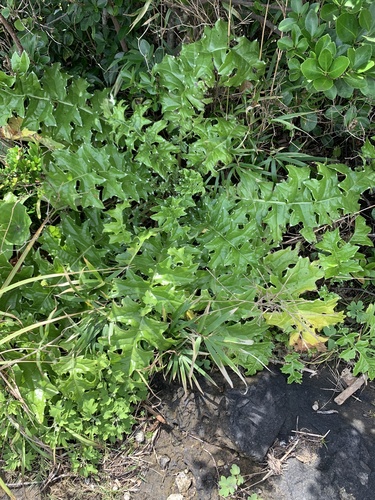
iNaturalist· cc-by-nc
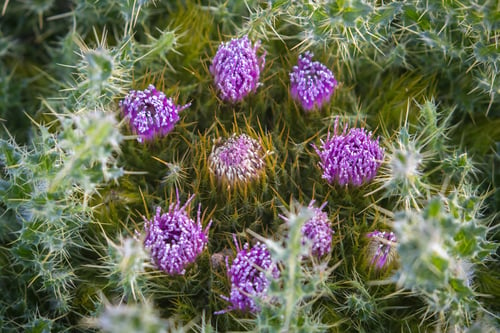
(c) chanti2481, some rights reserved (CC BY-NC)
iNaturalist· cc-by-nc
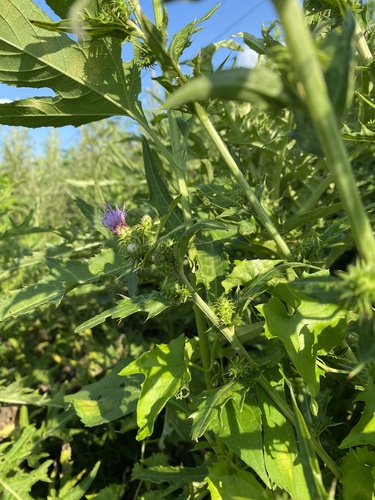
(c) Alejandro M S, some rights reserved (CC BY-NC), uploaded by Alejandro M S
Summary
Source: WikipediaDahlia pinnata (D. × pinnata) is a species in the genus Dahlia, family Asteraceae, with the common name garden dahlia. It is the type species of the genus and is widely cultivated.
Description
A daisy family herb. It keeps growing from year to year. It grows 1.5-2 m high and spreads 50-90 cm wide. The leaves have purple tints. They are divided into 3 or 5 segments. The flowers are in clustered flower-heads.
Edible Uses
The flower petals can be used in salads. The tuber is cooked as a vegetable and has a bitter flavour. A sweet extract of the tuber, called dacopa, is used as a beverage or flavouring — mixed with hot or cold water or sprinkled on ice cream. Its naturally sweet, mellow taste is said to combine characteristics of coffee, tea, and chocolate. The root is rich in the starch inulin which, while not absorbed directly by the body, can be converted into fructose, a sweetening substance suitable for use by diabetics.
Traditional Uses
The tubers are eaten as a vegetable. They are high in inulin. It is used in bread. Flower petals can be eaten in salads. The sweet extract from the tuber is used for a drink or flavouring. It is mixed with hot or cold water or milk or sprinkled on ice cream.
Medicinal Uses
No medicinal uses are known for this plant.
Known Hazards
The plant's phytostabilization properties regarding arsenic could lower the risk of the harmful carcinogen to humans.
Distribution
It is a warm temperate to subtropical plant. It is best in light to medium well-drained soil. It needs an open sunny position. It is resistant to frost but damaged by drought. It suits hardiness zones 8-11.
Where It Grows
Andes, Argentina, Asia, Australia, Bolivia, Central America, Central Asia, Colombia, Guatemala, Honduras, India, Korea, Mexico*, Myanmar, North America, SE Asia, South America, Tajikistan,
Cultivation
An easily grown plant so long as the soil does not dry out. It requires a deep rich soil and a sunny position, disliking shade. The growing plant is very frost-tender, though the tubers are somewhat hardier tolerating temperatures down to about -5°c. However, these tubers are not reliably hardy if left in the ground over winter in Britain. They are best harvested after the foliage is killed off by frost and then stored in a cool but frost-free place over the winter, planting out in April/May.
Propagation
Sow seed in a greenhouse from late winter to mid-spring; germination typically takes 1–3 weeks at 20°C. Prick seedlings into individual pots when large enough to handle and grow on under glass for at least the first winter, then plant out in late spring or early summer after the last expected frosts. Take cuttings of young basal shoots in early spring — tubers are usually brought into the greenhouse in late winter to encourage early growth, and shoots are removed once large enough. Division is also possible: tubers are harvested in autumn and can be divided into individual sections at planting time in spring, each portion needing a growing point.
Other Uses
An orange dye is obtained from the flowers and seed heads.
Notes
There are about 30 Dahlia species and many cultivated varieties.
Synonyms
Also Known As
Mogok-pan
References (13)
- Ambasta, S.P. (Ed.), 2000, The Useful Plants of India. CSIR India. p 160 (As Dahlia rosea)
- Cundall, P., (ed.), 2004, Gardening Australia: flora: the gardener's bible. ABC Books. p 466
- Facciola, S., 1998, Cornucopia 2: a Source Book of Edible Plants. Kampong Publications, p 38
- Hedrick, 1919,
- Hibbert, M., 2002, The Aussie Plant Finder 2002, Florilegium. p 82
Show all 13 references Hide references
- Icon. 1(3):57, t. 80. 1791
- Icon. 3(2):33, t. 265. 1795-1796 (As Dahlia rosea)
- Kermath, B. M., et al, 2014, Food Plants in the Americas: A survey of the domesticated, cultivated and wild plants used for Human food in North, Central and South America and the Caribbean. On line draft. p 296
- Lim, T. K., 2015, Edible Medicinal and Non Medicinal Plants. Volume 9, Modified Stems, Roots, Bulbs. Springer p 33
- Lim, T. K., Edible Medicinal and Non-Medicinal Plants Volume 7 Flowers
- Plants for a Future database, The Field, Penpol, Lostwithiel, Cornwall, PL22 0NG, UK. http://www.pfaf.org (Also as Dahlia rosea)
- Recher, P, 2001, Fruit Spirit Botanical Gardens Plant Index. www.nrg.com.au/~recher/ seedlist.html p 5
- World Checklist of Useful Plant Species 2020. Royal Botanic Gardens, Kew