Glebionis segetum
(L.) Fourr.
Corn marigold, Corn chrysanthemum
iNaturalist· cc-by-nc-sa
(c) Sarah Gregg, some rights reserved (CC BY-NC-SA), uploaded by Sarah Gregg
iNaturalist· cc-by-nc
(c) Pat Enright, some rights reserved (CC BY-NC), uploaded by Pat Enright
iNaturalist· cc-by-nc
(c) Pat Enright, some rights reserved (CC BY-NC), uploaded by Pat Enright
Summary
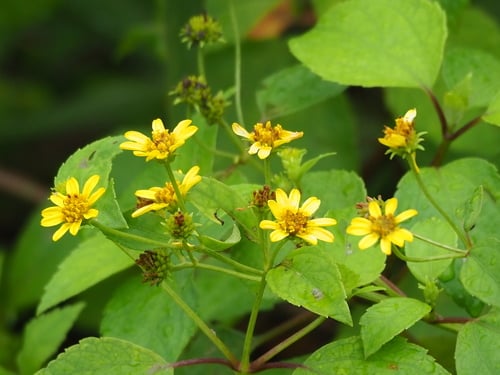
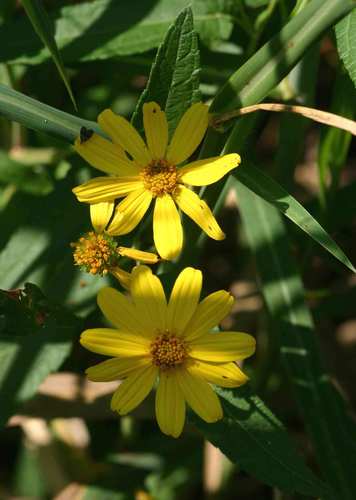
Source: WikipediaGlebionis segetum (syn. Chrysanthemum segetum) is a species of flowering plant in the family Asteraceae, probably native only to the eastern Mediterranean region but now naturalized in western and northern Europe as well as China and parts of North America. Common names include corn marigold and corn daisy. Glebionis segetum has been hybridized with related Argyranthemum species to create cultivars of garden marguerites. Glebionis segetum is a herbaceous annual plant growing to 80 cm tall, with spirally arranged, deeply lobed leaves 5–20 cm long. The flowers are bright yellow, produced in capitula (flowerheads) 3.5-5.5 cm in diameter, with a ring of ray florets and a centre of disc florets. Glebionis segetum is widely naturalised outside of its native range, colonising western and central Europe with early human agriculture; it can be an invasive weed in some areas. However, it also was ranked very highly, in terms of nectar production, thus showing particular value in the role of nectar-provider for insects in a UK survey of meadow species' production of nectar sugar and pollen. Glebionis segetum was practically an exact equivalent in terms of how much nectar and pollen it produced in this study with the popular garden and meadow plant, cornflower Centaurea cyanus — the top producer of nectar sugar among the cultivated plants in the study (as opposed to those classified as weeds). Its long blooming period helps its ranking, as it does not have few flowers with very high nectar volume per flower — coupled with a brief blooming period that completely exhausts the plant, like some top-ranked plants in nectar sugar production surveys (e.g. Bull Thistle, Cirsium vulgare). The plant strongly attracts very small butterflies (such as the Pearl Crescent) and also small hoverflies such as Toxomerus marginatus. Japanese beetles will consume the petals. The corn marigold appears to have been a serious weed during the 13th century in Scotland, as suggested by a law of Alexander II which states that if a farmer allows so much as a single plant to produce seed in amongst his crops, then he will be fined a sheep. In Crete and Greece, the leaves and the tender shoots of a variety called neromantilida (νερομαντηλίδα) are eaten raw in salads or browned in hot olive oil by the locals.
Description
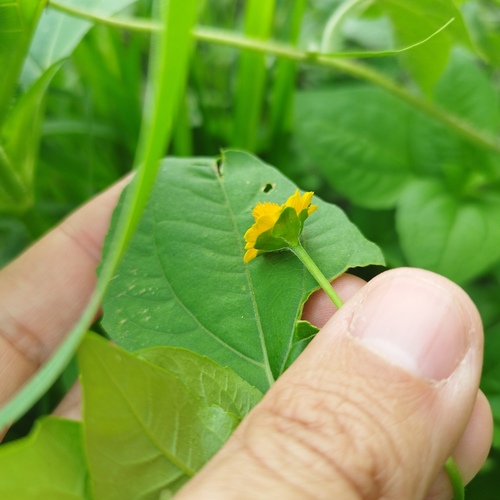
A plant about 0.5-0.8 m high. It spreads to about 30 cm across. It is an annual plant. The leaves are grey green. They are oblong and 3-5 cm long. The leaves near the tips are entire but nearer the base they are divided. The flower heads occur singly and are daisy like and yellow. They are 5 cm across.
Edible Uses
The young shoots are eaten cooked or raw.
Traditional Uses
The young shoots are used cooked or raw. CAUTION: It may contain coumarin which stops blood coagulating.
This uses section is brief — help expand it
Known Hazards
The plant contains coumarin, which may inhibit blood coagulation.
Distribution
It suits Mediterranean regions. It occurs on soils where lime has not been added. It does well in sandy soils. In Yunnan.
Where It Grows
Africa, Algeria, Asia, Australia, Britain, Central Asia, China, Crete, Cyprus, Europe, France, Germany, Greece, Hawaii, Israel, Italy, Japan, Jordan, Lebanon, Libya, Luxembourg, Mediterranean*, Middle East, Morocco, New Zealand, North Africa, North America, Pacific, Portugal, SE Asia, Spain, Syria, Tajikistan, Tunisia, Turkey, Türkiye, USA,
Cultivation
They are grown from seed sown where the plants are to grow. Seed germinate in 10-18 days at 15°C.
Production
It grows quickly.
Other Information
Cultivated as a vegetable.
Notes
Plant contains the aromatic element cumarin. There are about 20-40 Chrysanthemum species and many cultivated varieties.
Synonyms
Also Known As
Cucuddhaci, Cucuddho, Fior gialle, Sari papatya, Similia, Tung hao
References (25)
- Arora, R. K., 2014, Diversity in Underutilized Plant Species - An Asia-Pacific Perspective. Bioversity International. p 38 (As Chrysanthemum segetum)
- Biscotti, N. et al, 2018, The traditional food use of wild vegetables in Apulia (Italy) in the light of Italian ethnobotanical literature. Italian Botanist 5:1-24
- Blamey, M and Grey-Wilson, C., 2005, Wild flowers of the Mediterranean. A & C Black London. p 444 (As Chrysanthemum segetum)
- Brickell, C. (Ed.), 1999, The Royal Horticultural Society A-Z Encyclopedia of Garden Plants. Convent Garden Books. p 266 (As Chrysanthemum segetum)
- Della, A., et al, 2006, An ethnobotanical survey of wild edible plants of Paphos and Larnaca countryside of Cyprus. J. Ethnobiol. Ethnomed. 2:34 (As Chrysanthemum segetum)
Show all 25 references Hide references
- Dogan, Y., 2012, Traditionally used wild edible greens in the Aegean Region of Turkey. Acta Societatis Botanicorum Poloniae 81(4): 329-342 (As Chrysanthemum segetum)
- Ertug, F., 2004, Wild Edible Plants of the Bodrum Area. (Mugla, Turkey). Turk. J. Bot. 28 (2004): 161-174 (As Chrysanthemum segetum)
- Ertug, F, Yenen Bitkiler. Resimli Türkiye Florası -I- Flora of Turkey - Ethnobotany supplement
- Facciola, S., 1998, Cornucopia 2: a Source Book of Edible Plants. Kampong Publications, p 36 (As Chrysanthemum segetum)
- Hedrick, U.P., 1919, (Ed.), Sturtevant's edible plants of the world. p 188 (As Chrysanthemum segetum)
- Hussey, B.M.J., Keighery, G.J., Cousens, R.D., Dodd, J., Lloyd, S.G., 1997, Western Weeds. A guide to the weeds of Western Australia. Plant Protection Society of Western Australia. p 92 (As Chrysanthemum segetum)
- Lazarides, M. & Hince, B., 1993, Handbook of Economic Plants of Australia, CSIRO. p 59 (As Chrysanthemum segetum)
- Ling Yuou-ruen & C. J. Humphries, ASTERACEAE (Draft), Tribe ANTHEMIDEAE Cassini, in Flora of China. (As Chrysanthemum segetum)
- Martin, F.W. & Ruberte, R.M., 1979, Edible Leaves of the Tropics. Antillian College Press, Mayaguez, Puerto Rico. p 184 (As Chrysanthemum segetum)
- Morley, B. & Everard, B., 1970, Wild Flowers of the World. Ebury press. Plate 39 (As Chrysanthemum segetum)
- Nebel, S., Pieroni, A. & Heinrich, M., 2006, Ta cho`rta: Wild edible greens used in the Graecanic area in Calabria, Southern Italy. Appetite 47 (2006) 333–342 (As Chrysanthemum segetum)
- Paczkowska, G. & Chapman, A.R., 2000, The Western Australian Flora. A Descriptive Catalogue. Western Australian Herbarium. p 159 (As Chrysanthemum segetum)
- Plants for a Future database, The Field, Penpol, Lostwithiel, Cornwall, PL22 0NG, UK. http://www.scs.leeds.ac.uk/pfaf/ (As Chrysanthemum segetum)
- READ (As Chrysanthemum segetum)
- Sp. pl. 2:889. 1753 (As Chrysanthemum segetum)
- Uphof, (As Chrysanthemum segetum)
- USDA, ARS, National Genetic Resources Program. Germplasm Resources Information Network - (GRIN). [Online Database] National Germplasm Resources Laboratory, Beltsville, Maryland. Available: www.ars-grin.gov/cgi-bin/npgs/html/econ.pl (10 April 2000) (As Chrysanthemum segetum)
- Wiersema, J. H. & Leon, B., 2013, World Economic Plants. A Standard Reference CRC Press. 2nd Ed. p 324
- World Checklist of Useful Plant Species 2020. Royal Botanic Gardens, Kew
- Zeven, A. C. & de West, J. M. J., 1982, Dictionary of cultivated plants and their regions of diversity. Wageningen. p 34 (As Chrysanthemum segetum)