Dacrydium cupressinum
Sol. ex Lamb.
Rimu, New Zealand Red Pine
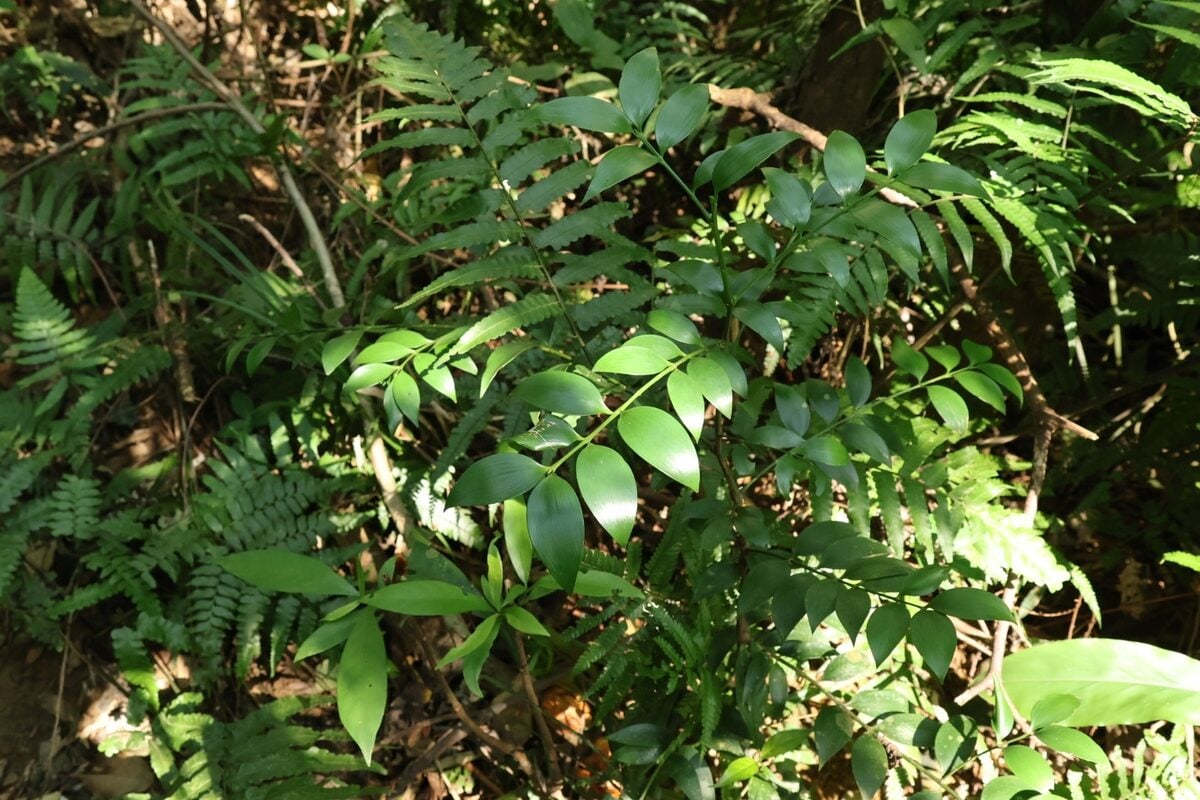
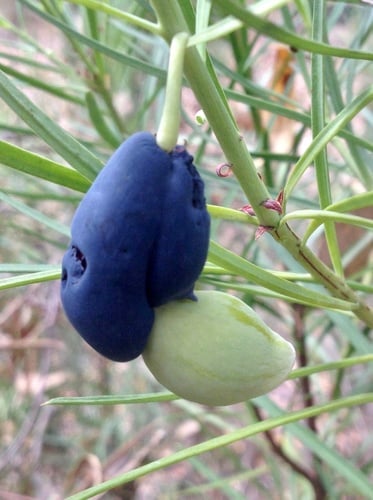
iNaturalist· cc-by-nc
(c) iandeas, some rights reserved (CC BY-NC), uploaded by iandeas
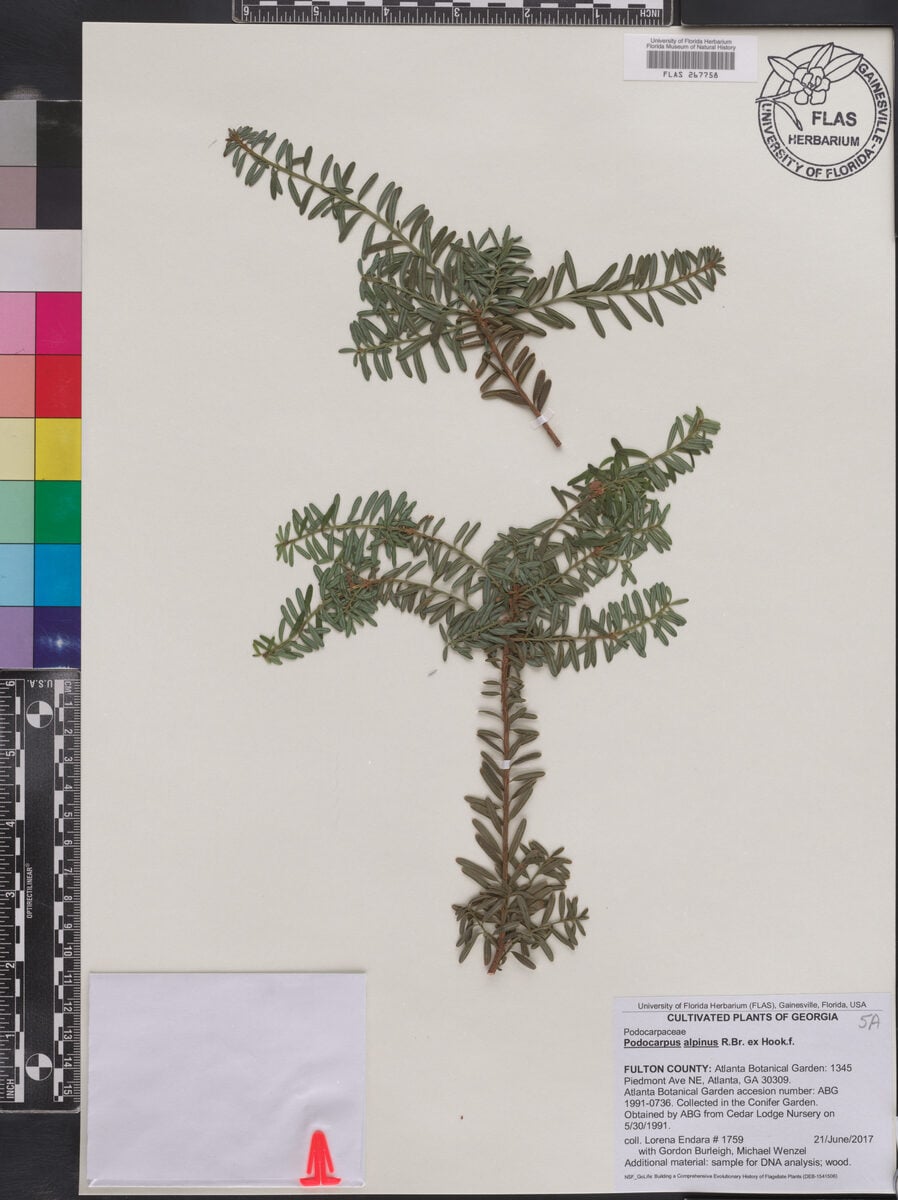
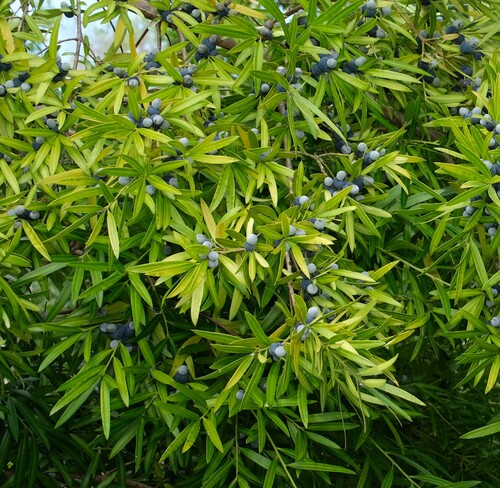
iNaturalist· cc-by
(c) Ben, some rights reserved (CC BY), uploaded by Ben
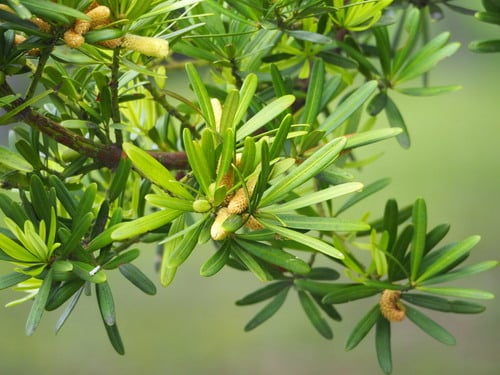
iNaturalist· cc-by
(c) Duncan Cunningham, some rights reserved (CC BY), uploaded by Duncan Cunningham
Summary
Source: WikipediaDacrydium cupressinum, commonly known as rimu, is an evergreen conifer native to New Zealand. A member of the Podocarpaceae, the tree usually reaches 35 metres (100 feet) in height, but may reach up to 60 metres (200 feet) and can have a stout trunk up to 2 m (6 ft 7 in) in diameter. It is dioecious, meaning individual trees are either male or female. Rimu is the country's most common native conifer, its range covers the North, South, and Stewart Islands. Rimu has an estimated lifespan of 600–800 years, although it may live as long as 1,200 years. The name D. cupressinum was first published invalidly in 1786 by Daniel Solander and Georg Forster. However the species was first given a valid description in 1806 by Aylmer Lambert. The second part of the scientific name, cupressinum, was given because of the tree's similarity with cypress species. Rimu's fruits are consumed by various birds such as bellbirds, kererū, and the tūī. Rimu's fruits also provide an important source of food and vitamins for the native flightless parrot, the kākāpō, which will only mate during years of heavy fruiting. Many different plants grow on the tree's trunk and branches, using it for support, which are called epiphytes and hemi-epiphytes. Rimu also plays host to numerous insect species. In Māori culture, D. cupressinum is of great importance. Rimu had several medicinal purposes for Māori, and the British missionary, Richard Taylor, described the fruit was prized by the natives. In 1773, the British explorer, James Cook, brewed the first native beer at Tamatea / Dusky Sound, by extracting the young tips of the tree's branches. Rimu was once the most harvested timber, popular for flooring, furniture making, wagon building, and other uses, before it was protected by law. The tree's timber has very durable and resilient texture. Rimu's conservation status was assessed by the IUCN Red List in 2013 as "Least Concern", and its population trend was assessed as "Stable".
Description
A tree. In cultivation it is about 9 m high. It can grow 27-60 m high. It turns reddish brown in winter. Adult trees have shorter, fleshier needles than juvenile ones. Trees are separately male and female. Male cones are small. Female trees bear small bluish seeds. Each seed is sunk in a bright red fleshy cup.
Edible Uses
The fruit can be eaten raw or cooked, though it can be somewhat constipating. A resinous substance collected from the young branches has been used to make an alcoholic beverage similar to spruce beer. The resin itself is bitter but edible.
Traditional Uses
A drink like spruce beer is made from the young shoots and the resin. The fleshy cup of the nut is eaten.
This uses section is brief — help expand it
Medicinal Uses
None known.
Distribution
It is a warm temperate plant. They need cool climates without severe frosts. They need adequate rainfall and humidity. Melbourne Botanical gardens. It suits hardiness zones 9-10. Arboretum Tasmania.
Where It Grows
Australia, Britain, Europe, Hawaii, New Zealand*, Tasmania, USA,
Cultivation
Requires a light, freely draining soil in a sheltered position with protection from cold winds. Requires high rainfall and humidity if it is to succeed. It tolerates shade and probably requires it in drier areas if the tree is to survive. Requires warm humid summers and mild humid winters if it is to grow well, and even then it is very slow growing. It is best grown in a woodland garden. This species is only hardy in the very mildest areas of the country and does not really thrive even there. A tree on the Scilly Isles was 9 metres tall in 1970. Seed from a more alpine provenance might be more successful. Dioecious, male and female plants must be grown if seed is required.
Propagation
Sow seed in spring in a freely draining compost; germination usually occurs within 1–3 months at 20°C. An alternative report suggests seed can be very slow to germinate and is best sown in a cold frame as soon as it is ripe. Prick seedlings out into individual pots once large enough to handle and grow on under glass for at least the first winter. Plant out into permanent positions in late spring or early summer after the last expected frosts. Propagate also by cuttings of short leading shoots taken in early autumn.
Other Uses
The heartwood is extremely resinous and is used as a torch for lighting. Tannin is obtained from the bark. The wood is beautifully marked and is widely used for construction, railway sleepers, and furniture.
Production
They are slow growing. Trees reach maturity in 300 years and can live 800-900 years.
Notes
There were 15-30 Dacrydium species but some have now been reclassified. It is rich in Vitamin D.
Also Known As
Imou
References (17)
- Bodkin, F., 1991, Encyclopedia Botanica. Cornstalk publishing, p 319
- Crowe, A., 1997, A Field Guide to the Native Edible Plants of New Zealand. Penguin. p 51
- Cundall, P., (ed.), 2004, Gardening Australia: flora: the gardener's bible. ABC Books. p 464
- Descr. Pinus ed. 1, app., 93, t. 41. 1806
- Etherington, K., & Imwold, D., (Eds), 2001, Botanica's Trees & Shrubs. The illustrated A-Z of over 8500 trees and shrubs. Random House, Australia. p 252
Show all 17 references Hide references
- Facciola, S., 1998, Cornucopia 2: a Source Book of Edible Plants. Kampong Publications, p 184
- Hedrick, U.P., 1919, (Ed.), Sturtevant's edible plants of the world. p 263
- Hibbert, M., 2002, The Aussie Plant Finder 2002, Florilegium. p 80
- Lord, E.E., & Willis, J.H., 1999, Shrubs and Trees for Australian gardens. Lothian. p 83
- Matthews, J., 1987, New Zealand Native Plants for your Garden. Pacific Publishers, p 41
- Plants for a Future database, The Field, Penpol, Lostwithiel, Cornwall, PL22 0NG, UK. http://www.scs.leeds.ac.uk/pfaf/
- Ryan, S., 2008, Dicksonia. Rare Plants Manual. Hyland House. p 66
- Salmon, J.T., 1989, The Native Trees of New Zealand. Heinmann Reid p 74
- Staples, G.W. and Herbst, D.R., 2005, A tropical Garden Flora. Bishop Museum Press, Honolulu, Hawaii. p 72 (Drawing)
- Stewart, K., 1984, Collins handguide to the Native Trees of New Zealand. Collins. p 36
- Tanaka,
- Young, J., (Ed.), 2001, Botanica's Pocket Trees and Shrubs. Random House. p 310