Aegle marmelos
(L.) Correa ex Roxb.
Bael fruit, Bengal quince
iNaturalist· cc-by-nc
(c) Karan Thakkar, some rights reserved (CC BY-NC), uploaded by Karan Thakkar
iNaturalist· cc-by
(c) Vijay Barve, some rights reserved (CC BY), uploaded by Vijay Barve
iNaturalist· cc-by-nc
(c) Saniya Chaplod, some rights reserved (CC BY-NC), uploaded by Saniya Chaplod
Summary
Source: WikipediaAegle marmelos, commonly known as bael (a.k.a. bel, beli, or bhel), also Bengal quince, golden apple, Japanese bitter orange, stone apple or wood apple, is a species of tree native to the Indian subcontinent and Southeast Asia. It is present in India, Pakistan, Bangladesh, Sri Lanka, and Nepal as a naturalized species. The tree is considered to be sacred by Hindus and Buddhists.
Description
A medium sized tree. It loses its leaves. It grows to 3-6-12 m tall and spreads 2 m across. The stem is erect and thorny. The leaves are green and with 3 leaflets and generally sword shaped. They are aromatic. The flowers are yellowish-white. They have a strong sweet smell. They contain both sexes and occur in clusters. The fruit is large and with a hard shell about 3 mm thick. It is 8-10 cm across. The fruit is yellow-green when ripe. The pulp is reddish or orange. The pulp of the fruit is edible. The fruit is made up of small cells (about 15) each with woolly seeds.
Edible Uses
The fruit is the primary edible portion and can be eaten raw or made into marmalades, jams, jellies, and drinks. The orange fruits have an aromatic yellow pulp; at ripeness this pulp develops a scented mucilage with a sweet flavour. The fruit can be cut in half or broken open and the pulp dressed with palm sugar as a breakfast dish. It is notably high in vitamin C. The fruit itself is a rounded berry, 50–125mm in diameter, with a hard woody shell. Young leaves and shoots can be cooked as a vegetable or used as a condiment, and are said to reduce appetite. An infusion of the flowers makes a refreshing drink. Nutritional values per 100g of fruit: moisture 58%, energy 577 kJ (138 kcal), protein 2.3g, vitamin A 0.13µg, vitamin C 219mg, iron 0.55mg.
Traditional Uses
The ripe fruit are eaten raw. They are also used to make drinks. The fruit are often sliced and dried. Marmalade can be made from ripe pulp. They can also be pickled or used in jams and jellies. The young shoots and leaves can be eaten raw in salad. They are also used in chutneys. The flowers are used to make a drink. CAUTION: There are reports that leaves make women sterile or cause abortions.
Medicinal Uses
The fruits, leaves, twigs, and roots of bael contain coumarins, flavonoids, alkaloids, tannins, and oil, and all are used medicinally. The dried pulp is astringent, reduces irritation in the digestive tract, and is considered an excellent remedy for diarrhoea and dysentery. A decoction of the unripe fruit combined with fennel and ginger is prescribed for haemorrhoids. A decoction of the unripe fruit is also valued as an aphrodisiac. The ripe fruit is laxative and demulcent, easing stomach pain and supporting healthy digestion. The psoralen in the pulp is thought to increase tolerance of sunlight and help maintain normal skin colour, making it useful in treating leucoderma. Marmelosin derived from the pulp acts as a laxative and diuretic, though in large doses it lowers the respiratory rate, depresses heart action, and causes drowsiness. For medicinal markets, young tender fruits are sliced horizontally and sun-dried, and are widely exported to Malaysia and Europe. The leaves are astringent and used to treat peptic ulcers. The dried root is used for earache: it is dipped in neem oil (Azadirachta indica) and set alight so that oil from the burning end drips into the ear — though this practice is not recommended.
Known Hazards
Aegeline is a known constituent of the bael leaf and consumed as a dietary supplement with the intent to produce weight loss. In 2013, the U.S. Food and Drug Administration (FDA), Centers for Disease Control and Prevention (CDC), the Department of Defense Armed Forces Health Surveillance Center, and Hawaii state and local health officials identified an outbreak of 97 persons with acute non-viral hepatitis that first emerged in Hawaii. Seventy-two of these persons had reported using the dietary supplement OxyElite Pro, containing aegeline, which was manufactured by the Dallas-based company USPlabs. FDA had previously taken action against an earlier formulation of OxyElite Pro because it contained dimethylamylamine, a stimulant that FDA had determined to be an adulterant when included in dietary supplements, and could cause high blood pressure and lead to heart attacks, seizures, psychiatric disorders, and death. USPlabs subsequently reformulated this product without informing the FDA or submitting the required safety data for a new dietary ingredient. Doctors at the Liver Center at The Queen's Medical Center investigating the first cases in Hawaii reported that between May and September 2013, eight previously healthy individuals presented themselves at their center suffering from a drug-induced liver injury. All of these patients had been using the reformulated OxyElite Pro, which they had purchased from different sources, and which had different lot numbers and expiration dates, at doses within the manufacturer's recommendation. Three of these patients developed fulminant liver failure, two underwent urgent liver transplantation, and one died. The number of such cases ultimately rose to 44 in Hawaii. In January 2014, leaders from the Queen's Liver Center informed state lawmakers that they were almost certain that aegeline was the agent responsible for these cases, but the mechanism of how aegeline may damage the liver has not been isolated.
Distribution
A tropical plant. It prefers rich well drained soils in an open sunny position. It suits tropical or warm places. It appears to do best where there is a distinct dry season. It is drought and frost tender. It grows in Nepal to about 1100 m altitude. A hot dry summer is best. It can tolerate some alkalinity and salty soils. It can tolerate alkalinity. It can grow in arid places. In Yunnan.
Where It Grows
Africa, Andamans, Asia, Australia, Bangladesh*, Bhutan, Brazil, Cambodia, China, Cuba, East Africa, East Timor, Fiji, Guianas, Hawaii, Himalayas, India*, Indochina, Indonesia, Laos, Malaysia, Mexico, Myanmar, Nepal, Nigeria, North America, Northeastern India, NW India, Pacific, Pakistan*, Papua New Guinea, PNG, Philippines, Pohnpei, SE Asia, Singapore, South America, Sri Lanka, Suriname, Taiwan, Tanzania, Thailand, Timor-Leste, Uganda, USA, Vietnam, West Africa, West Indies,
Cultivation
It is grown from seed. Seed are taken from freshly picked ripe fruit. Seedlings are planted out after one year. It can be grown from root offshoots. They are best grown using patch budding. Trees are spaced 6-9 m apart. Trees can be pruned to have 4-6 strong branches. Suckers should be removed. It can also be grown from root suckers or air layering.
Propagation
Commonly grown from seed in nurseries and transplanted to the field, though seedlings show considerable variation in form, rind texture, pulp quality and quantity, and seed number. Can also be propagated from root suckers or by budding onto seedling rootstocks.
Other Uses
The plant is occasionally grown as a hedge, its spiny branches forming an effective living barrier. Stems are used as chewsticks. Wild fruit pulp contains up to 9% tannin, with cultivated types having less; the rind contains up to 20%, and tannin is also present in the leaves. The rind of the unripe fruit is used in tanning and yields a yellow dye for calico and silk. The essential oil of the leaves contains d-limonene, 56% a-d-phellandrene, cineol, citronellal, citral, 17% p-cymene, and 5% cumin aldehyde. The limonene-rich oil distilled from the rind is used to scent hair oil. A pungent essential oil from the fruit rind is used in perfumes and soap. A leaf extract has shown insecticidal activity against the brown plant hopper, a key rice pest in Asia. Dried fruit shells with the pulp removed serve as cups, small containers, and decorative pill and snuff boxes, sometimes ornamented with gold and silver. The mucilage around unripe seeds — most abundant in wild, unripe fruit — is used as a household glue and by jewellers as an adhesive. It is mixed with lime plaster for waterproofing wells and added to cement in wall construction. Artists incorporate it into watercolours and use it as a protective coating on paintings. The gum is sometimes used as a soap substitute, and the fruit pulp has detergent properties useful for washing clothes. The grey-white wood is strongly aromatic when freshly cut, fine-grained, and hard but not durable; it takes a fine polish. Typically available in smaller dimensions, it is used for carving, small-scale turnery, tool and knife handles, pestles, and combs. Larger pieces have been used for carts and construction, though the wood tends to warp and crack during curing. It can also be used as fuel.
Production
It is slow growing. Trees produce in 3-4 years. Full production is gained after 15 years. Fruit are produced throughout the year. Fruit should be picked and not allowed to drop. There can be 200-400 fruit per tree. A fruit can weigh 1 kg. Fruit ripen in the dry season. Fruit can be ripened off the tree. Trees can continue bearing for 50 years. The fruit can be stored for 2 weeks at 30°C and for 4 months at 10°C.
Other Information
Fruit are sold in markets. It is commonly cultivated.
Notes
There are 3 Aegle species. In some places the fruit is used as treatment for diarrhoea. The tree is common in temple gardens in India. It has anticancer properties.
Nutrition
| Part | Moisture | kJ | kcal | Protein | Vit A | Vit C | Iron | Zinc |
|---|---|---|---|---|---|---|---|---|
| Fruit | 58 | 577 | 138 | 2.3 | 0.13 | 219 | 0.55 | — |
| Leaves | — | — | — | — | — | — | — | — |
| Flowers | — | — | — | — | — | — | — | — |
Synonyms
Also Known As
Aluvigam, Arbol de bael, Bak tuum, Beel, Bel, bela, Belang, Beli, Bella, Belo, Belpatri, Belthei, Belu, Bil, Bila, Bilak, Bili, Bilpatre, Bilva, Bnau, Chilongpak chi, Golden apple, Hpun ja, Indian bael, Indian quince, Iyalbudi, Kawista, Kia-bok, Koovalam, Ma pin, Maak tum, Mahafal, Mak-phyn, Maja batu, Maja ingus, Maja, Mak tum, Maredoo, Maredu, Marmelo, Matoon, Matoom, Matum, Muredu, Okshit, Opesheet, Phnao, Phneu, Pnoeu, Pohon maja manis, Sinje dari, Sirphal, Soh-bel, Srifal, Thepli, Toum, Tum, Vilva marum, Vilvam, Vilvan, Yod maak tuum
References (143)
- Acharya K. P. and Acharya, R., 2010, Eating from the Wild: Indigenous knowledge on wild edible plants in Parroha VDC of Rupandehi District, Central Nepal. International Journal of Social Forestry. 3(1):28-48
- Ambasta S.P. (Ed.), 2000, The Useful Plants of India. CSIR India. p 16
- Arinathan, V., et al, 2007, Wild edibles used by Palliyars of the western Ghats, Tamil Nadu. Indian Journal of Traditional Knowledge. 6(1) pp 163-168
- Arora, R. K., 2014, Diversity in Underutilized Plant Species - An Asia-Pacific Perspective. Bioversity International. p 56
- Aryal, K. P. et al, 2009, Uncultivated Plants and Livehood Support - A case study from the Chepang people of Nepal. Ethnobotany Research and Applications. 7:409-422
Show all 143 references Hide references
- Aryal, K. P., et al, 2018, Diversity and use of wild and non-cultivated edible plants in the Western Himalaya. Journal of Ethnobiology and Ethnomedicine (2018) 14:10
- Ashton, M. S., et al 1997, A Field Guide to the Common Trees and Shrubs of Sri Lanka. WHT Publications Ltd. pdf p 343
- Bajpai, O., et al, 2015, Tree species of the Himalayan Terai region of Uttar Pradesh, India: a checklist. Check List 11(4): 1718
- Balkrishna, A., et al, 2022, Indigenous Uses of Plants among Forest-dependent Communities of Seijosa, Arunachal Pradesh. International Journal of Economic Plants 2022, 9(1):064-080
- Bandyopadhyay, S., et al, 2012, A Census of Wild Edible Plants from Howrah District, West Bengal, India. Proceedings of UGC sponsored National Seminar 2012
- Barwick, M., 2004, Tropical and Subtropical Trees. A Worldwide Encyclopedic Guide. Thames and Hudson p 12
- Basha, S. K. M., Ethnobotanical Trees of Sri Lanka Malleswara Wildlife Sanctuary; Eastern Ghats, Andhra Pradesh.
- Behera, K. K. et al, 2008, Wild Edible Plants of Mayurbhanj District, Orissa, India. J. Econ. Taxon. Bot. Vol. 32 (Suppl,) pp 305-314
- Bhardwaj, J. & Seth, M. K., 2017, Edible wild plant resources of Bilaspur, Hamirpur and Una districts of Himachal Pradesh, India. International Journal of Botany Studies. Volume 2; Issue 6; p 09-17
- Bhatia, H., et al, 2018, Traditionally used wild edible plants of district Udhampur, J&K, India. Journal of Ethnobiology and Ethnomedicine (2018) 14:73
- Bircher, A. G. & Bircher, W. H., 2000, Encyclopedia of Fruit Trees and Edible Flowering Plants in Egypt and the Subtropics. AUC Press. p 10
- Blench, R., 2004, Fruits and Arboriculture in the Indo-Pacific Region. Indo-Pacific Prehistory Association Bulletin 24. (Taipei Papers Volume 2) p 34
- Bodkin, F., 1991, Encyclopedia Botanica. Cornstalk publishing, p 51
- Bohra, N., et al, 2017, Ethnobotany of wild edible plants traditionally used by the local people in the Ramnagar regions from Nainital District, Uttarakhand, India. Biolife 5(1): 12-19
- Bole, P.V., & Yaghani, Y., 1985, Field Guide to the Common Trees of India. OUP p 9
- Brahma, S., et al, 2013, Wild edible fruits of Kokrajhar district of Assam, North-East India, Asian Journal of Plant Science and Research 3(6):95-100
- Brouk, B., 1975, Plants Consumed by Man. Academic Press, London. p 156
- Burkill, H. M., 1985, The useful plants of west tropical Africa, Vol. 4. Kew.
- Burkill, I.H., 1966, A Dictionary of the Economic Products of the Malay Peninsula. Ministry of Agriculture and Cooperatives, Kuala Lumpur, Malaysia. Vol 1 (A-H) p 56
- Chandrakumar, P., et al, 2015, Ethnobotanical studies of wild edible plants of Gond, Halba and Kawar tribes of Salekasa Taluka, Gondia District, Maharashtra State, India. International Research Journal of Pharmacy 6(8)
- Chandrashekara, U. M., 2009, Tree species yielding edible fruit in the coffee-based homegardens of Kerala, India: their diversity, uses and management. Food Sec. 1:361-370
- Chatterjee, A. S., 1997, Fruit Trees in Cambodian Home Gardens. Trainers' training manual. Home garden series No.3 p 43
- Chauhan, S. H., et al, 2018, Consumption patterns of wild edibles by the Vasavas: a case study from Gujarat, India. Journal of Ethnobiology and Ethnomedicine (2018) 14:57
- Chowdery, T., et al, 2014, Wild edible plants of Uttar Dinajpur District, West Bengal. Life Science Leaflets. 47:pp 20-36 http://lifesciencesleaflets.ning.com
- Chowdhury, M. & Mukherjee, R., 2012, Wild Edible Plants Consumed by Local Communities of Maldah of West Bengal, India. Indian J.Sci.Res.3(2) : 163-170
- Coronel, R.E., 1982, Fruit Collections in the Philippines. IBPGR Newsletter p 6
- Cowie, I, 2006, A Survey of Flora and vegetation of the proposed Jaco-Tutuala-Lore National Park. Timor-Lests (East Timor) www.territorystories.nt/gov.au p 52
- Cruz-Garcia, G. S., & Price, L. L., 2011, Ethnobotanical investigation of 'wild' food plants used by rice farmers in Kalasin, Northeast Thailand. Journal of Ethnobiology and Ethnomedicine 7:33
- Darley, J.J., 1993, Know and Enjoy Tropical Fruit. P & S Publishers. p 118
- Das, S. and De, B., 2013, Evaluation of Angiotension I-Converting Enzyme (ACE) inhibitory potential of some underutilized indigenous fruits of West Bengal using an in vitro model. Fruits, Vol. 68:499-506
- Das, T. & Das, A. K., 2005, Inventorying plant biodiversity in homegardens: A case study in Barak Valley, Assam, North East India. CURRENT SCIENCE, VOL. 89, NO. 1, 10 JULY 2005
- Datar, M. N. & Upadhye, A. S., 2016, Forest foods of northern region of Western Ghats. MACS - Agharkar Research Institute, Pune. Pp 1-160. ISBN: 978-93-85735-10-3 p 15
- Dobriyal, M. J. R. & Dobriyal, R., 2014, Non Wood Forest Produce an Option for Ethnic Food and Nutritional Security in India. Int. J. of Usuf. Mngt. 15(1):17-37
- Dyani, S.K., & Sharma, R.V., 1987, Exploration of Socio-economic plant resources of Vyasi Valley in Tehri Garwhal. J. Econ. Tax. Bot. Vol. 9 No. 2 pp 299-310
- Ethnobotany of Karbis. Chapter 4 in p 103
- Facciola, S., 1998, Cornucopia 2: a Source Book of Edible Plants. Kampong Publications, p 213
- Flora of Pakistan. www.eFloras.org
- Food Composition Tables for use in East Asia FAO http://www.fao.org/infoods/directory No. 822
- GAMMIE,
- Gardner, S., et al, 2000, A Field Guide to Forest Trees of Northern Thailand, Kobfai Publishing Project. p 102
- Gautim, R. S., et al, 2020, Wild Edible Fruits of Nepal. Int. J. Appl. Sci. Biotechnol. Vol 8(3): 289-304
- Gouldstone, S., 1983, Growing your own Food-bearing Plants in Australia. Macmillan p 77
- GUPTA,
- Hardwick, G., 2001, Economically Useful Plants for Northern Australia: Master Species List. Crusader eBooks.
- Hazarika, T. K., et al, 2012, Studies on wild fruits of Mizoram, India used as ethno-medicines. Genetic Resources and Crop Evolution. Published on line 03 February, 2012
- Hearne, D.A., & Rance, S.J., 1975, Trees for Darwin and Northern Australia. AGPS, Canberra p 15
- Hedrick, U.P., 1919, (Ed.), Sturtevant's edible plants of the world. p 27
- http://palaeoworks.anu.edu.au/Nuno_PhD/04.pdf re Timor
- Jacquat, C., 1990, Plants from the Markets of Thailand. D.K. Book House p 72
- Jadhav, R., et al, 2015, Forest Foods of Northern Western Ghats: Mode of Consumption, Nutrition and Availability. Asian Agri-History Vol. 19, No. 4: 293-317
- Japanese International Research Centre for Agricultural Science www.jircas.affrc.go.jp/project/value_addition/Vegetables
- Jeeva, S., 2009,Horticultural potential of wild edible fruits used by the Khasi tribes of Meghalaya. Journal or Horticulture and Forestry Vol. 1(9) pp. 182-192
- Jindal, M., et al, 2013, Synthesis, physico-chemical and biomedical applications of sulfated Aegle marmelos gum: Green chemistry approach. Arabian Journal of Chemistry.
- John, L., & Stevenson, V., 1979, The Complete Book of Fruit. Angus & Robertson p 76
- Kahlon, L. K. & Singh, R., 2019, Traditional knowledge & Dynamics of edible plants of primitive tribal group ‘Paudi Bhuyan’ with changing demography migration patterns in Northern Odisha. Indian Journal of Traditional Knowledge Vol 18(1), pp 7-15
- Khan, D. & Shaukat, S.S., 2006, The Fruits of Pakistan: Diversity, Distribution, Trends of Production and Use. Int. J. Biol. Biotech., 3(3):463-499
- Khan, M. & Hussain, S., 2014, Diversity of wild edible plants and flowering phenology of district Poonch (J & K) in the northwest Himalaya. Indian Journal of Sci, Res. 9(1): 032-038
- Khanal, R., et al, 2014, Documenting abundance and use of underutilized plant species in the mid hill region of Nepal. ECOPRINT 21: 63-71, 2014
- Khumgratok, S., Edible Plants in Cultural Forests of Northeastern Thailand. Mahasarakham University Thailand.
- Kintzios, S. E., 2006, Terrestrial Plant-Derived Anticancer Agents and Plant Species Used in Anticancer research Critical Reviews in Plant Sciences. 25: pp 79-113
- Kiple, K.F. & Ornelas, K.C., (eds), 2000, The Cambridge World History of Food. CUP p 1725
- Kiran, K. C., et al, 2019, Diversity and Seasonal Availability of Potential Wild Edible Plants from Vidarbha Region of Maharashtra State, India. Int.J.Curr.Microbiol.App.Sci (2019) 8(2): 1434-1446
- Krishen P., 2006, Trees of Delhi, A Field Guide. DK Books. p 198
- Lorenzi, H., Bacher, L., Lacerda, M. & Sartori, S., 2006, Brazilian Fruits & Cultivated Exotics. Sao Paulo, Instituto Plantarum de Estuados da Flora Ltda. p 525
- Luczaj, L., et al, 2021, Wild food plants and fungi sold in the markets of Luang Prabang, Lao PDR. Journal of Ethnobiology and Ethnomedicine (2021) 17:6
- Lyle, S., 2006, Discovering fruit and nuts. Land Links. p 52
- Macmillan, H.F. (Revised Barlow, H.S., et al) 1991, Tropical Planting and Gardening. Sixth edition. Malayan Nature Society. Kuala Lumpur. p 290
- Majumdar, K. & Datta, B. K., 2009, Traditional wild edible fruits for the forest dwellers of Tripura, India. Pleione 3(2): 167 - 178.
- Manandhar, N.P., 2002, Plants and People of Nepal. Timber Press. Portland, Oregon. p 74
- Martin, F.W. & Ruberte, R.M., 1979, Edible Leaves of the Tropics. Antillian College Press, Mayaguez, Puerto Rico. p 98, 217
- Martin, F. W., et al, 1987, Perennial Edible Fruits of the Tropics. USDA Handbook 642 p 64
- Medhi, P. & Borthakur, S. K., 2012, Phytoresources from North Cachur Hills of Assam -3: Edible plants sold at Hflong market. Indian Journal of Natural Products and Resources. 3(1) pp 84-109
- Miguel, E., et al, 1989, A checklist of the cultivated plants of Cuba. Kulturpflanze 37. 1989, 211-357
- Milow, P., et al, 2014, Malaysian Species of Plants with Edible Fruits or Seeds and Their Valuation. International Journal of Fruit Science, 14:1-27, 2014
- Miya, M. S. & Gautum, D., 2021, Checklist of floral species at the Institute of Forestry, Pokhara Campus, Pokhara, Nepal. Journal of Institute of Forestry, Nepal 18 (2021) 133-177
- Morton, J. F., 1987, Fruits of Warm Climates. Wipf & Stock Publishers p 187
- Murtem, G. & Chaudhrey, P., 2016, An ethnobotanical note on wild edible plants of Upper Eastern Himalaya, India. Brazilian Journal of Biological Sciences, 2016, v. 3, no. 5, p. 63-81.
- Pandy, R. K. & Saini, S. K., 2007, Edible plants of tropical forests among tribal communities of Madhya Pradesh. Indian Journal of Traditional Knowledge. 6(1), pp 185-190
- Pandey, K. C. & Pande, N., 2016, Ethnobotanical Documentation of Wild Edible Plants used by Gujjar Community of Tarai West Forest Division Ramnagar, Nainital, India, Current World Environment. Vol. 11(3), 808-818
- Parmar, C., & Kaushel, M. K., 1982, In Wild Fruits. Kalyani Publishers, New Delhi, India. p 1
- Patel, K. P., Sahu, J., Sahu, L., Prajapati, N. K. and Dubey, B. K., 2012, Aegle marmelos:A Review on its Medicinal Properties, Int. J. Pharm. Phytopharmacol. Res., 1(5): pp. 332-338.
- Patiri, B. & Borah, A., 2007, Wild Edible Plants of Assam. Geethaki Publishers. p 21
- Paul, A., 2013, Minor and uncultivated fruits of Eastern India, 2nd International Symposium on Minor Fruits and Medicinal Plants
- Phangchopi, U., et al, 2015, Diversity of wild edible plants in Marat Longri Wildlife Sanctuary, Assam. Indian Journal of Natural Products and Resources Vol. 6(4), December 2015 pp. 305-313
- Phon, P., 2000, Plants used in Cambodia. © Pauline Dy Phon, Phnom Penh, Cambodia.
- Prachi, K., et al, 2012, Underutilized wild fruits of North Maharashtra. Journal of Research in Plant Sciences. (2012) 1:071-076
- PROSEA (Plant Resources of South East Asia) handbook, Volume 2, 1991, Edible fruits and nut. p 59
- PROSEA handbook Volume 13 Spices. p 273
- Purseglove, J.W., 1968, Tropical Crops Dicotyledons, Longmans. p 493
- Rajapaksha, U., 1998, Traditional Food Plants in Sri Lanka. HARTI, Sri Lanka. p 418
- Rajendra, K.C., 2014. Prominent Non-Wood Forest Products of Te- rai and Siwalik Regions in Nepal. Food and Agriculture Organization, Kathmandu, Nepal. p 49
- Rao, M. L. S., et al, 2014, Indigenous Plant Foods which are commonly consumed by the tribal communities in Dumbriguda Area of Visakhapatnam District, Andhra Pradesh, India. Biolife. Vol 2, Issue 3
- Rashid, H. E., 1977, Geography of Bangladesh. Westview. p 348
- Reddy, B. M., 2012, Wild edible plants of Chandrapur district, Maharashtra, India. Indian Journal of Natural Products and Resources. 3(1) pp 110-117
- Reddy, K. N., et al, 2006, Traditional knowledge on wild food plants in Andhra Pradesh. Indian Journal of Traditional Knowledge 6(1) pp 223-229
- Royal Botanic Gardens, Kew (1999). Survey of Economic Plants for Arid and Semi-Arid Lands (SEPASAL) database. Published on the Internet; http://www.rbgkew.org.uk/ceb/sepasal/internet [Accessed 10th June 2011]
- Sahni, K.C., 2000, The Book of Indian Trees. Bombay Natural History Society. Oxford. p 49
- Sawian, J. T., et al, 2007, Wild edible plants of Meghalaya, North-east India. Natural Product Radiance Vol. 6(5): p 413
- Segura, S., et al, 2018, The edible fruit species in Mexico. Genet Resour Crop Evol (2018) 65:1767–1793
- Seidemann J., 2005, World Spice Plants. Economic Usage, Botany, Taxonomy. Springer. p 6
- Sharma, B.B., 2005, Growing fruits and vegetables. Publications Division. Ministry of Information and broadcasting. India. p 21
- SHORTT,
- Shrestha, S., 2021, Wild Edible Plants of Dhankuta, Eastern Nepal. Rupantaran : A Multidisciplinary Journal Vol. V : pp 100-109, September, 2021 p 102
- Siemonsma, J. S. & Kasem Piluek, eds. 1993. Vegetables. In: Plant Resources of South-East Asia (PROSEA) 8:311
- Singh, G. K. & Ahirwar, R. K., 2013, An Ethnobotanical Survey for Certain Wild Edible Plants of Chanda Forest District Dindori Central India. International Journal of Science and Research. 6:14
- Singh, H.B., Arora R.K.,1978, Wild edible Plants of India. Indian Council of Agricultural Research, New Delhi. p 48
- Singh, V. and Singh, P., 1981, Edible Wild Plants of Eastern Rajasthan. J. Econ. Tax. Bot. Vol 2 pp 197-207
- Singh, V. B. et al (Eds), Horticulture for Sustainable Income and Environmental Protection: Advances Vol. 1 Annexure 18.1
- Slathia, P. S., et al, 2017, Traditional uses of under-utilized tree species in sub tropical rainfed areas of Kathua, Jammu & Kashmir. Indian Journal of Traditional Knowledge. Vol. 16(1), January 2017, pp. 164-169
- Smith, A.C., 1985, Flora Vitiensis Nova, Lawaii, Kuai, Hawaii, Volume 3 p 525
- Solomon, C., 2001, Encyclopedia of Asian Food. New Holland. p 17
- Srichaiwong, P., et al, 2014, A Study of the Biodiversity of Natural Food Production to Support Community Upstream of Chi Basin, Thailand. Asian Social Science 10 (2):
- Staples, G.W. and Herbst, D.R., 2005, A tropical Garden Flora. Bishop Museum Press, Honolulu, Hawaii. p 509
- Sukarya, D. G., (Ed.) 2013, 3,500 Plant Species of the Botanic Gardens of Indonesia. LIPI p 107
- Swaminathan, M.S., and Kochnar, S.L., 2007, An Atlas of Major Flowering Trees in India. Macmillan. p 72
- Tankard, G., 1990, Tropical fruit. An Australian Guide to Growing and using exotic fruit. Viking p 105
- Tate, D., 1999, Tropical Fruit. Archipelago Press. Singapore. p 12
- Teron, R. & Borthakur, S. K., 2016, Edible Medicines: An Exploration of Medicinal Plants in Dietary Practices of Karbi Tribal Population of Assam, Northeast India. In Mondal, N. & Sen, J.(Ed.) Nutrition and Health among tribal populations of India. p 155
- Terra, G.J.A., 1973, Tropical Vegetables. Communication 54e Royal Tropical Institute, Amsterdam, p 19
- Thapa, L. B., et al, 2014, Wild Edible Plants used by endangered and Indigenous Raji Tribe in Western Nepal. International Journal of Applied Sciences and Biotechnology. Vol 2(3):243-252
- Thitiprasert, W., et al, 2007, Country report on the State of Plant Genetic Resources for Food and Agriculture in Thailand (1997-2004). FAO p 95
- Tiwari, J. K., et al, 2010, Some Promising Wild Edible Plants of Srinagar and its Adjacent Area in Alaknanda Valley of Garhwal Himalaya, India. Journal of American Science 6(4) p 167ff
- Tomar, A., Kumar, A., & Dubey, K., 2002, Underutilized Wild Edible fruits of Nutritional and Medicinal Value. J. Res. Educ. Indian Med., Vol XX1
- Toppo, P. et al, 2016, Wild edible plants of Dhamtari district of Chhattisgarh, India. Van Sangyan Vol. 3, No. 4
- Trans. Linn. Soc. London 5:223. 1800
- Uphof,
- Upreti, K., et al, 2010, Diversity and Distribution of Wild Edible Fruit Plants of Uttarakhand. Biodiversity Potentials of the Himalaya. Edited by : Lalit M. Tewari, Y.P.S. Pangtey, Geeta Tewari pp 157 - 196, 2010
- Uprety, Y., et al, 2010, Non-timber Forest Products in Bardiya District of Nepal: Indigenous use, Trade and Conservation. J. Hum. Ecol. 30(3): 143-158
- Uprety, Y., et al, 2012, Diversity of use and local knowledge of wild edible plant resources in Nepal. Journal of Ethnobotany and Ethnomedicine 8:16
- Uprety, Y., et al, 2011, Plant biodiversity and ethnobotany inside the projected impact area of the Upper Seti Hydropower Project, Western Nepal. Environ. Dev. Sustain. (2011) 13:463-492
- USDA, ARS, National Genetic Resources Program. Germplasm Resources Information Network - (GRIN). [Online Database] National Germplasm Resources Laboratory, Beltsville, Maryland. Available: www.ars-grin.gov/cgi-bin/npgs/html/econ.pl (10 April 2000)
- WATT
- Wiersema, J. H. & Leon, B., 2013, World Economic Plants. A Standard Reference CRC Press. 2nd Ed. p 20
- World Checklist of Useful Plant Species 2020. Royal Botanic Gardens, Kew
- www.worldagroforestrycentre.org/sea/products/afdbases/af
- Yeshi, K. et al, 2017, Taxonomical Identification of Himalayan Edible Medicinal Plants in Bhutan and the Phenolic Contents and Antioxidant Activity of Selected Plants. TBAP 7 (2) 2017 pp 89 - 106
- Yesodharan, K. & Sujana, K. A., 2007, Wild edible plants traditionally used by the tribes in the Parambikulam Wildlife Sanctuary, Kerala, India. Natural Products radiance Vol. 6(1), pp 74-80
- Zeven, A. C. & de West, J. M. J., 1982, Dictionary of cultivated plants and their regions of diversity. Wageningen. p 62
More from Rutaceae
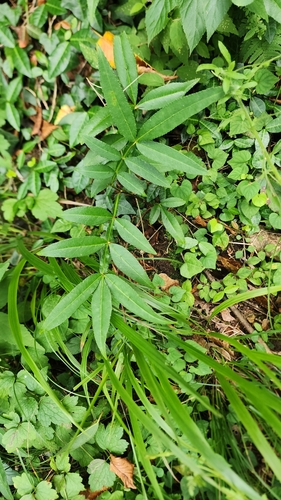
Zanthoxylum planispinum
Winged prickly ash, Chinese wingleaf pricklyash
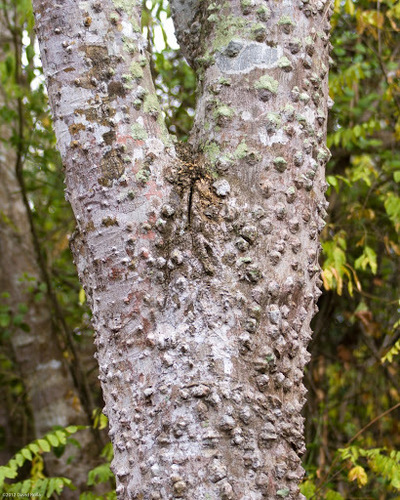
Zanthoxylum rhetsa
Indian prickly ash, Cape yellowwood
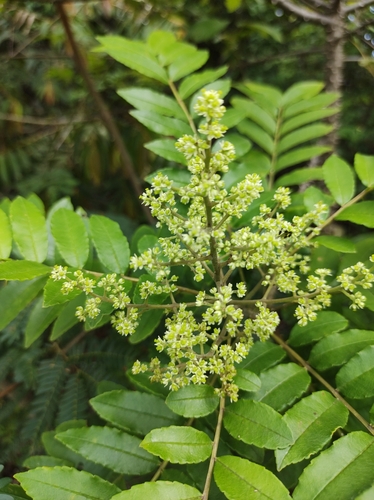
Zanthoxylum rhoifolium
Dark prickly ash
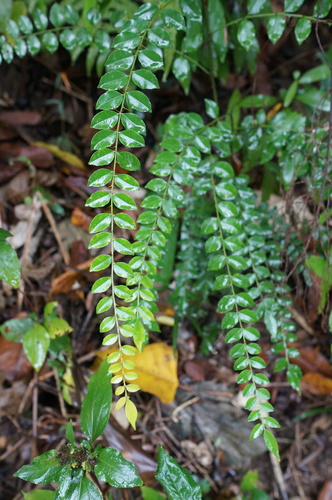
Zanthoxylum scandens
Zanthoxylum schinifolium
Green zanthoxylum, Aromatic zanthoxylum
Zanthoxylum simulans
Szechwan pepper, Sichuan peppercorn