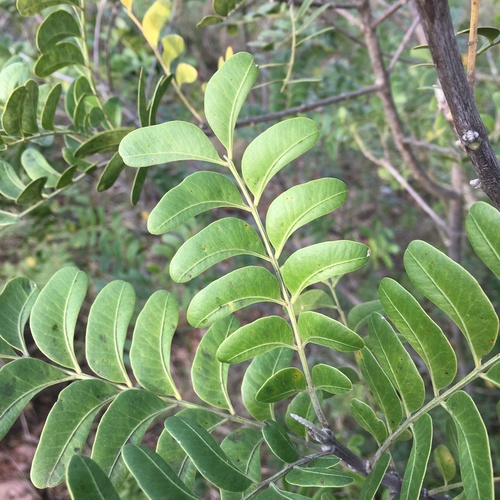
Clausena heptaphylla
(Roxb.) Wight & Arn.
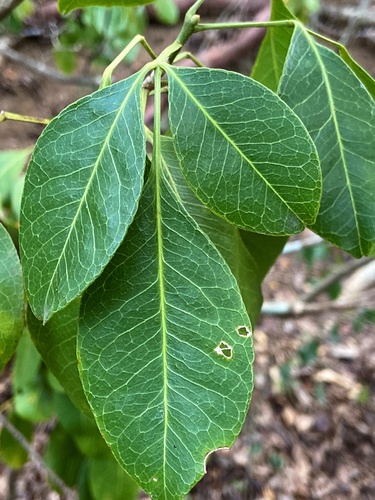
iNaturalist· cc-by-nc
(c) V.Arun, some rights reserved (CC BY-NC), uploaded by V.Arun
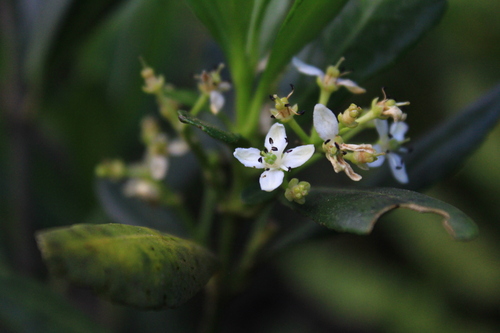
iNaturalist· cc-by-nc
(c) V.Arun, some rights reserved (CC BY-NC)
Description
A tropical shrub in the Rutaceae family with edible leaves and fruit.
This description is brief — help expand it
Edible Uses
An essential oil from the leaves is used to flavour alcoholic beverages, in the same way as those of Clausena anisum-olens. The smell is said to have a narcotic action.
Traditional Uses
The leaves are chewed with betel leaves. They are used as flavouring..
This uses section is brief — help expand it
Medicinal Uses
The smell of the essential oil is said to have a narcotic action.
Distribution
A tropical plant.
Where It Grows
Asia, India, Indochina, Laos, Myanmar, Northeastern India, SE Asia,
Other Uses
An essential oil from the leaves is used as a flavouring.
Production
In India plants flower and fruit April to December.
Notes
There are about 23-30 Clausena species.
Synonyms
Also Known As
Dieng-siang-mat, Karumphul, Taw-pyin-daw-thein
References (6)
- Fl. Brit. India 1:504. 1875 (Wight & Arn., Prodr. fl. Ind.orient. 95 (in note). 1834, nom. inval.)
- Jeeva, S., 2009, Horticultural potential of wild edible fruits used by the Khasi tribes of Meghalaya. Journal or Horticulture and Forestry Vol. 1(9) pp. 182-192
- Martin, F. W., et al, 1987, Perennial Edible Fruits of the Tropics. USDA Handbook 642 p 74
- Ramachandran, V. S., 2007, Wild edible plants of the Anamalais, Coimbatore district, western Ghats, Tamil Nadu. Indian Journal or Traditional Knowledge. 6(1) pp 173-176
- Sawian, J. T., et al, 2007, Wild edible plants of Meghalaya, North-east India. Natural Product Radiance Vol. 6(5): p 414
Show all 6 references Hide references
- Singh, H.B., Arora R.K.,1978, Wild edible Plants of India. Indian Council of Agricultural Research, New Delhi. p 22