Clausena brevistyla
Oliver
Clausena
iNaturalist· cc-by-nc-sa
(c) filibot.web, some rights reserved (CC BY-NC-SA)
iNaturalist· cc-by-nc
(c) Ian McMaster, some rights reserved (CC BY-NC)
iNaturalist· cc-by-nc
(c) Alan McArthur, some rights reserved (CC BY-NC)
Summary
Source: WikipediaClausena brevistyla is a species of evergreen shrub to 6 m tall, in the citrus family Rutaceae. It is found in New Guinea and Queensland, Australia.
Description
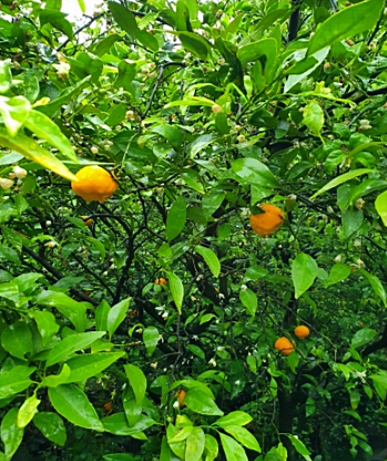
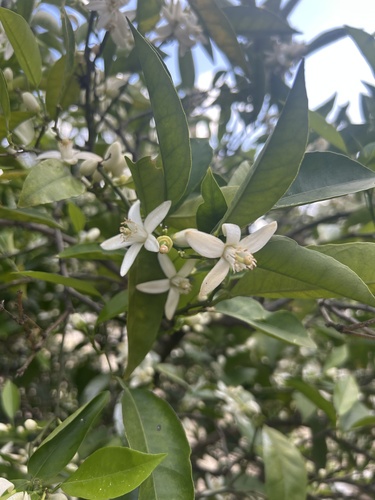
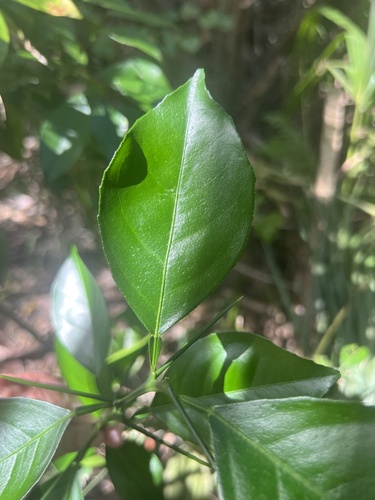
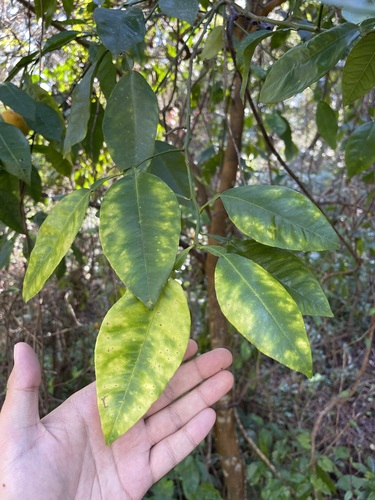
A medium sized shrub. It grows to 2-3 m high and spreads to 1-1.5 m across. The young shoots have hairs. There are 10-15 leaflets which are 5-15 cm long by 6 cm wide. They are oval and bright green. They have small oil dots and are thin textured. The edges of the leaves have ornamental, rounded lobes. The flower clusters are at the ends of branches and in the axils of upper leaves. The flower clusters are loose and large. The flowers are 0.8 cm across and white. The fruit is a berry, which is about 1-1.3 cm across and dry. Both the leaves and flowers have a fragrant smell. The fruit are edible. There is one seed inside and it is 9-11 mm long by 7-8 mm wide.
Edible Uses
Fruit. A sweet flavour, but with a powerful, aromatic aftertaste like orange-peel. The pink (sometimes white or purple) globose fruit is around 5 - 8mm in diameter, containing 1 - 3 seeds. The fruits are produced in large clusters at the ends of branches.
Traditional Uses
The fruit are eaten.
This uses section is brief — help expand it
Distribution
A tropical plant. It grows in lowland and upland rainforest. In tropical Queensland it grows from sea level to 1000 m altitude.
Where It Grows
Australia*, Pacific, Papua New Guinea, PNG,
Cultivation
Plants are grown from seed. Seed should be planted fresh.
Propagation
Seed - it germinates quickly if sown when fresh.
Production
The flowers are produced from August to October and the fruit are ripe March to April.
Other Information
It is not known if they are used for food in Papua New Guinea.
Notes
There are about 23-30 Clausena species.
References (7)
- Cooper W & Cooper W T, 1994, Fruits of the Rain Forest. RD Press p 74
- Cooper, W. and Cooper, W., 2004, Fruits of the Australian Tropical Rainforest. Nokomis Editions, Victoria, Australia. p 460
- Elliot, W.R., & Jones, D.L., 1984, Encyclopedia of Australian Plants suitable for cultivation. Vol 3. Lothian. p 43
- Jackes, B.R., 2001, Plants of the Tropics. Rainforest to Heath. An Identification Guide. James Cook University. p 78
- Jones D, L, 1986, Ornamental Rainforest Plants in Australia, Reed Books, p 106
Show all 7 references Hide references
- Townsend, K., 1994, Across the Top. Gardening with Australian Plants in the tropics. Society for Growing Australian Plants, Townsville Branch Inc. p 134
- Williams, J.B., Harden, G.J., and McDonald, W.J.F., 1984, Trees and shrubs in rainforests of New South Wales and Southern Queensland. Univ. of New England, Armidale. p 33