Causonis trifolia
(L.) Mabb. & J. Wen
iNaturalist· cc-by-nc
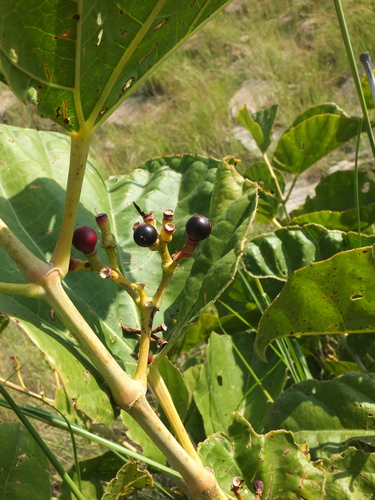
(c) Shiwalee Samant, some rights reserved (CC BY-NC), uploaded by Shiwalee Samant
iNaturalist· cc-by-nc
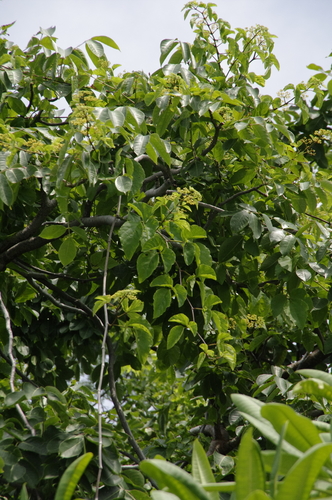
(c) anilamanalil, some rights reserved (CC BY-NC), uploaded by anilamanalil
iNaturalist· cc-by-nc-nd
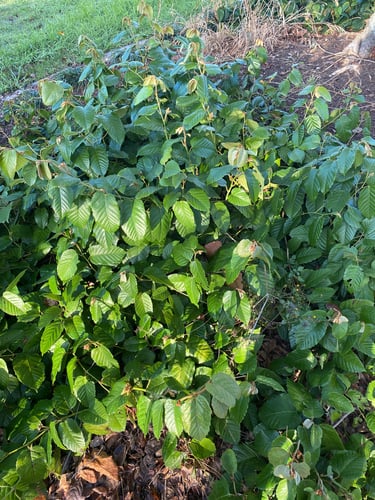
(c) Dinesh Valke, some rights reserved (CC BY-NC-ND)
Summary
Source: WikipediaCausonis trifolia commonly known as bush grape, fox-grape, three-leaved wild vine or threeleaf cayratia is a species of plant native to regions from India, through Southeast Asia to Australia and the western Pacific Ocean. It is a vine with a stem diameter up to 7 cm (2.8 in), trifoliate leaves and blackish berries. Its leaves contain several flavonoids, such as cyanidin and delphinidin. Hydrocyanic acid is present in the stem, leaves and roots.
Description
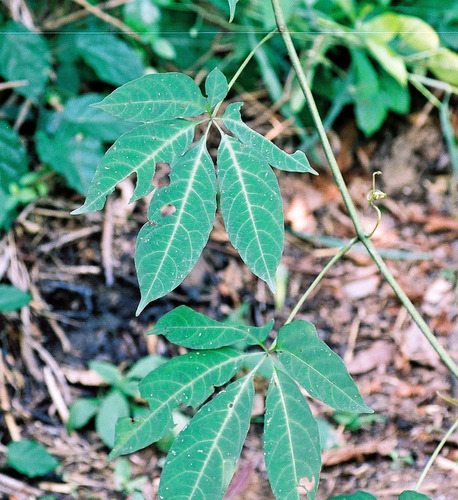
A woody creeper. It grows 2-20 m long. The branches have ridges along them. They are slightly hairy. The tendrils are 3-5 branched. The leaves have 3 leaflets. The leaflets are oval and 3-6 cm long by 1.5-4 cm wide. They have hairs on top. The fruit are round berries 7-8 mm across. They have 2-3 seeds. The seeds are triangle shaped.
Edible Uses
The leaves are boiled with salt and eaten, and the round berries are edible.
Traditional Uses
The leaves are boiled with salt and then eaten.
This uses section is brief — help expand it
Medicinal Uses
The plant has several important medicinal properties.
Distribution
It is a tropical plant.
Where It Grows
Andamans, Asia, Australia, Bangladesh, Cambodia, China, Himalayas, Indonesia, Laos, Malaysia, Myanmar, Nepal, New Caledonia, Northeastern India, Pacific, Pakistan, Papua New Guinea, SE Asia, Solomon Islands, Sri Lanka, Thailand, Vanuatu, Vietnam,
Notes
It has several important medicinal properties.
Synonyms
References (4)
- Balkrishna, A., et al, 2022, Indigenous Uses of Plants among Forest-dependent Communities of Seijosa, Arunachal Pradesh. International Journal of Economic Plants 2022, 9(1):064-080
- Ferns, Useful Tropical Plants.
- Flora of China
- World Checklist of Useful Plant Species 2020. Royal Botanic Gardens, Kew