Ampelocissus obtusata
(Welw. ex Baker) Planch.
Wild grape
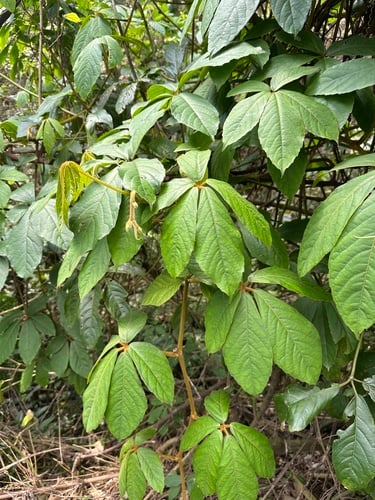
iNaturalist· cc-by-nc
(c) Peter Erb, some rights reserved (CC BY-NC), uploaded by Peter Erb
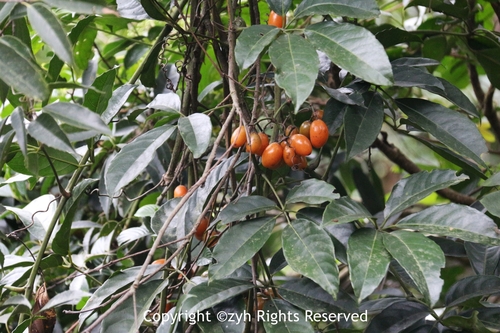
iNaturalist· cc-by-nc
(c) Troos van der Merwe, some rights reserved (CC BY-NC)
iNaturalist· cc-by-nc
(c) Troos van der Merwe, some rights reserved (CC BY-NC)
Description
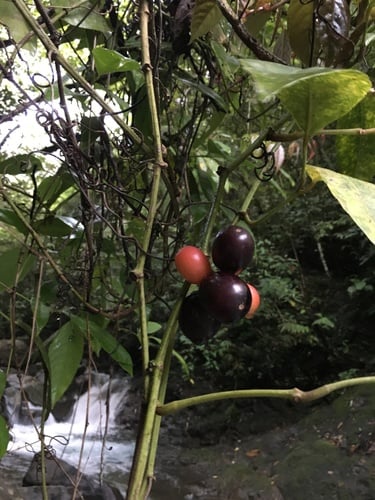
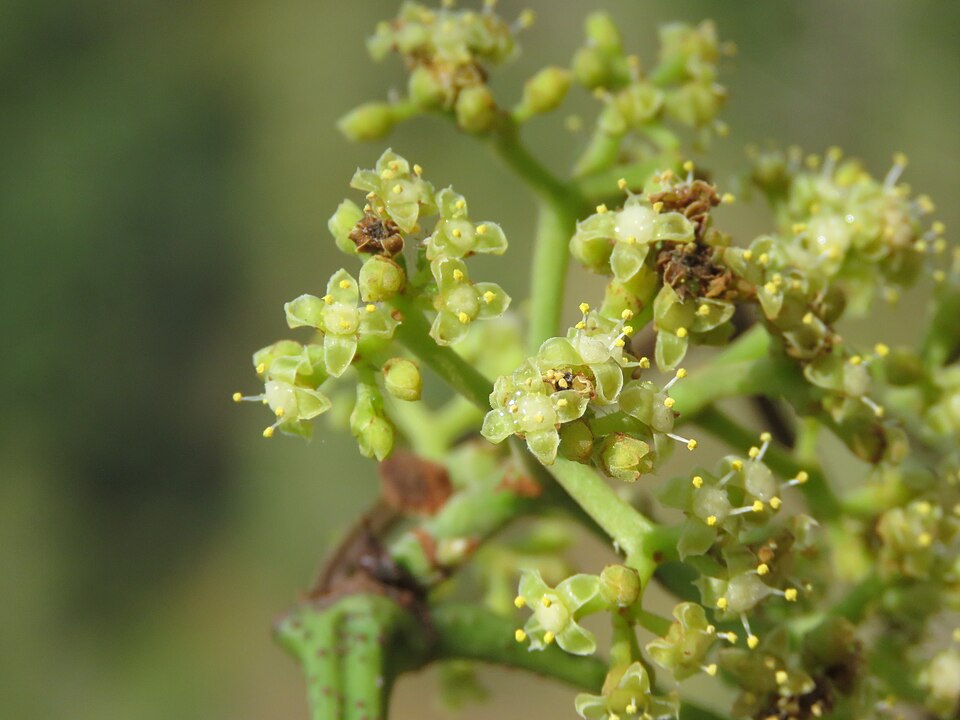
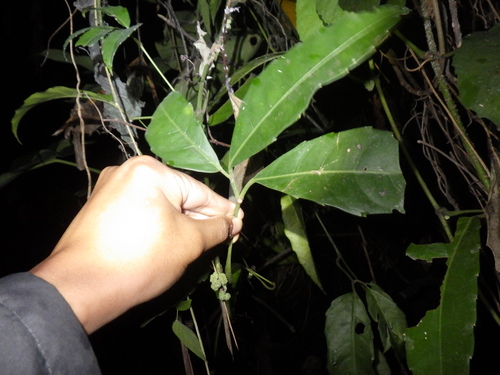
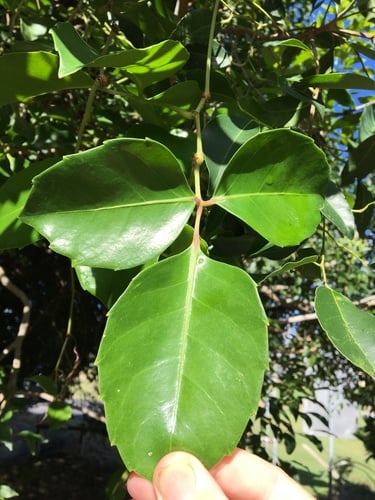
A climbing herb. It keeps growing from year to year. It grows 2 m tall. The leaves have 3 to 5 leaflets. The leaflets are leathery and there are irregular teeth along the edge. The flowers are in dense compact heads. These are on long stalks. The flowers are red and with yellow anthers. The fruit are small and red. They are tart but edible.
Edible Uses
The ripe fruit are eaten fresh.
Traditional Uses
The ripe fruit are eaten.
This uses section is brief — help expand it
Distribution
A tropical plant. It grows in woodland areas and rocky outcrops.
Where It Grows
Africa, East Africa, Mozambique, Southern Africa, Zambia, Zimbabwe,
Notes
There are about 95 Ampelocissus species.
Synonyms
Also Known As
Munsansa, Muzambiringa
References (4)
- Malaisse, F., 1997, Se nourrir en floret claire africaine. Approche ecologique et nutritionnelle. CTA., p 57
- Malaisse, F., 2010, How to live and survive in Zambezian open forest (Miombo Ecoregion). Les Presses Agronomiques de Gembloux.
- Maroyi, A., 2011, The Gathering and Consumption of Wild Edible Plants in Nhema Communal Area, Midlands Province, Zimbabwe. Ecology of Food and Nutrition 50:6, 506-525
- Maroyi, A. & Cheikhyoussef, A., 2017, Traditional knowledge of wild edible fruit in southern Africa: A comparative use patterns in Namibia and Zimbabwe. Indian Journal of Traditional Knowledge. 16(3): 385-392