Ampelocissus leonensis
(Hook.f.) Planch.
No photos yet for Ampelocissus leonensis
Sign in to contribute a photoDescription
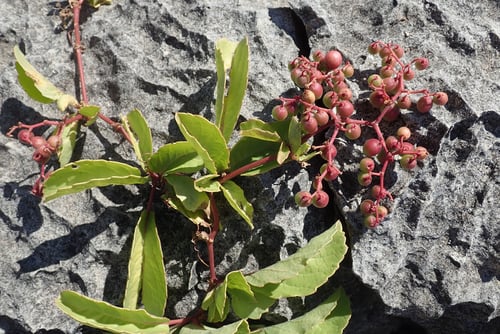
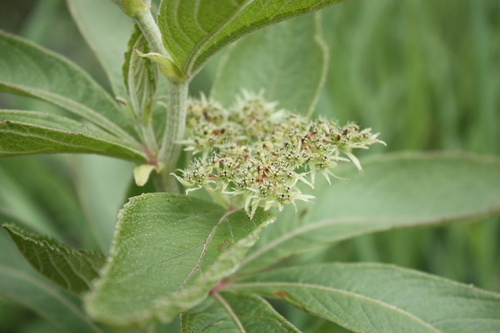
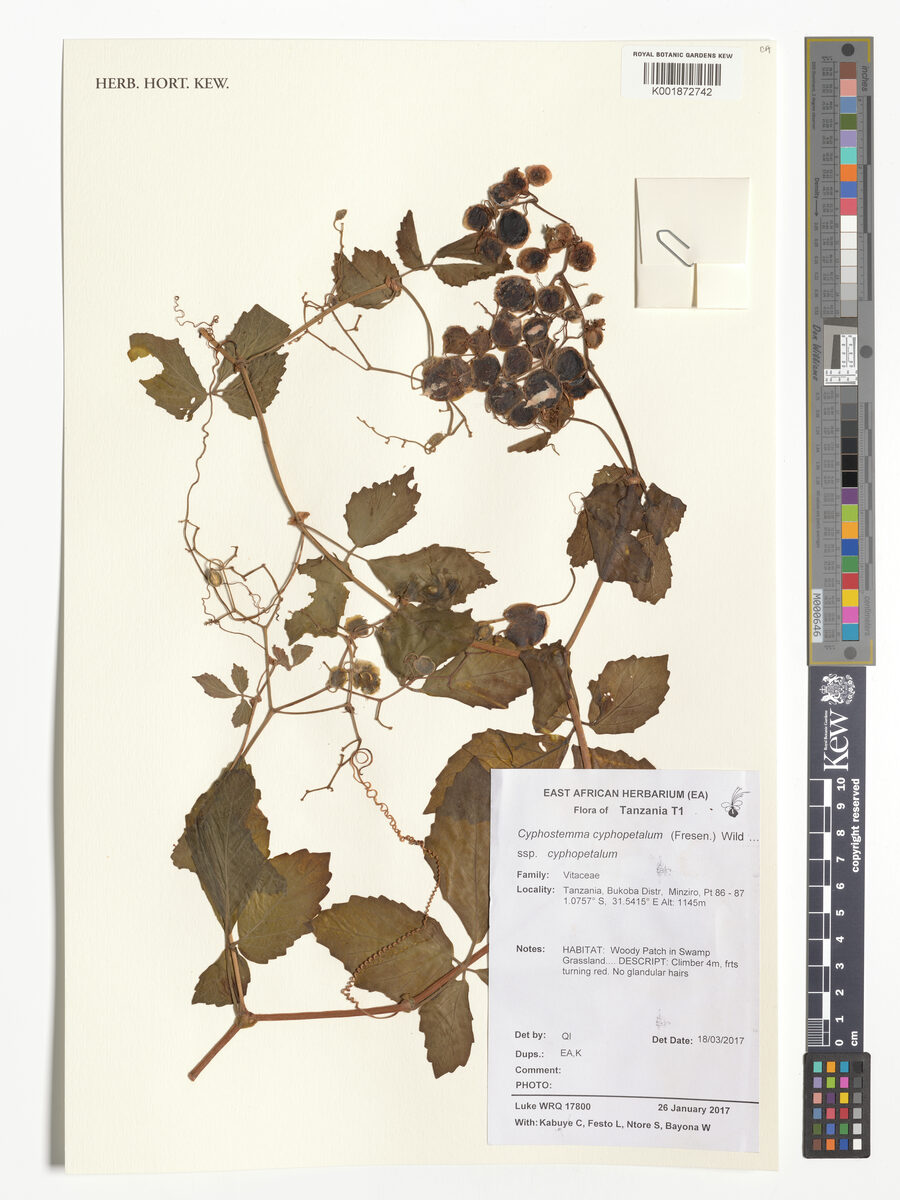
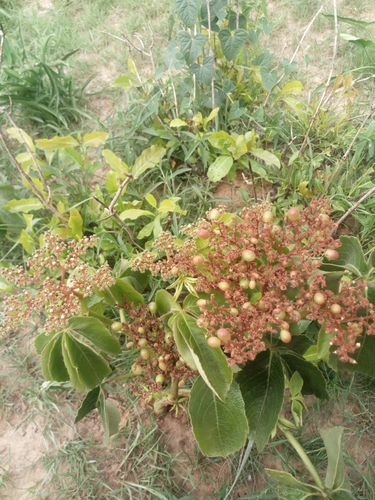
A stout climbing plant. It is softly woody. The stems are hollow. They have bristly hairs. The leaves are almost round or with 5 lobes. They are ash coloured but red underneath. The tendrils are long, woody and branched. The flowers are on a long stalk with a tuft at the end. The flowers are green. The fruit are purple and like grapes. They are sour.
Edible Uses
The fruit are edible and can be eaten fresh.
Distribution
A tropical plant. It grows in the forest.
Where It Grows
Africa, Burkina Faso, Gambia, Guinea, Guinée, Guinea-Bissau, Nigeria, Senegal, Sierra Leone, West Africa,
Notes
There are about 95 Ampelocissus species.
Synonyms
Ampelocissus bakeri Planch.Ampelocissus celardii (Lecard) Planch.Ampelocissus salmonea (Baker) Planch.Cissus leonensis Hook. f.Vitis leonensis (Hook. f.) BakerVitis salmonea Baker
References (8)
- Bircher, A. G. & Bircher, W. H., 2000, Encyclopedia of Fruit Trees and Edible Flowering Plants in Egypt and the Subtropics. AUC Press. p 25 (Also as Ampelocissus lecardii)
- Burkill, H. M., 1985, The useful plants of west tropical Africa, Vol. 5. Kew.
- Dalziel, J. M., 1937, The Useful plants of west tropical Africa. Crown Agents for the Colonies London. (Also as Ampelocissus lecardii)
- Gallagher, D. E., 2010, Farming beyond the escarpment: Society, Environment, and Mobility in Precolonial Southeastern Burkina Faso. PhD University of Michigan.
- Global Plants JSTOR
Show all 8 references Hide references
- Jardin, C., 1970, List of Foods Used In Africa, FAO Nutrition Information Document Series No 2.p 119
- Peters, C. R., O'Brien, E. M., and Drummond, R.B., 1992, Edible Wild plants of Sub-saharan Africa. Kew. p 200 (Also as Ampelocissus lecardii)
- World Checklist of Useful Plant Species 2020. Royal Botanic Gardens, Kew