Ampelocissus multistriata
(Baker) Planch.
iNaturalist· cc-by-nc
(c) Umar Musa, some rights reserved (CC BY-NC), uploaded by Umar Musa
iNaturalist· cc-by-nc
(c) Umar Musa, some rights reserved (CC BY-NC), uploaded by Umar Musa
iNaturalist· cc-by-nc
(c) Umar Musa, some rights reserved (CC BY-NC), uploaded by Umar Musa
Description
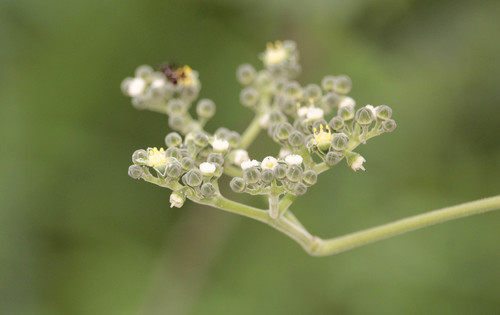
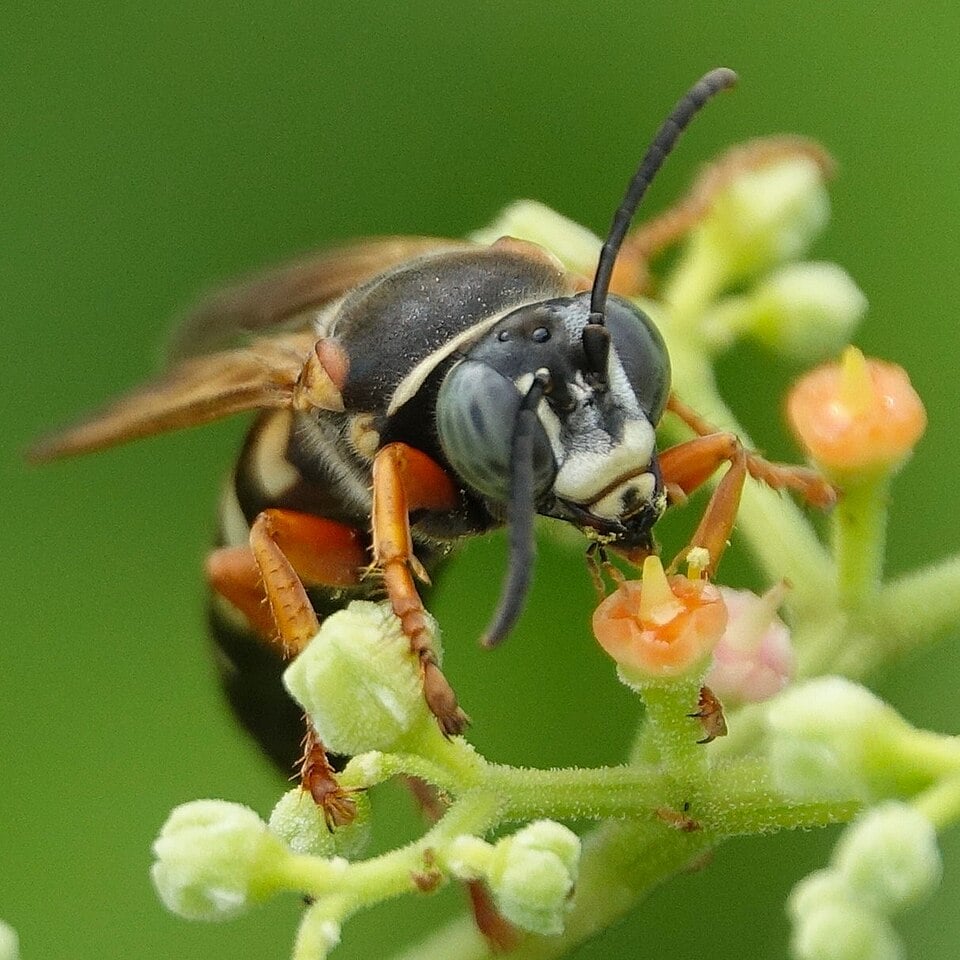
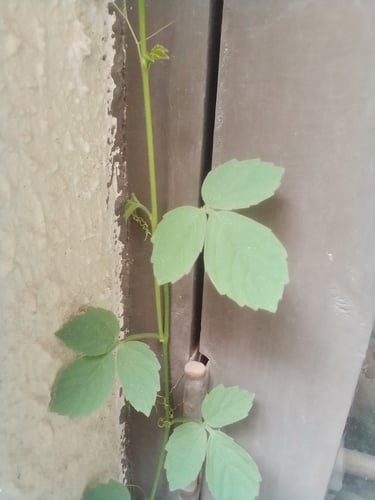
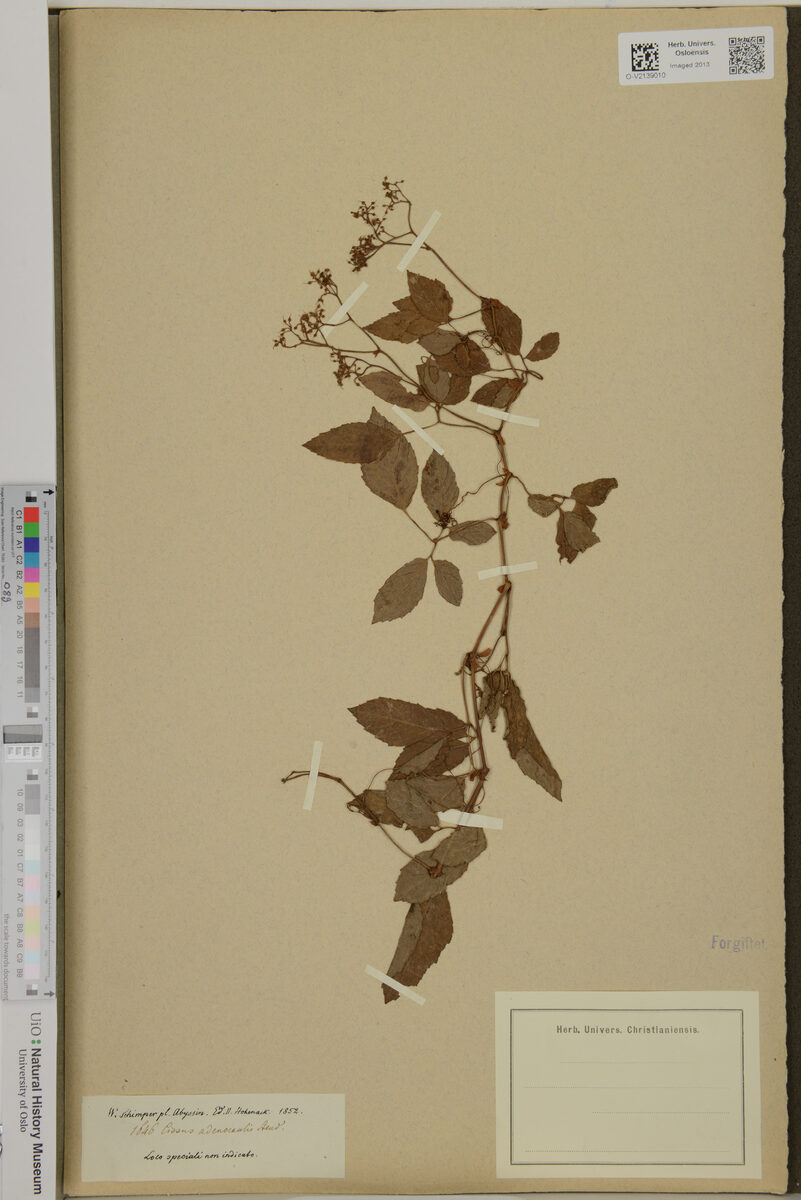
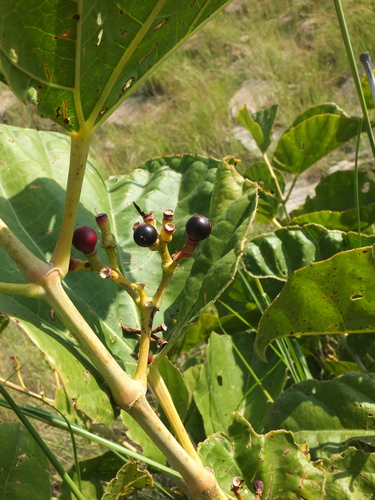
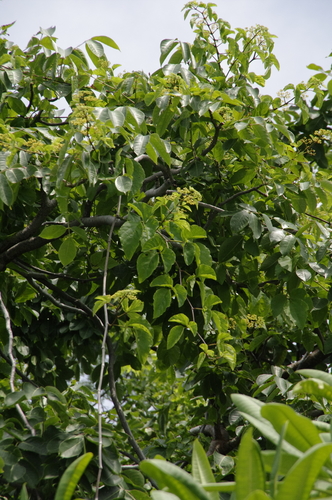
A large climber. The stems are hollow and have fine lines along them. The leaves have 5 leaflets. They can be simple and have 5 lobes. The leaflet blade is 22 cm long by 11 cm wide. The side leaflets are smaller. The flowers are in a branched cluster. They are on a stalk 11 cm long. There are tendrils below the flower stalk. The fruit is about 1 cm long. They are narrowly oval. The seeds are dark brown and 9 mm long by 4 mm wide.
Edible Uses
Both the fruit and seeds are edible.
Distribution
A tropical plant. It grows in savanna scrub. It grows along rivers.
Where It Grows
Africa, Burkina Faso, Cameroon, Central Africa, Central African Republic, CAR, Chad, Congo, East Africa, Gambia, Guinea, Guinée, Guinea-Bissau, Malawi, Mali, Mozambique, Nigeria, Senegal, Southern Africa, Sudan, Tanzania, West Africa, Zambia,
Notes
There are about 95 Ampelocissus species.
Synonyms
Also Known As
Dirindiri, Funhalon, Galavumba, Me, Perupe
References (8)
- Bircher, A. G. & Bircher, W. H., 2000, Encyclopedia of Fruit Trees and Edible Flowering Plants in Egypt and the Subtropics. AUC Press. p 25
- Bongers, F. et al (Eds), Forest Climbing Plants of West Africa: Diversity, Ecology and Management. CABI (As Ampelocissus pentaphylla)
- Burkill, H. M., 1985, The useful plants of west tropical Africa, Vol. 5. Kew.
- Dalziel, J. M., 1937, The Useful plants of west tropical Africa. Crown Agents for the Colonies London. (As Ampelocissus pentaphylla)
- Jardin, C., 1970, List of Foods Used In Africa, FAO Nutrition Information Document Series No 2.p 119
Show all 8 references Hide references
- Peters, C. R., O'Brien, E. M., and Drummond, R.B., 1992, Edible Wild plants of Sub-saharan Africa. Kew. p 200 (As Ampelocissus pentaphylla)
- White, F., Dowsett-Lemaire, F. and Chapman, J. D., 2001, Evergreen Forest Flora of Malawi. Kew. p 596
- World Checklist of Useful Plant Species 2020. Royal Botanic Gardens, Kew