Ampelocissus martini
Planchon
wikimedia· cc-by-sa
Wikimedia Commons - Omar hoftun
gbif· cc0
President and Fellows of Harvard College
Description
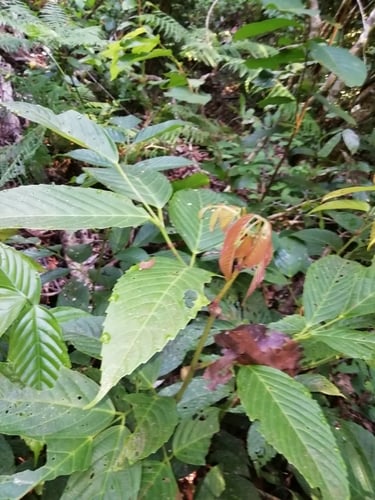
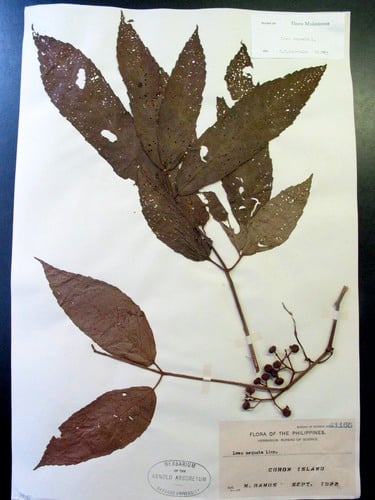
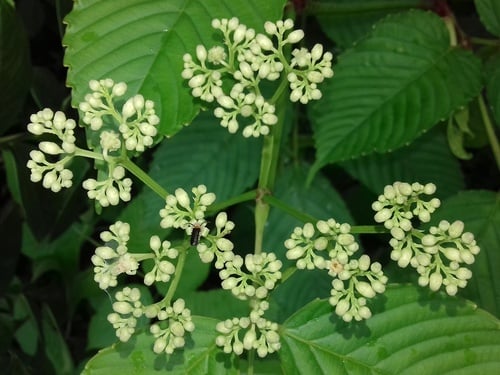
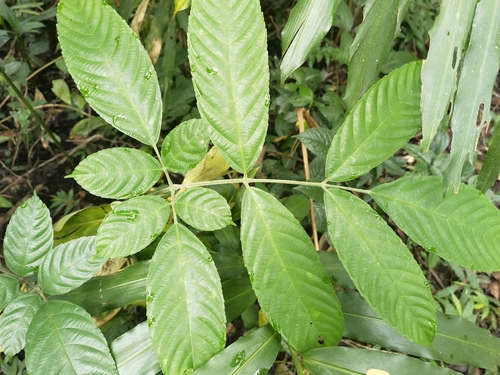
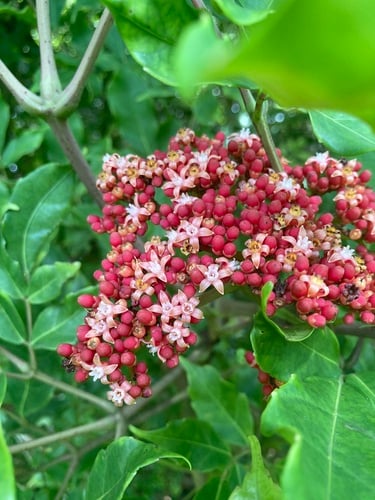
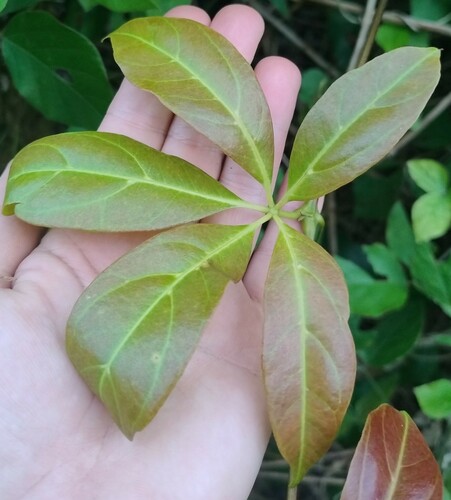
A large woody vine or climbing shrub. It has large easy to see tendrils. It has large tuberous roots. The leaves have 3 lobes and are somewhat hairy. The edges of the leaves have teeth. The lower surface of the leaf has velvety hairs. The flowers are small and reddish purple. The fruit are borne in grape like clusters. They are 1 cm across. They are green and fleshy. They are edible.
Edible Uses
The fruit is eaten, including, in Cambodia, unripe with salt. In the community forest of Khok Bung Preu (northeast Thailand), the wild fruit are one of a number of non-timber forest products gathered by the local people, mainly for sale, with no limit on quantities harvested. The rhizome extracts of Ampelocissus martini included secondary metabolites, specifically flavonoids and phenolics, that function as effective reducing agents and stabilizers during the manufacture of zinc oxide nanoparticles.
Traditional Uses
The fruit are eaten. Unripe fruit are eaten with salt.
This uses section is brief — help expand it
Distribution
A tropical plant. It grows in sunny areas. It is distributed from Luzon to Palawan in the Philippines.
Where It Grows
Asia, Cambodia, Indochina, Laos, Malaysia, Pacific, Philippines, SE Asia, Thailand, Vietnam,
Notes
There are about 95 Ampelocissus species.
Synonyms
Also Known As
Anggur hutan, Bika, Nho rung, Somkhung, Somkui, Somz kooyx, Thaowan-khon, Tumpeang bay chu prei
References (8)
- Bircher, A. G. & Bircher, W. H., 2000, Encyclopedia of Fruit Trees and Edible Flowering Plants in Egypt and the Subtropics. AUC Press. p 25
- Brown, W.H., 1920, Wild Food Plants of the Philippines. Bureau of Forestry Bulletin No. 21 Manila. p 106
- A. L. P. P. de Candolle & A. C. de Candolle, Monogr. phan. 5:373. 1887
- Kachenchart, B., et al, 2008, Phenology of Edible Plants at Sakaerat Forest. In Proceedings of the FORTROP II: Tropical Forestry Change in a Changing World. Bangkok, Thailand.
- Milow, P., et al, 2013, Malaysian species of plants with edible fruits or seeds and their evaluation. International Journal of Fruit Science. 14:1, 1-27
Show all 8 references Hide references
- Phon, P., 2000, Plants used in Cambodia. © Pauline Dy Phon, Phnom Penh, Cambodia. p 33
- Verheij, E. W. M. and Coronel, R.E., (Eds.), 1991, Plant Resources of South-East Asia. PROSEA No 2. Edible fruits and nuts. Pudoc Wageningen. p 315
- World Checklist of Useful Plant Species 2020. Royal Botanic Gardens, Kew