Melia volkensii
Gurke
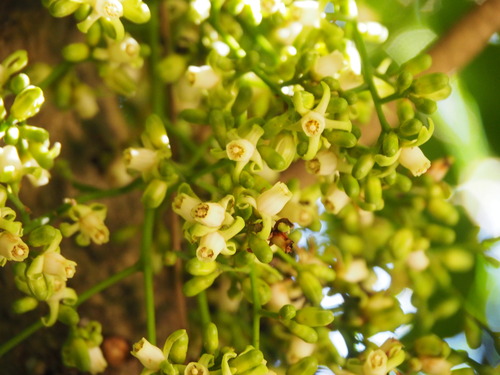
iNaturalist· cc-by-nc
(c) Teddy Kinyanjui, some rights reserved (CC BY-NC)
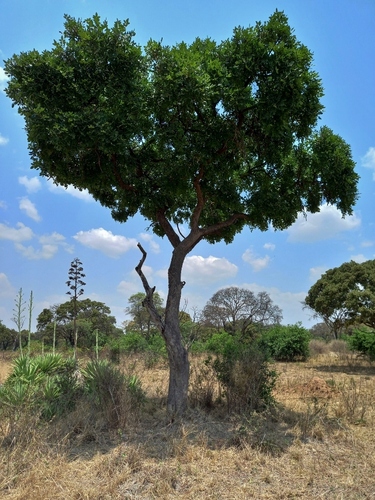
iNaturalist· cc-by-nc
(c) bryanadkins, some rights reserved (CC BY-NC)
iNaturalist· cc-by-nc
(c) bryanadkins, some rights reserved (CC BY-NC)
Description
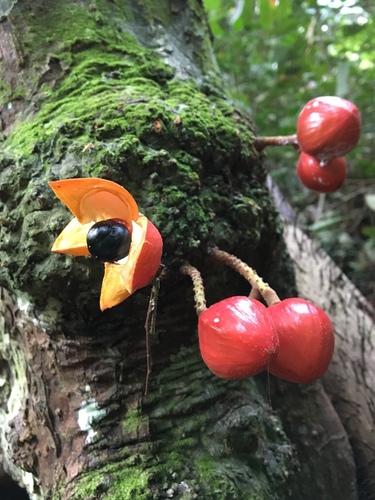
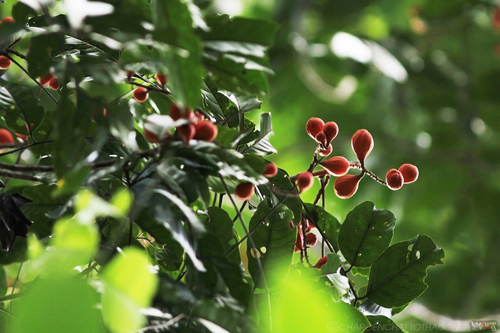
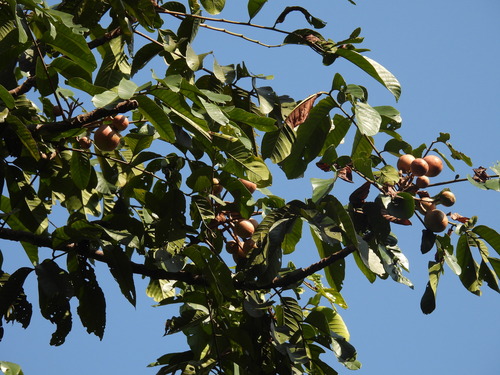
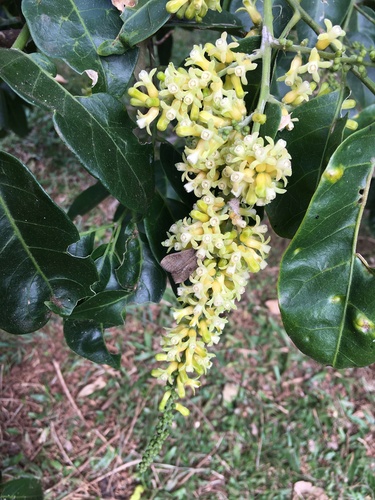
A tree. It grows 15-20 m tall. The crown is flattened due to browsing by giraffes. The bark has cracks along it. The leaves are 35 cm long. The leaflets are entire. The flowering shoots are on older branched and are 12 cm long. The fruit is 3-4 cm long. They have a thick bony coat. There are 5 lobed depressions.
Distribution
It is a tropical plant.
Where It Grows
Africa, East Africa, Ethiopia, Kenya, Somalia, Tanzania,
Cultivation
A plant of the drier tropics, where it is found at elevations from 350 - 1,680 metres. It grows best in areas where annual daytime temperatures are within the range 20 - 28°c, but can tolerate 16 - 32°c. It prefers a mean annual rainfall in the range 500 - 800mm, but tolerates 300 - 1,000mm. Grows best in a sunny position. Succeeds in most soils; including sandy, clay and shallow stony soils, but preferably with good drainage. Prefers a pH in the range 6 - 7, tolerating 5.5 - 7.5. Established plants are very drought tolerant. The tree coppices well and is fast growing, with a rotation of 10 - 15 years. The trees have been reported to start flowering as early as 2 - 3 years old from seed.
Propagation
Seed - there are conflicting reports on whether the seed can be stored, so it is probably wise to try and sow the seed as soon as it is ripe. One of the factors that limits the use of this species is seed dormancy. The type of dormancy is not yet completely known but it seems to be caused by the extremely hard endocarp and/or the seed coat. There are effective ways of pre-treatment but they are all very labour intensive. To get optimal germination the seeds must first be extracted using a knife to remove the endocarp. After extraction the caruncle is removed and the seedcoat is nicked or cut with a knife. Extracted seeds are very susceptible to fungal infections so extraction should wait until just before sowing. The traditional method of pre-treatment, using stones that have been eaten and excreted by animals, only improves germination slightly. Extracted and scarified seeds will normally germinate very quickly. Before sowing it is recommended to soak the seeds in water for 18 hours. Optimal temperature for germination is 25 - 37°c - studies have shown that germinating seeds are damaged by higher or lower temperatures. As a result of this, it is strongly recommended to shade seedbeds and only water early in the morning and late in the evening when soil temperatures are low. The seedlings are highly susceptible to damping-off. Vegetative propagation by root cuttings is possible while there has been little success using stem cuttings as rooting is difficult.
Other Uses
Like the related neem tree (Azadirachta indica), this species contains compounds (although not azadirachtin) that are toxic to insects. Aqueous extracts of the fruits are traditionally used to control fleas and ticks. Leaf preparations are used as flea and fly repellents. The wood is coarse-textured, durable and extremely termite and decay resistant, easily worked, planes well. It is valued locally for making items such as door and window frames, door shutters, rafters, poles and furniture. Because the wood is so easy to work and shape, it is one of the principal species used to make items such as log hives and acoustic drums. The wood is used for fuel. The firewood produces an unpleasant smoke, and the tree is said to produce poor quality charcoal.
Also Known As
Boran, Digo, Kamba, Kikuyu, Taveta, TRharaka
References (1)
- World Checklist of Useful Plant Species 2020. Royal Botanic Gardens, Kew