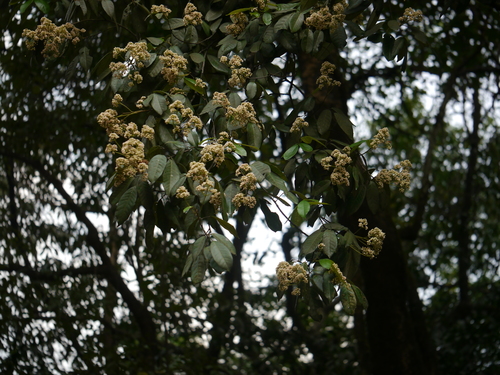
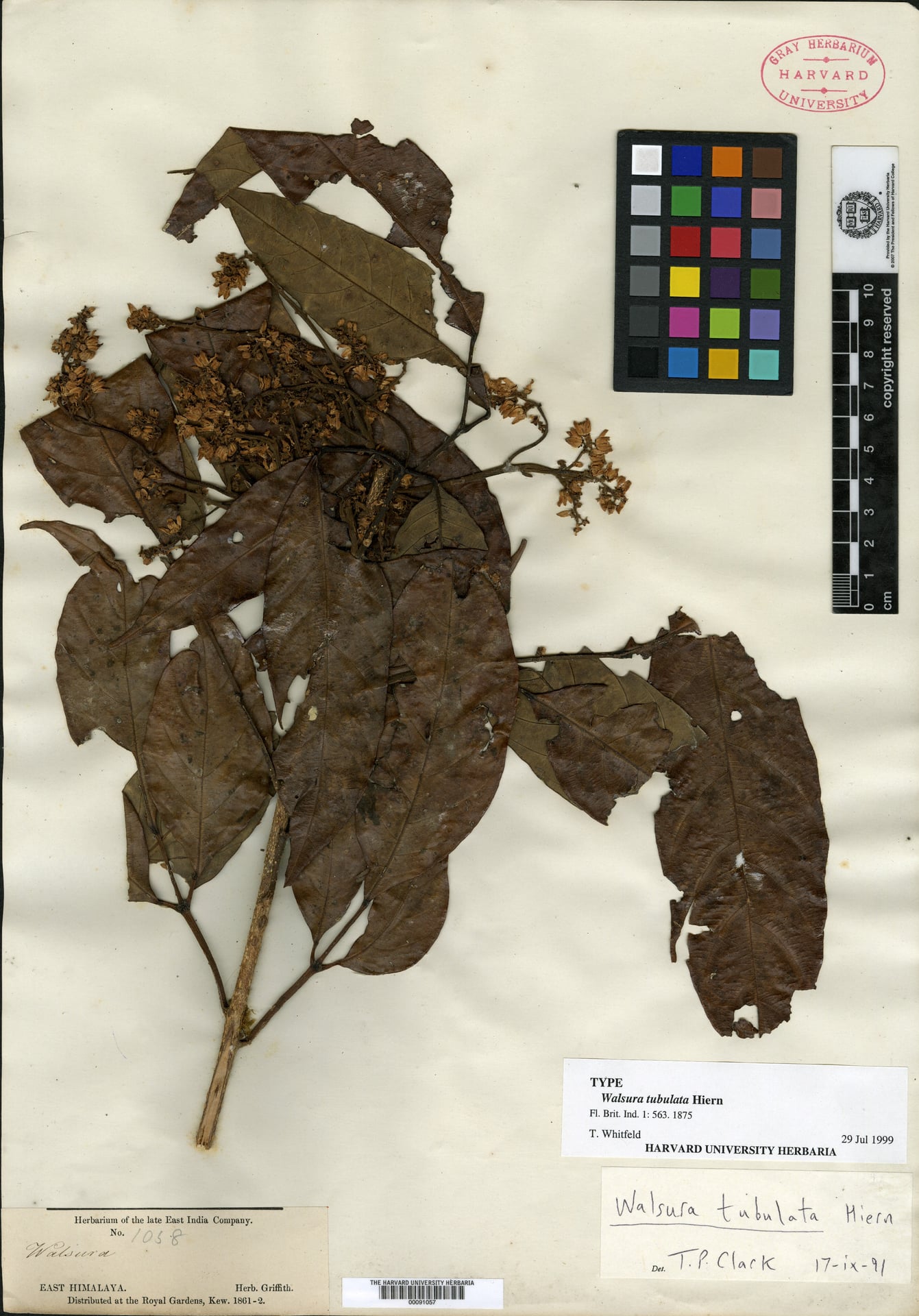
Dysoxylum cyrtobotryum
Miq.
iNaturalist· cc-by-nc
(c) Binturong27, some rights reserved (CC BY-NC), uploaded by Binturong27
Summary
Source: WikipediaDysoxylum cyrtobotryum is a species of tree in the family Meliaceae. The specific epithet cyrtobotryum is from the Greek meaning 'curved fruits'.
Description
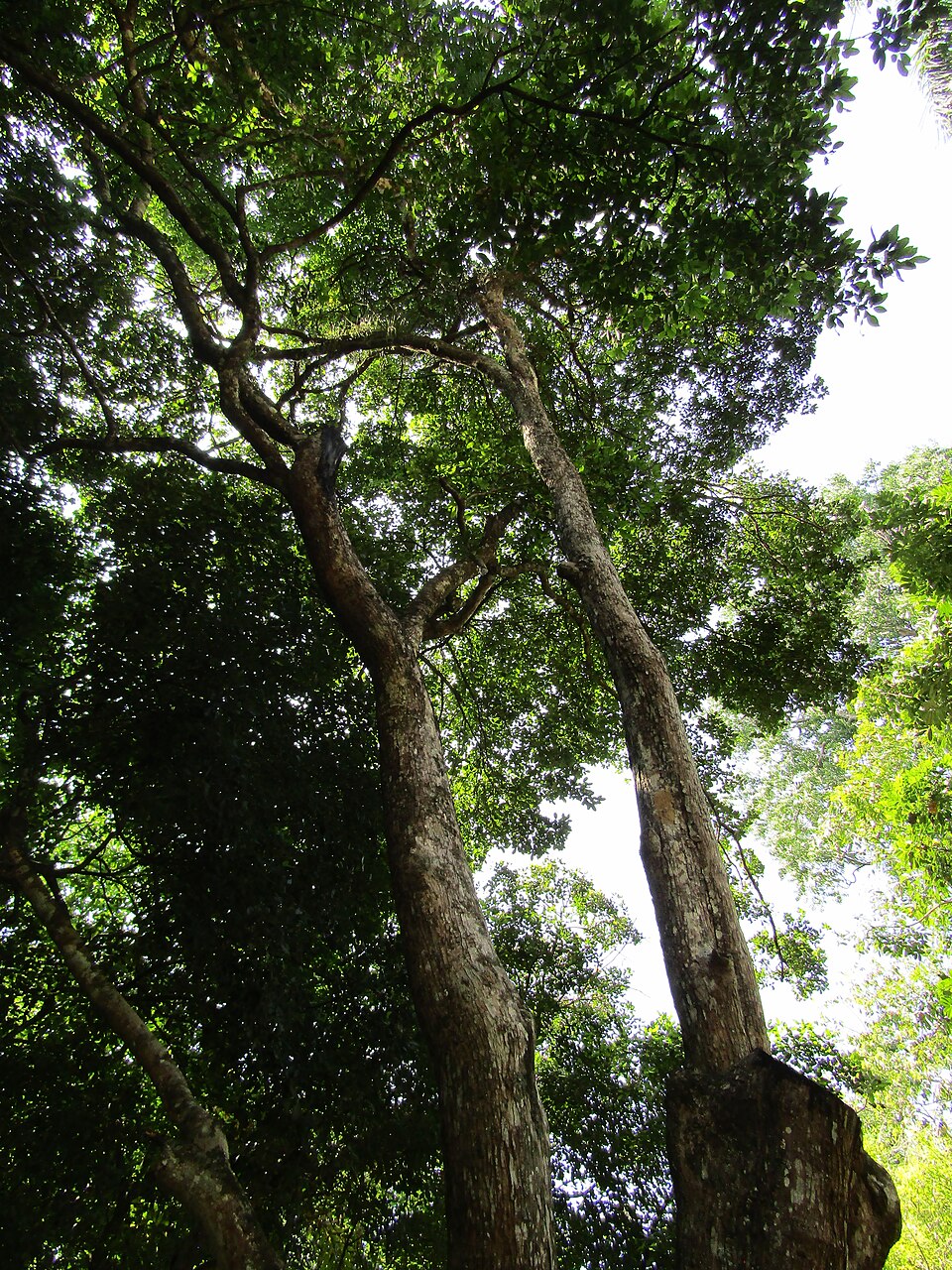
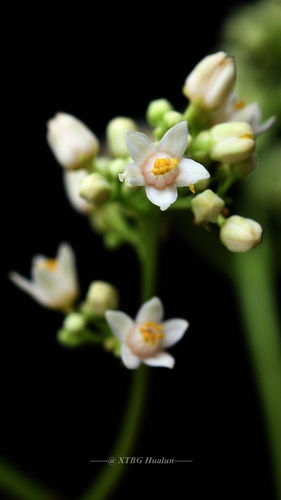
A tree. It can grow 15-39 m tall. The trunk can be up to 85 cm across. It can have buttresses 100 cm tall. The flowers are yellow and have a scent. The fruit are round to fig shaped and orange to red and 5 cm across.
Edible Uses
The fruit is eaten.
Distribution
It is a tropical plant. It can grow up to 2,000 m above sea level.
Where It Grows
Andamans, Asia, Brunei, Cambodia, Indonesia, Laos, Malaysia, Myanmar, Northeastern India, Philippines, SE Asia, Thailand, Vietnam,
Cultivation
We have no specific information for this species, but most members of the genus are dioecious, in which case both male and female forms need to be grown if fruit and seed are required.
Other Uses
The heartwood is red-brown; it is clearly demarcated from the pale yellow sapwood. The freshly cut wood has a sour smell. The wood is suitable for medium to heavy construction work, planking, flooring, panelling, and for manufacturing high grade furniture, wood pallets, veneer and plywood. We have no more specific information on the wood of this species, but it is one of a group of species that are the source of a commercial timber known in the trade as 'jarum-jarum'. The general description of jarum-jarum is as follows:- The heartwood is orange-red to brick red when fresh,darkening on exposure; it is clearly demarcated from the yellow sapwood. The texture is moderately coarse but uneven due to the abundant of parenchyma; the grain is straight, interlocked, wavy or irregular; there is a watersilk marking on flat-sawn surfaces due to the parenchyma bands. The wood is moderately hard to hard. It is used for purposes such as flooring, furniture, wall panelling, solid door construction, veneer and plywood.
Synonyms
Also Known As
Bunya, Kayu ling, Kelampu, Lantupak, Segera
References (2)
- Ferns, Useful Tropical Plants.
- Suwardi, A. B., et al, 2020, Wild edible fruits generate substantial income for local people of the Gunung Leuser National Park, Aceh Tamiang Region. Ethnobotany Research & Applications 20:11