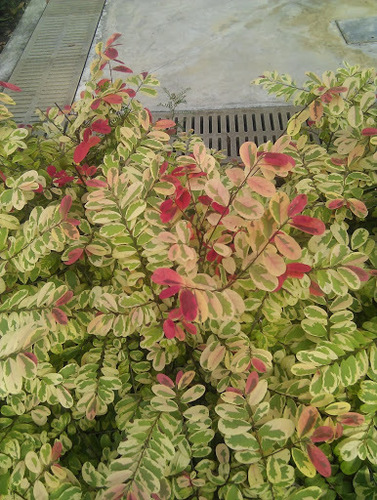
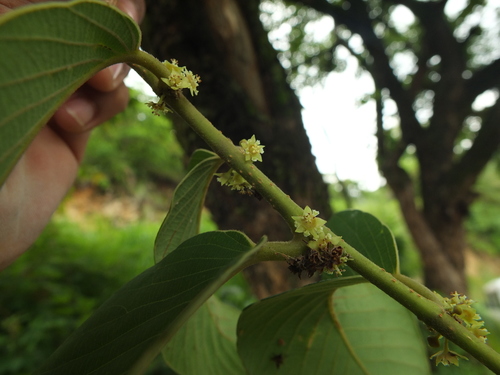
Phyllanthus ciccoides
Mull.Arg.
iNaturalist· cc-by-nc
(c) geoffbyrne, some rights reserved (CC BY-NC)
iNaturalist· cc-by-nc
(c) carolwest, some rights reserved (CC BY-NC)
iNaturalist· cc-by-nc
(c) carolwest, some rights reserved (CC BY-NC)
Description
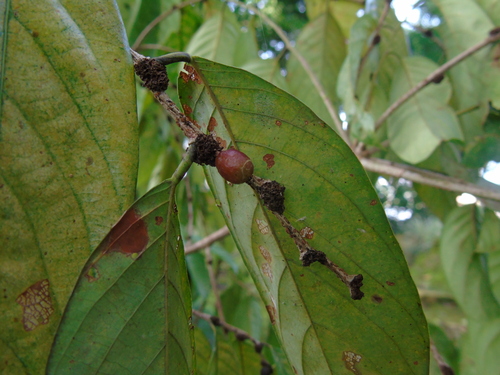
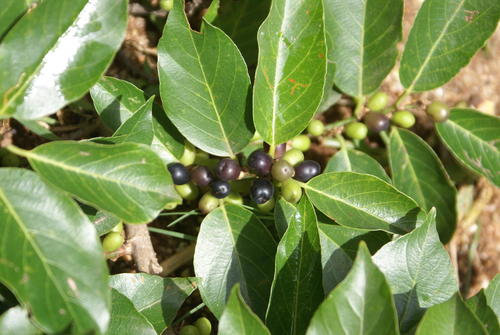
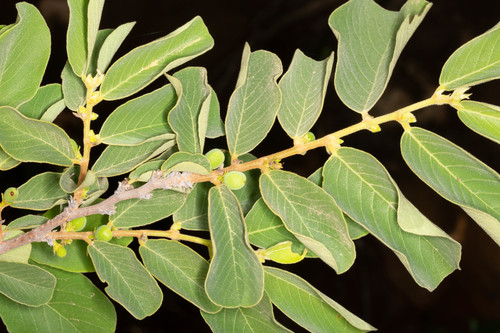
A tree. It can grow 10 m tall. The small branches have about 10 leaves and flowers. The leaves are alternate and simple and oval.
This description is brief — help expand it
Edible Uses
The fruit is eaten.
Distribution
It is a tropical plant. It has been recorded up to 1,900 m above sea level.
Where It Grows
Australia, New Caledonia, Pacific, Papua New Guinea, PNG, Solomon Islands, Vanuatu,
Cultivation
It can be grown from cuttings.
Other Uses
The pounded leaves are boiled in a mixture with other ingredients in order to stain Pandanus leaves black for traditional mat making. The wood is quite heavy and is used for beams and posts in traditional house building; it is also suitable for digging sticks, being used for purposes such as taro (Colocasia esculenta) cultivation. The wood yields an average quality fuel. In the Solomon Islands it is planted as a fallow crop, for live fences, and as a support tree for yams (Dioscorea spp.).
Synonyms
Also Known As
Fonfati, Sasale
References (1)
- Lebot, V. & Sam, C., Green desert or ‘all you can eat’? How diverse and edible was the flora of Vanuatu before human introductions?. Terra australis 52 p 409