Bridelia mollis
Hutch.
Velvet sweet berry, Velvet bridelia
iNaturalist· cc-by-nc
(c) Grant Reed, some rights reserved (CC BY-NC), uploaded by Grant Reed
iNaturalist· cc-by-nc
(c) frasergear, some rights reserved (CC BY-NC), uploaded by frasergear
iNaturalist· cc-by-sa
(c) M Kriek, some rights reserved (CC BY-SA), uploaded by M Kriek
Summary
Source: WikipediaBridelia mollis is a tree in the family Phyllanthaceae. It is native to southern Africa (Mozambique, Malawi, Zimbabwe, Zambia, Botswana, Namibia, and Limpopo).
Description
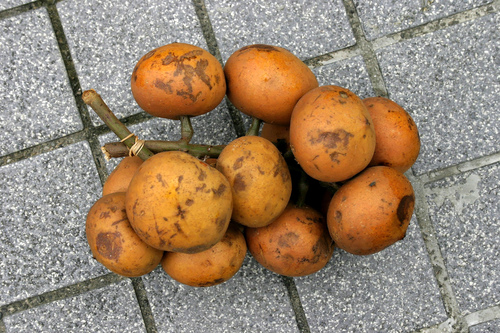
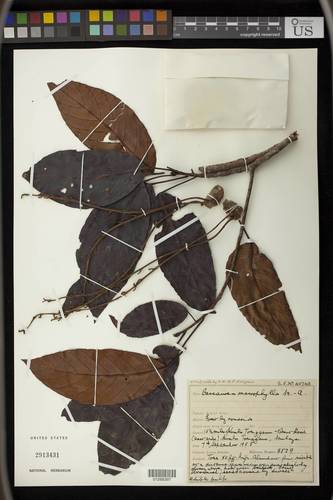
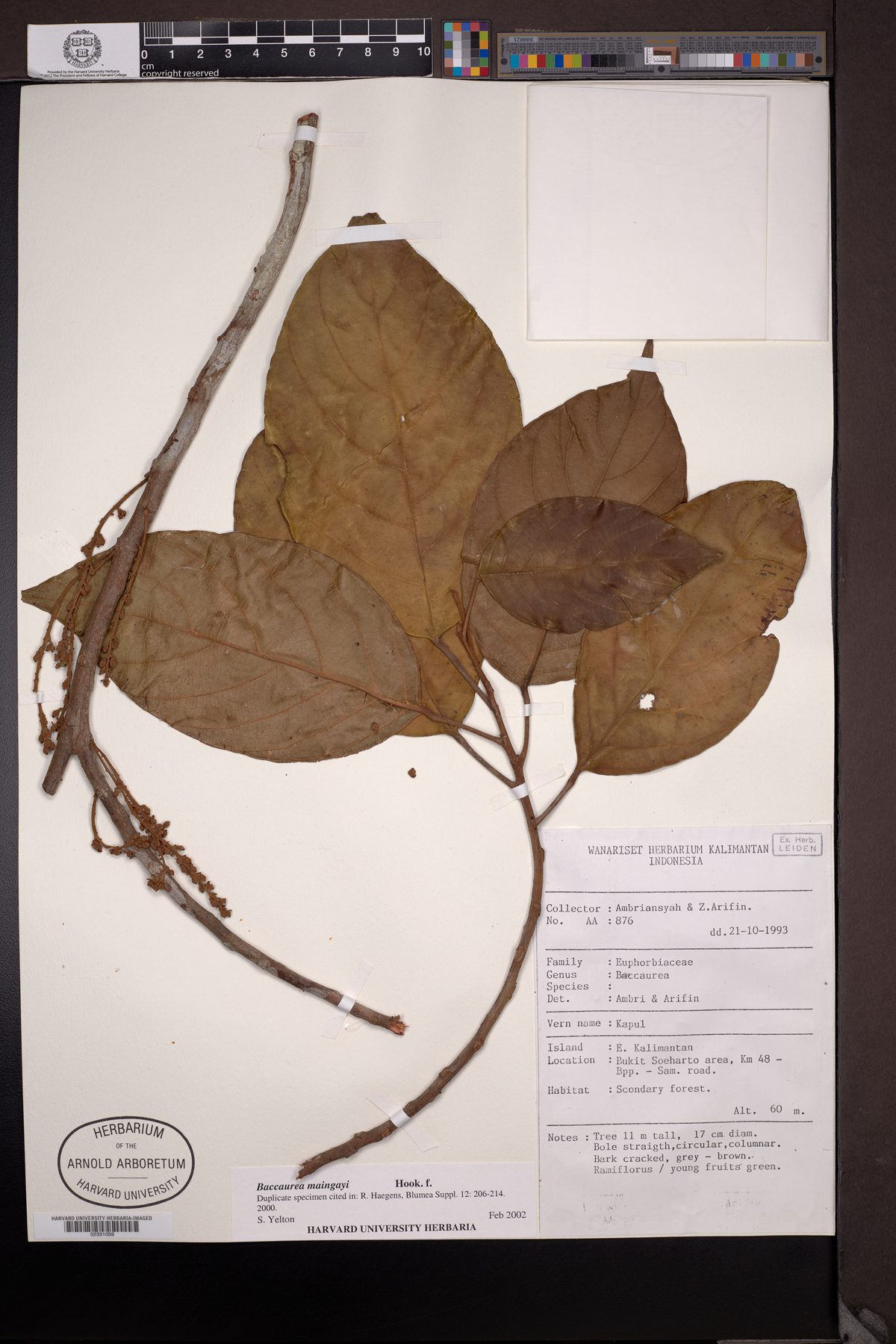
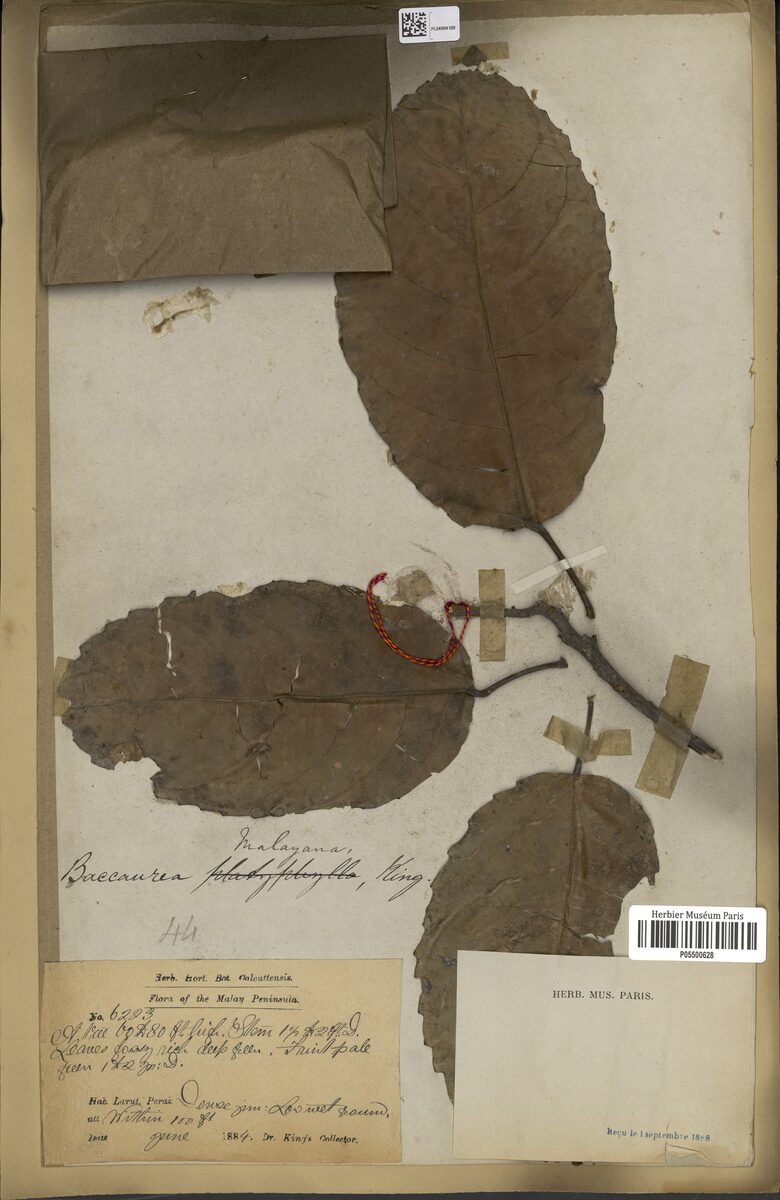
A shrub or small tree. It grows to 7 m high. It often has many branches and is spreading. The bark is dark grey and often rough with vertical stripes. It loses its leaves during the year. The leaves are oval and 2.5-13 cm long by 1.3-9 cm wide. The young leaves are golden and furry. The older leaves have soft hairs. The edge of the leaf is scalloped. The flowers are small and greenish-yellow. They are in tight clusters in the axils of leaves. The fruit are almost round and 10 mm across. They are clustered along the branches. They are finely velvety when young. They are black when mature. The fruit are edible.
Edible Uses
The fruit are eaten fresh or dried, and can be used for jam and juice. They are especially popular with children.
Traditional Uses
The fruit are eaten fresh or dried. They can be used for jam and juice.
This uses section is brief — help expand it
Distribution
A tropical plant. It grows at low altitudes. It is often amongst rocks. It grows between 100-1,525 m above sea level. It can grow in arid places.
Where It Grows
Africa, Botswana, East Africa, Malawi, Mozambique, Namibia, Sierra Leone, South Africa, Southern Africa, West Africa, Zambia, Zimbabwe,
Other Information
The fruit are eaten especially by children.
Notes
There are about 60 Bridelia species.
Also Known As
Capsipsa, Fluweelsoetbessie, Mokokokwena, Mokopakopa, Mudenhanyani, Mufukusi, Mukumbakumba, Munzvaraqauya, Musosoriondo, Muyani, Umgojomba, Umgojomba, Umkumbakumba, Umwane
References (17)
- Fox, F. W. & Young, M. E. N., 1982, Food from the Veld. Delta Books. p 190
- Magwede, K., van Wyk, B.-E., & van Wyk, A. E., 2019, An inventory of Vhavenḓa useful plants. South African Journal of Botany 122 (2019) 57–89
- Maroyi, A., 2011, The Gathering and Consumption of Wild Edible Plants in Nhema Communal Area, Midlands Province, Zimbabwe. Ecology of Food and Nutrition 50:6, 506-525
- Maroyi, A. & Cheikhyoussef, A., 2017, Traditional knowledge of wild edible fruit in southern Africa: A comparative use patterns in Namibia and Zimbabwe. Indian Journal of Traditional Knowledge. 16(3): 385-392
- Motlhanka, D. M. T., et al, 2008, Edible Indigenous Fruit Plants of Eastern Botswana. International Journal of Poultry Science. 7(5): 457-460
Show all 17 references Hide references
- Palgrave, K.C., 1996, Trees of Southern Africa. Struik Publishers. p 414
- Peters, C. R., O'Brien, E. M., and Drummond, R.B., 1992, Edible Wild plants of Sub-saharan Africa. Kew. p 108
- Royal Botanic Gardens, Kew (1999). Survey of Economic Plants for Arid and Semi-Arid Lands (SEPASAL) database. Published on the Internet; http://www.rbgkew.org.uk/ceb/sepasal/internet [Accessed 16th April 2011]
- Ruiters-Welcome, A. K., 2019, Food plants of southern Africa. Ph.D. thesis. Univ. of Johannesburg p 86
- Schmidt, E., Lotter, M., & McCleland, W., 2007, Trees and shrubs of Mpumalanga and Kruger National Park. Jacana Media p 268
- Tredgold, M.H., 1986, Food Plants of Zimbabwe. Mambo Press. p 90
- van Wyk, Be, & Gericke, N., 2007, People's plants. A Guide to Useful Plants of Southern Africa. Briza. p 36
- van Wyk, B-E., 2011, The potential of South African plants in the development of new food and beverage products. South African Journal of Botany 77 (2011) 857–868
- Welcome, A. K. & Van Wyk, B.-E., 2019, An inventory and analysis of the food plants of southern Africa. South African Journal of Botany 122 (2019) 136–179
- Wild, 1975,
- World Checklist of Useful Plant Species 2020. Royal Botanic Gardens, Kew
- www.zimbabweflora.co.zw 2011