Bridelia glauca
Blume
Rhinoceros wood tree
iNaturalist· cc-by-nc
(c) Hani Ristiawan, some rights reserved (CC BY-NC), uploaded by Hani Ristiawan
gbif· cc0
President and Fellows of Harvard College
gbif· cc0
President and Fellows of Harvard College
Description
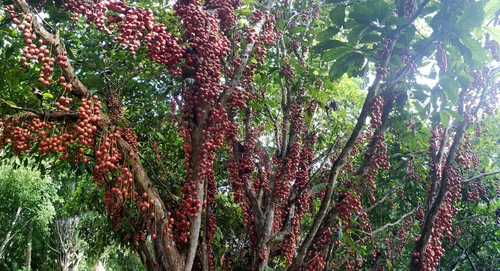
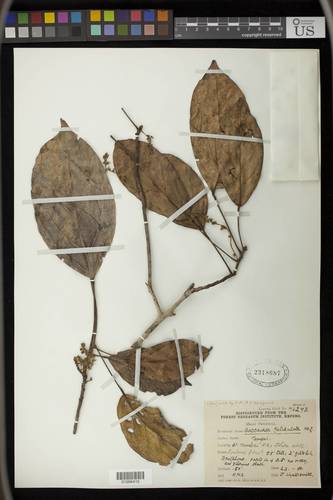
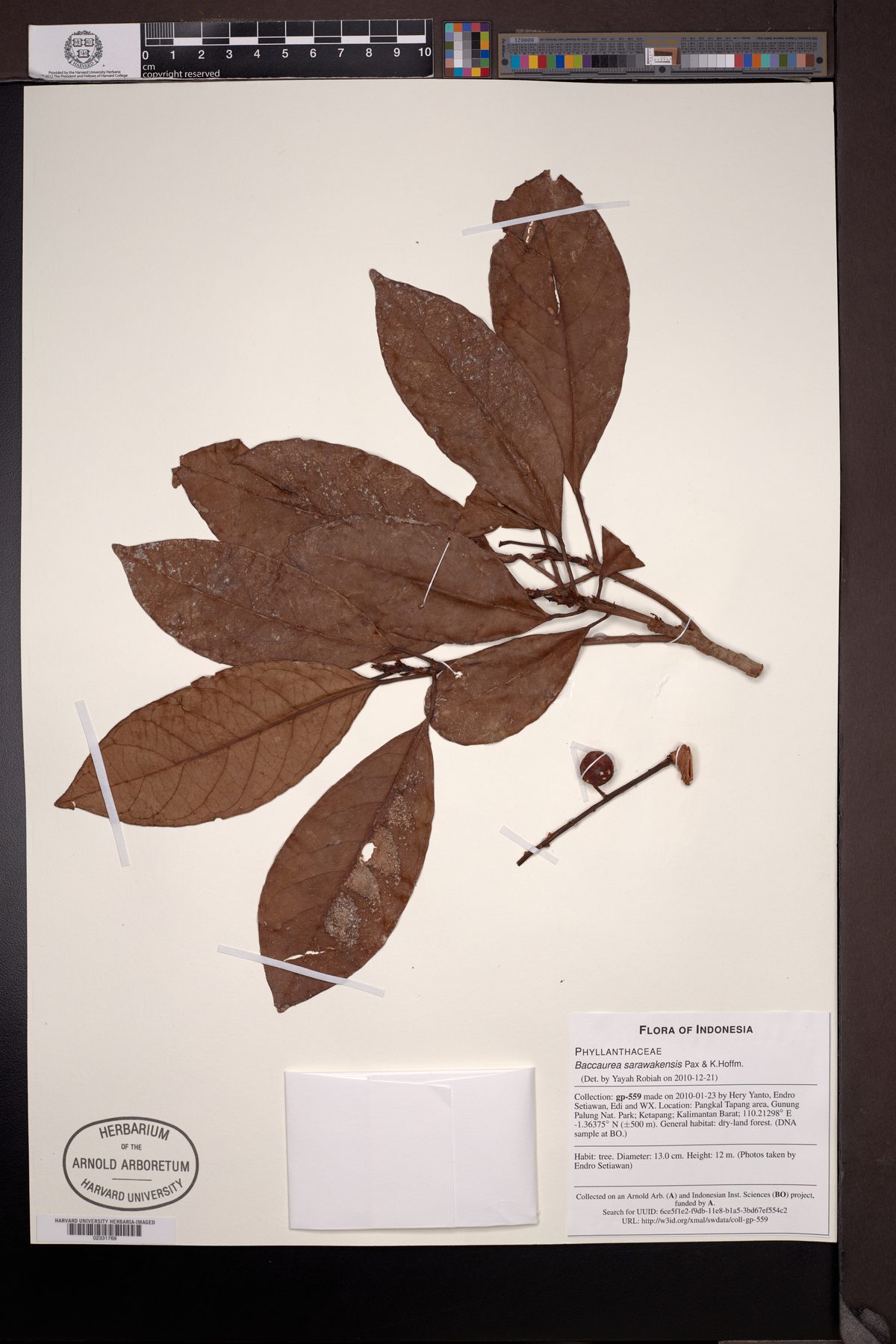
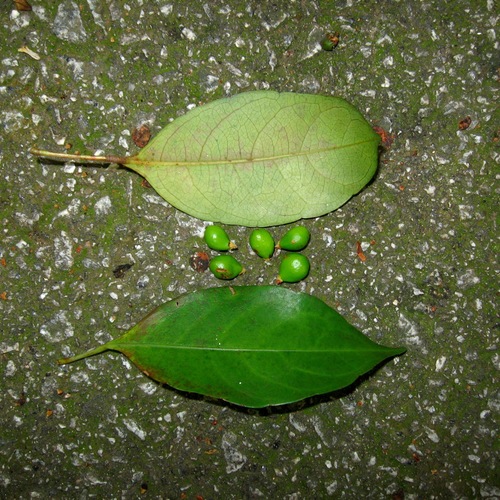
A tree. It grows 25 m tall. The trunk can be 45 cm across. The leaves are alternate and simple. The often have slightly heart shaped base. The upper and lower surfaces are different colours. The flowers are 3 mm across. They are green to yellow. They are in dense bundles in the axils of leaves. The fruit are about 8 mm long. They are red to purple. They are a capsule with red seeds.
Edible Uses
Fruit - raw. The juicy fruit has a sweetish flavour. The pale purple, ellipsoid fruits turn black when fully ripe; they are 5 - 8mm long and 4 - 8mm in diameter.
Distribution
It is a tropical plant. It grows in open sites in forests. It can grow up to 2,000 m above sea level. In Yunnan.
Where It Grows
Asia, Brunei, China, India, Indochina, Indonesia, Laos, Malaysia, Myanmar, New Guinea, Philippines, SE Asia, Taiwan, Thailand,
Cultivation
Plants can be grown by seeds.
Other Uses
The heartwood is ochre to dark brown; the up to 5cm layer of sapwood is yellowish white to orange. The wood is hard and durable. It is used for house and bridge construction, and also makes good house posts. The wood is used for fuel.
Synonyms
Also Known As
Baung-baung, Enep, Kanidei, Meretanak, Pentanah, Pohon kayu badak, Seik-chi-ywet-the
References (4)
- Reid, L. A. & Madulid, D., 1972, Some comments on Bontoc Ethnobotany. Philippine Journal of Linguistics
- Slik, F., www.asianplant.net
- Sukarya, D. G., (Ed.) 2013, 3,500 Plant Species of the Botanic Gardens of Indonesia. LIPI p 160 (Also as Bridelia multiflora)
- World Checklist of Useful Plant Species 2020. Royal Botanic Gardens, Kew