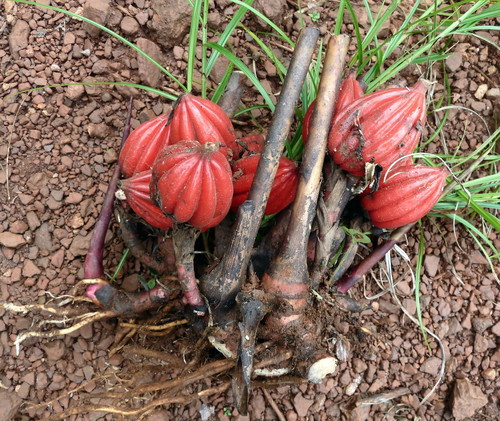
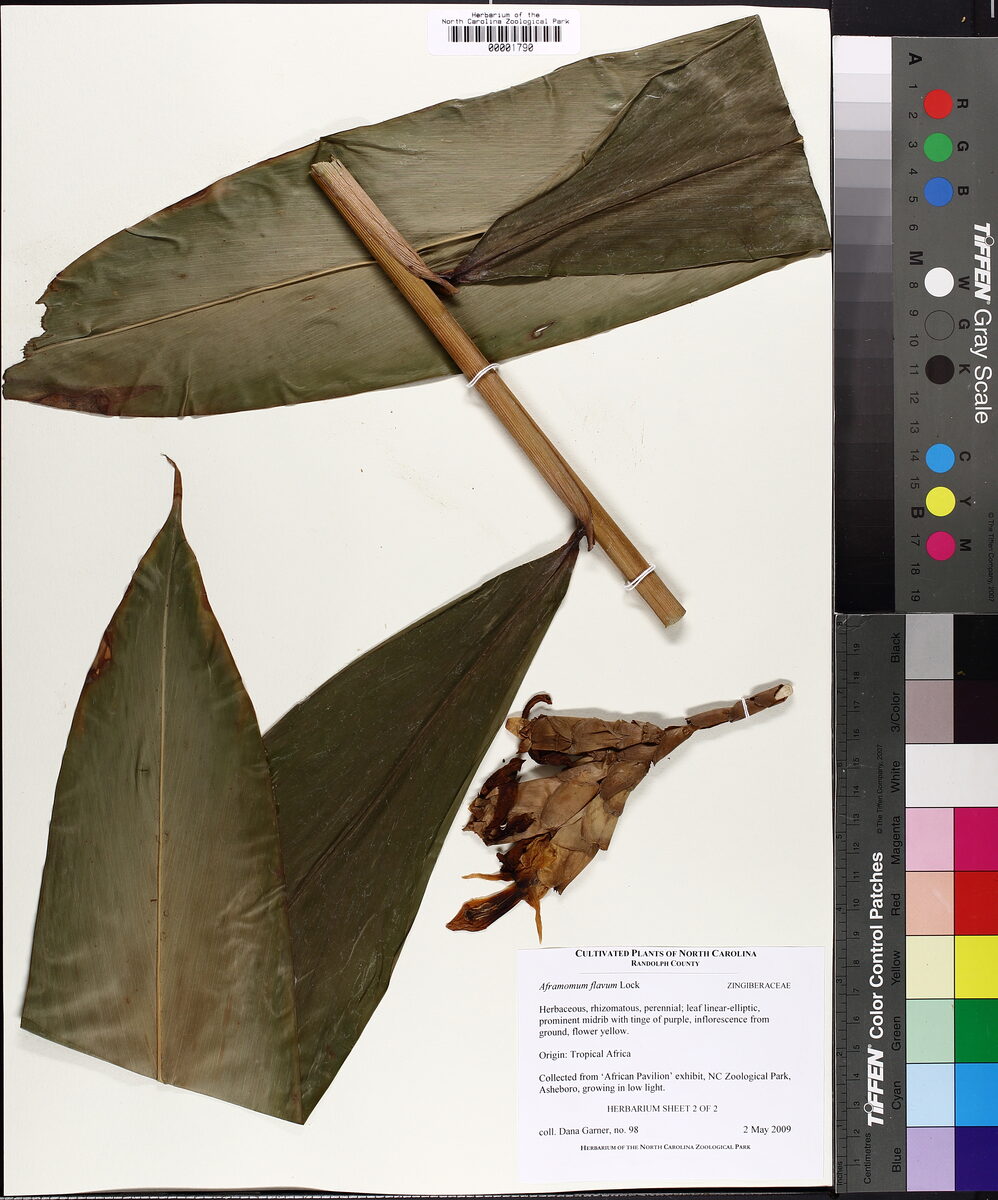
Curcuma caulina
J. Graham
Indian arrowroot
iNaturalist· cc-by-nc
(c) Kedar, some rights reserved (CC BY-NC), uploaded by Kedar
iNaturalist· cc-by-sa
(c) Dinesh Valke, some rights reserved (CC BY-SA)
iNaturalist· cc-by-nc
(c) Yuwaraj Gurjar, some rights reserved (CC BY-NC)
Description
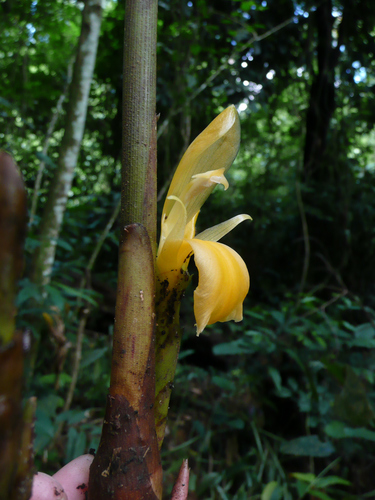
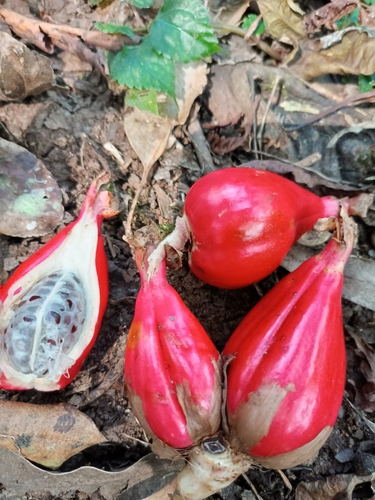
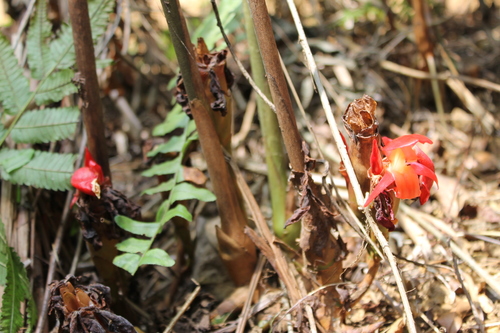
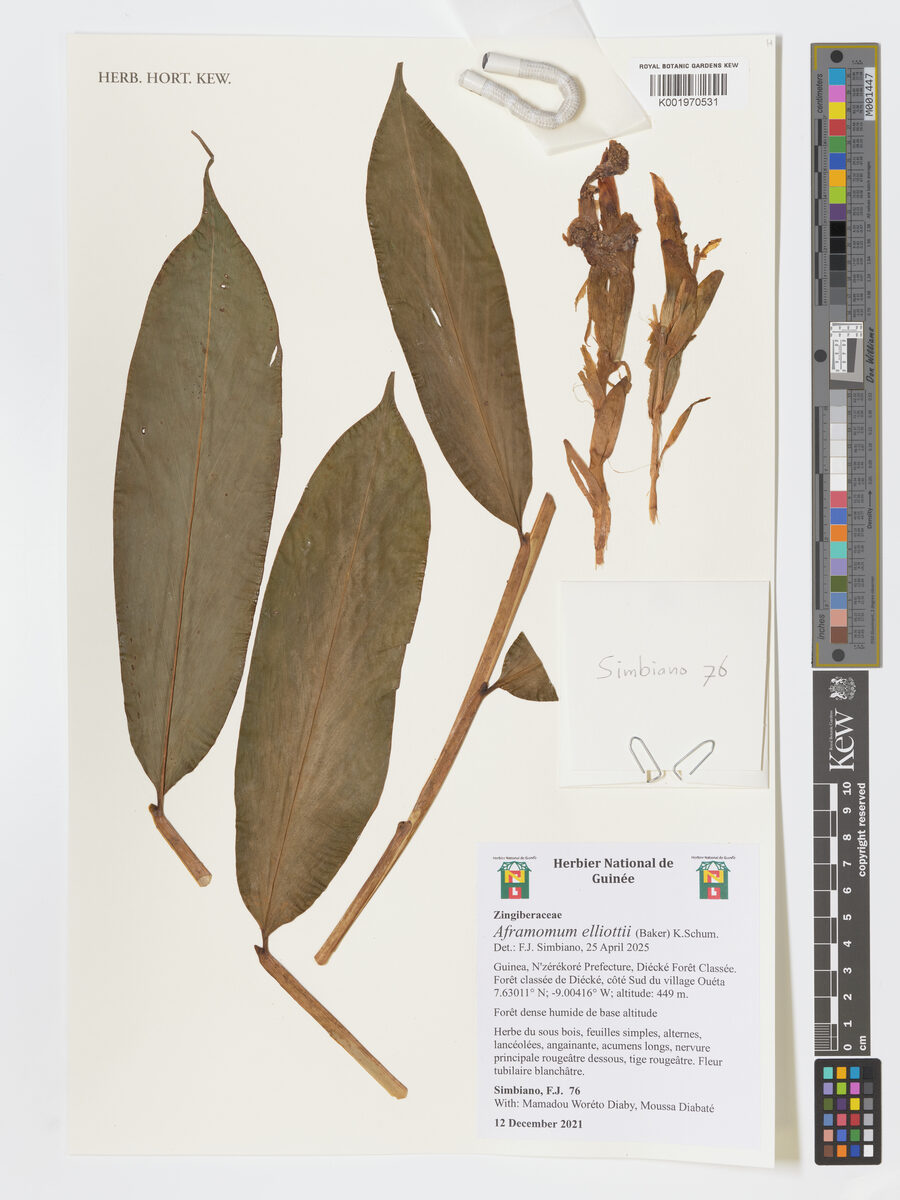
A ginger family herb which develops tubers. It has an underground rhizome or stem. The tubers are round and about 10 cm across. They are covered with fibrous roots. It keeps growing from year to year. It has an erect, unbranched leafy stem 0.9-1.2 m high. The leaves are oval to sword shaped and 30-50 cm long by 7.5-10 cm wide. The flowers are yellow. The flowers have a long stalk and are on a central spike. The tubers are the size of an orange. They have white flesh and covered with fibrous roots.
Edible Uses
The tubers are processed to produce arrowroot starch through cleaning, grating, washing, sieving, re-washing, and sun-drying. The tubers are eaten in times of food scarcity.
Traditional Uses
The tubers can be used to produce arrowroot starch. The tubers are cleaned, grated, washed and sieved and re-washed and then sun-dried.
This uses section is brief — help expand it
Distribution
It is a tropical plant. It grows in wet areas in the hot tropics. It suits a monsoonal area with annual rainfall of 5,000 mm or higher. It is grown on the edge of irrigation canals. It needs hot, moist conditions. It grows in forest areas where the annual rainfall is 7,500 mm. It grows on the Deccan.
Where It Grows
Asia, India*,
Cultivation
Plants can be grown from cuttings of the rhizomes. It is grown from tuber cuttings. It is often planted very densely. There can be 51,000 plants per hectare.
Propagation
Seed - best sown as soon as it is ripe. Germinates best at temperatures around 20°c. Cuttings of the rhizomes. Traditionally, these are planted in raked soil at the beginning of the monsoon, frequently in arecanut plantations and on the banks of rivers and irrigation channels.
Other Uses
It has been suggested that the leaves could be used for papermaking. The plant can be grown very densely along the sides of rivers and irrigation canals in order to prevent soil erosion - in some areas a density of up to 50,000 plants per hectare is used.
Production
The underground roots or tubers are harvested after 20-24 months.
Other Information
It is eaten in times when food is scarce.
Synonyms
Also Known As
Chavar, Chowar, Tikhur
References (10)
- Ambasta, S.P. (Ed.), 2000, The Useful Plants of India. CSIR India. p 152, (As Hitchenia caulina)
- Fern, K., 2012, Tropical Species Database http://theferns.info/tropical/
- J. D. Hooker, Fl. Brit. India 6:224. 1890 (As Hitchenia caulina)
- Kay, D. E., (Revised), 1987, Root Crops. Tropical Development and Crop Research: London.
- Kay, D.E., 1973, Root Crops, Digest 2, Tropical Products Institute, London, p 40 (As Hitchenia caulina)
Show all 10 references Hide references
- Kew Plants of the World on Line
- Lim, T. K., 2015, Edible Medicinal and Non Medicinal Plants. Volume 9, Modified Stems, Roots, Bulbs. Springer p 30
- Lim, T. K., 2016, Edible Medicinal and Non-Medicinal Plants: Volume 12 Modified Stems, Roots p 6
- Singh, H.B., Arora R.K.,1978, Wild edible Plants of India. Indian Council of Agricultural Research, New Delhi. p13 (As Hitchenia caulina)
- WATT, (As Curcuma caulina)