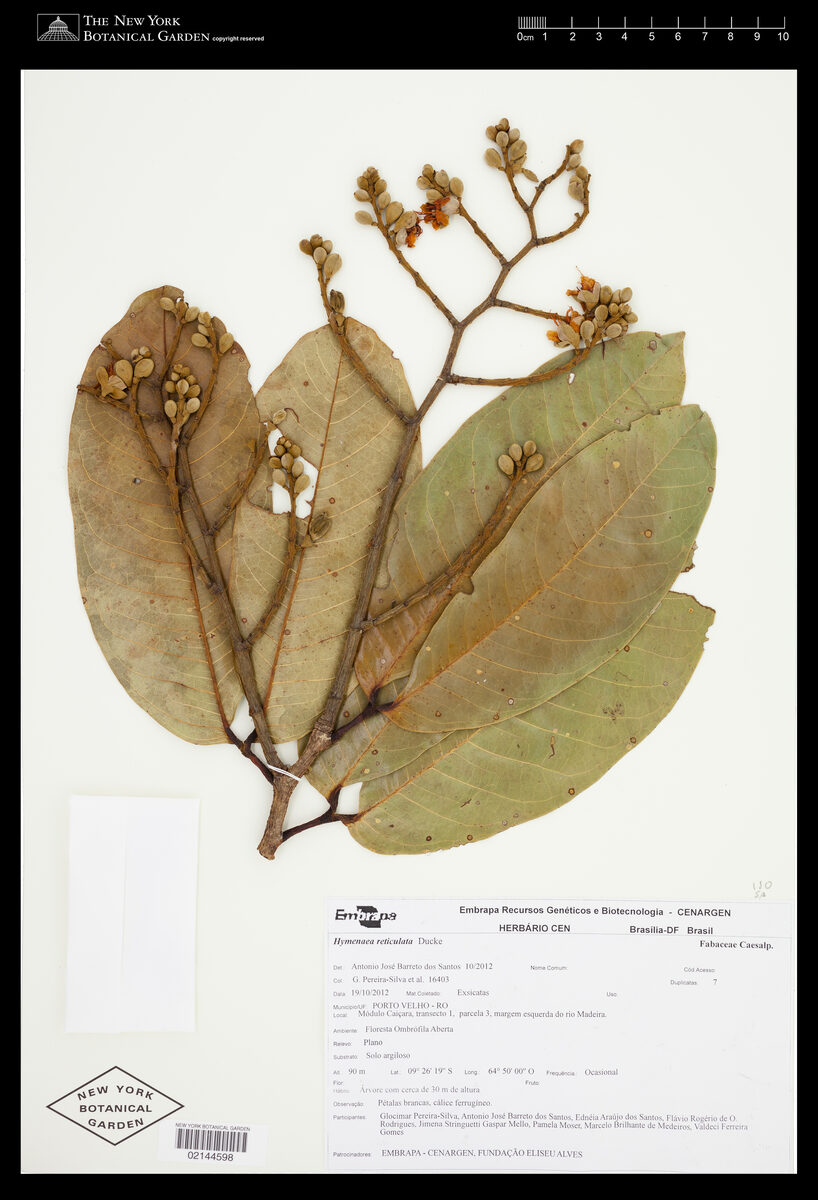
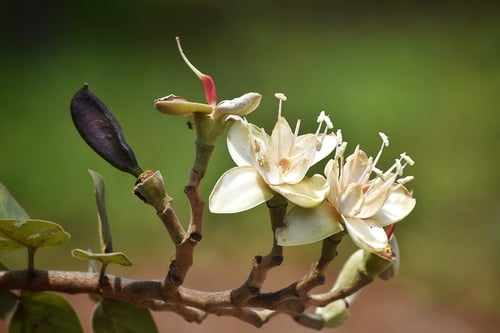
Caesalpinia decapetala
(Roth) Alston
iNaturalist· cc-by-nc
(c) onidiras-iNaturalist, some rights reserved (CC BY-NC)
iNaturalist· cc-by-nc
(c) onidiras-iNaturalist, some rights reserved (CC BY-NC)
iNaturalist· cc-by-nc
(c) onidiras-iNaturalist, some rights reserved (CC BY-NC)
Summary
Source: WikipediaDeciduous shrub reaching 3 m tall, hardy to UK zone 8. Hermaphroditic flowers pollinated by insects. Nitrogen-fixing. Tolerates light sandy, medium loamy, and heavy clay soils with good drainage. Grows in mildly acid to very alkaline conditions. Requires full sun and prefers moist soil.
Description
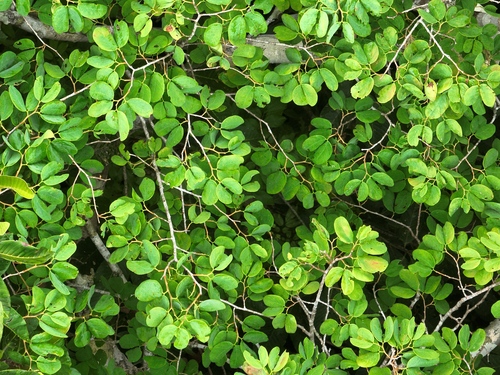
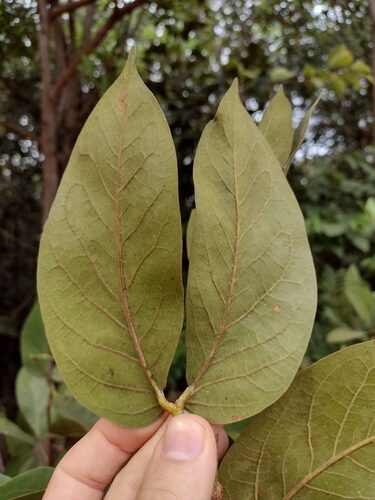
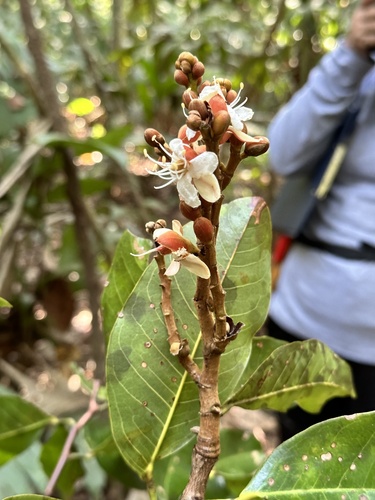
A climber or shrub. It has prickles. It can be 8 m tall. The bark is a dull red. The leaves are 20-30 cm long with 3-10 divisions with 8-12 pairs of leaflets. These are oblong and 1-2.5 cm long by 6-12 mm wide. The pods are 6-12 cm long by 2-3 cm wide. There is usually a wing along the side. There are 4-8 seeds.
Edible Uses
None known
Traditional Uses
Both the stems and fruit are eaten as a snack.
This uses section is brief — help expand it
Medicinal Uses
Anthelmintic Antiperiodic Astringent Emmenagogue Febrifuge Laxative Purgative Anthelmintic, antiperiodic, astringent, febrifuge. The leaves are emmenagogue and laxative. They are applied externally to burns. The root is purgative.
Distribution
It is a tropical and subtropical plant.
Where It Grows
Africa, Asia, Central Africa, Nepal, Pakistan, South Africa, Southern Africa,
Propagation
Seed - pre-soak for 12 - 24 hours in warm water and sow in a greenhouse in early spring. When large enough to handle, prick the seedlings out into individual pots and grow them on in the greenhouse for at least their first winter, planting them out into their permanent positions in late spring or early summer, after the last expected frosts. Softwood cuttings in sand in a frame.
Other Uses
Hedge Hedge Tannin Wood The bark is a rich source of tannin. Plants are often grown as field boundaries in Nepal. An excellent hedge plant. However, due to its doubtful hardiness it is not a good candidate for this use in Britain. Wood - moderately hard. Environmental Uses include: Agroforestry; Boundary, barrier or support; Soil improvement. It is used as an Ornamental. Special Uses Hedge Hedge Nitrogen Fixer
Synonyms
Also Known As
Bhujetro
References (3)
- Gautam, R. S., et al, 2020, Wild Edible Fruits of Nepal. Int. J. Appl. Sci. Biotechnol. Vol 8(3): 289-304
- Ruiters-Welcome, A. K., 2019, Food plants of southern Africa. Ph.D. thesis. Univ. of Johannesburg p 56
- Welcome, A. K. & Van Wyk, B.-E., 2019, An inventory and analysis of the food plants of southern Africa. South African Journal of Botany 122 (2019) 136–179