Senna alexandrina
Mill.
Indian senna
iNaturalist· cc-by-nc-sa
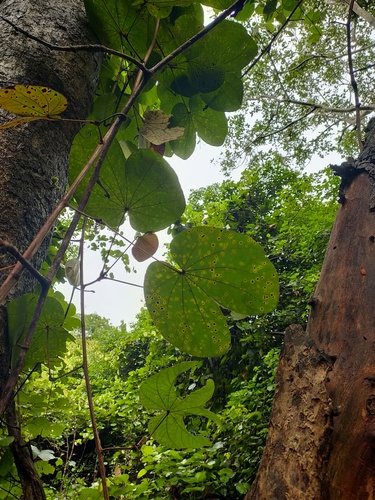
(c) ateah alfakih, some rights reserved (CC BY-NC-SA), uploaded by ateah alfakih
iNaturalist· cc-by
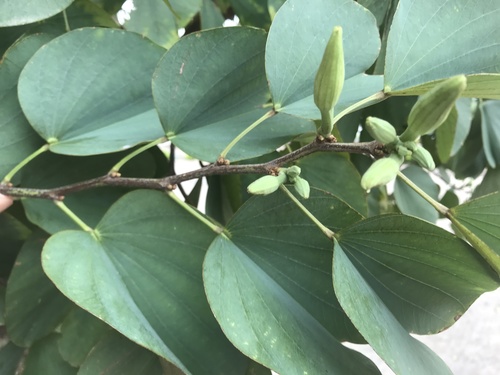
(c) Siddarth Machado, some rights reserved (CC BY)
Summary
Source: WikipediaSenna alexandrina (Alexandrian senna, in Arabic عشرج or عشرق or سنامكي and see below) is an ornamental plant in the genus Senna. It is used in herbalism. It grows natively in upper Egypt, especially in the Nubian region, and near Khartoum (Sudan), where it is cultivated commercially. It is also grown elsewhere, notably in India and Somalia. Not native to the USSR, it was farmed in southern Kazakhstan for medicine.
Description
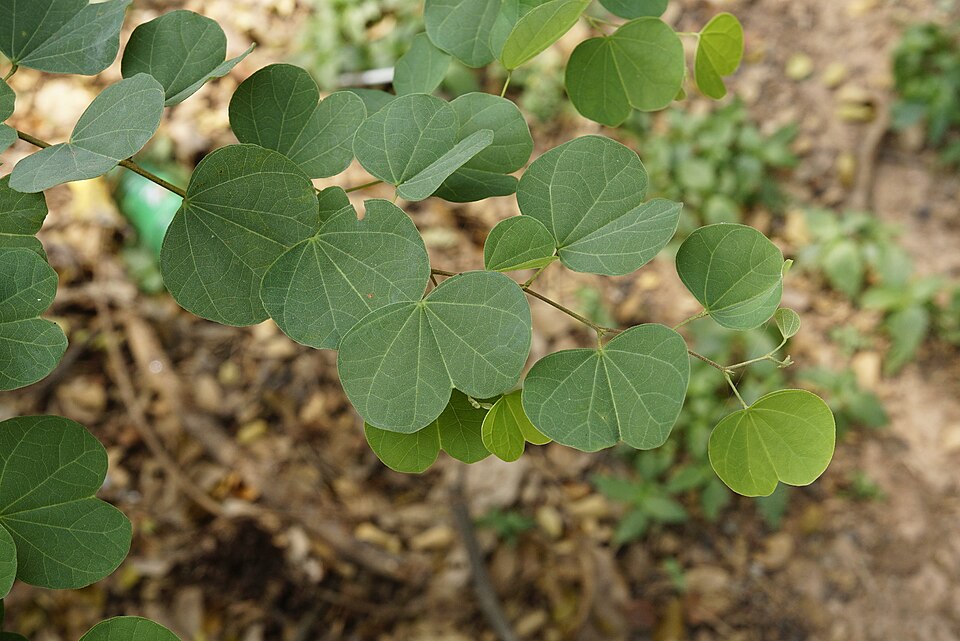
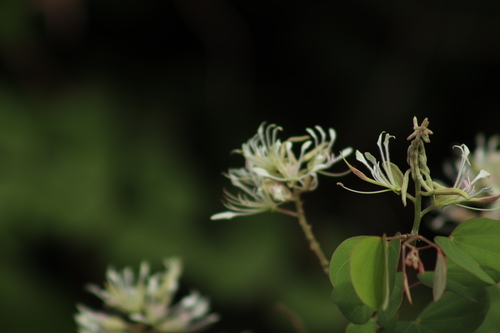
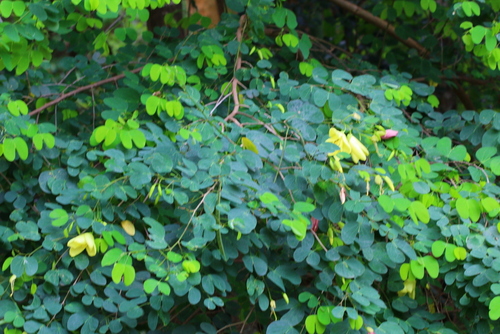
An evergreen shrub. It can grow to 1 m high. The branches have short hairs. The leaves are alternate and compound. They have leaflets along the stalk. There are 16-24 leaflets on short stalks. The leaflets slightly overlap. They have a sharp tip. They are more pale underneath. The flowers are large and bright yellow. They are arranged irregularly. They are 5 cm across on stalks 2.5 cm long. The fruit is a short pod 8-11 cm long by 1.5 cm wide. There are 12-20 seeds each in a separate cavity.
Edible Uses
When cultivated as medicinal herb, the plants are cut down semi-annually, dried in the sun, stripped and packed in palm-leaf bags. They are then sent on camels to Essouan and Darao, then down the Nile to Cairo or else to Red Sea ports. Trade in senna provides a significant source of income for the nomadic Ababda.
Traditional Uses
Caution: Has laxative properties. The leaves are used for a herbal tea.
This uses section is brief — help expand it
Medicinal Uses
Historically, Senna alexandrina was used in the form of senna pods, or as herbal tea made from the leaves, as a laxative. Traditional medicine has used senna extracts since at least the 1950s as a laxative. It also serves as a fungicide.
Distribution
A tropical plant.
Where It Grows
Africa, Algeria, Asia, Brazil, Central Africa, Central Asia, Chad, Dominican Republic, Egypt, Ethiopia, Haiti, India, Indochina, Libya, Mediterranean, Middle East, North Africa, Pakistan, Palestine, Sao Tome and Principe, Saudi Arabia, SE Asia, Somalia, South America, Sudan, Tajikistan, Vietnam, Virgin Islands, West Indies,
Cultivation
Plants can be grown in the drier warm temperate to tropical zones. Prefers a deep, well-drained, moderately fertile sandy loam and a position in full sun. Germination is hampered by salinity but older plants are salt-tolerant. Senna alexandrina does not tolerate continuous waterlogging or heavy irrigation. The plant is mostly grown as an annual crop, but it can be left standing to produce for another 2 - 3 years. Flowers and fruits are formed throughout the year. Yields vary considerably depending on the soil and water conditions. In India the average annual yield is about 700 kg of leaves and 100 kg of pods per ha under rainfed conditions. Under irrigation the yield of leaves and pods is about 1400 kg/ha and 150 kg/ha, respectively. Although the sennoside content is higher when plants are under stress, moderate irrigation and fertilization pay off through increased leaf and total sennoside yields. Although many species within the family Fabaceae have a symbiotic relationship with soil bacteria, this species is said to be devoid of such a relationship and therefore does not fix atmospheric nitrogen.
Propagation
Seed - requires pre-treatment since untreated seed has a poor germination rate. Pre-soaking for 12 - 24 hours in warm water helps, but scarifying with sulphuric acid has proved to be more effective with larger quantities of seed. In small quantities, the seed can be sown in containers, in larger amounts it is usually broadcast at rates of 15 - 25 kg/ha.
Other Uses
The wood is used to make farm tools. The species has been recommended for soil conservation.
Notes
There are 100 Cassia species. This group has been revised to a smaller more consistent group. Also as Caesalpinaceae.
Synonyms
Also Known As
Bhumiari, Bhupadma, Hindi-sana, Muong la-hep, Nat-ki-sana, Nela-tagedu, Nelavarike, Nila vaka, Nila virai, Salamac, Sanamokeh, Sanna-makki, Son-pat
References (10)
- Ambasta S.P. (Ed.), 2000, The Useful Plants of India. CSIR India. p 109
- Flora of Pakistan. www.eFlora.org (As Cassia senna)
- Gard. dict. ed. 8: Senna no. 1. 1768 - Senna alexandrina Mill.
- Jardin, C., 1970, List of Foods Used In Africa, FAO Nutrition Information Document Series No 2.p 25 (As Cassia senna)
- Martin, F.W. & Ruberte, R.M., 1979, Edible Leaves of the Tropics. Antillian College Press, Mayaguez, Puerto Rico. p 198
Show all 10 references Hide references
- Pham-Hoang Ho, 1999, An Illustrated Flora of Vietnam. Nha Xuat Ban Tre. p 847, 851
- Plants of Haiti Smithsonian Institute http://botany.si.edu/antilles/West Indies
- Purseglove, J.W., 1968, Tropical Crops Dicotyledons, Longmans. p 203 (Also as Cassia senna)
- Sp. pl. 1:377. 1753 (As Cassia senna)
- Vickery, M.L. and Vickery, B., 1979, Plant Products of Tropical Africa, Macmillan. p 95 (Also as Cassia senna)