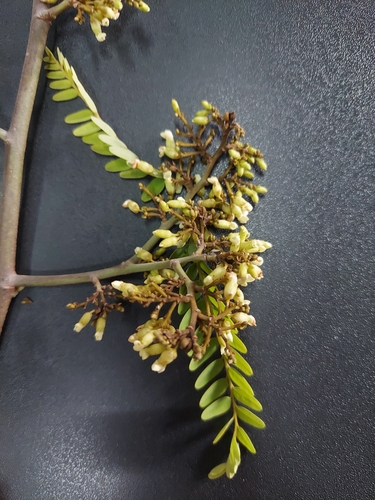
Senegalia polyacantha
(Willd.) Seigler & Ebinger
White thorn, Mukoka
iNaturalist· cc-by-nc
(c) Shiwalee Samant, some rights reserved (CC BY-NC), uploaded by Shiwalee Samant
iNaturalist· cc-by-nc
(c) lale2023, some rights reserved (CC BY-NC)
iNaturalist· cc0
no rights reserved, uploaded by Riaan Stals
Summary
Source: WikipediaSenegalia polyacantha (syn. Acacia polyacantha), also known as white thorn, is a flowering tree which can grow up to 25 m tall. The species name polyacantha has the meaning "many thorns" in Latin. The tree is native to Africa, India, the Indian Ocean and Asia, but it has also been introduced to the Caribbean.
Description
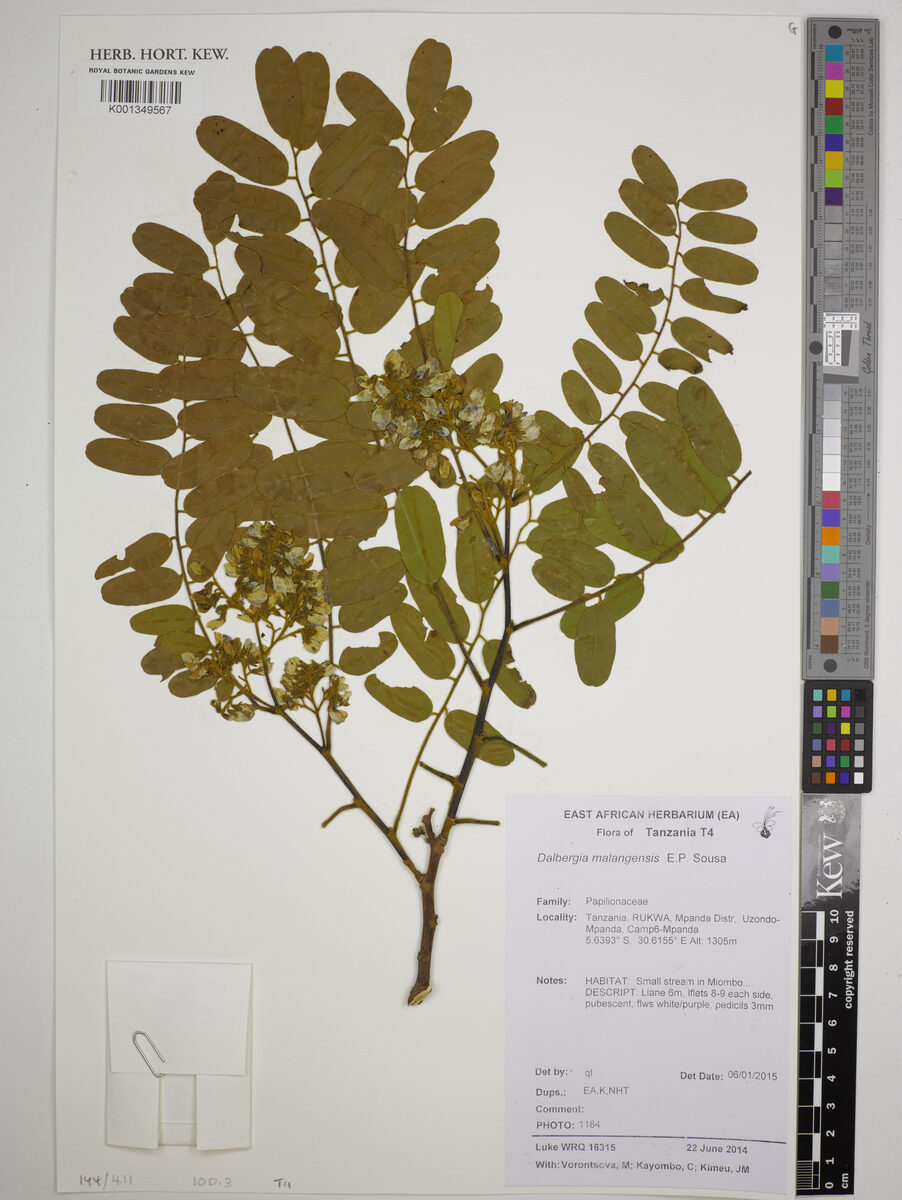
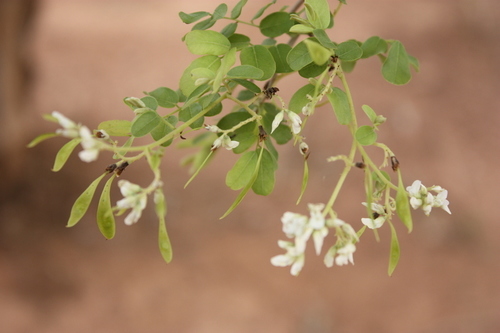
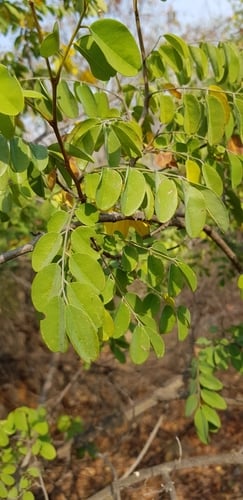
A tree. It can grow 25 m tall. The bark is pale yellow to white and flakes off. It has hooked prickles in pairs on the branches. The leaves have 13-40 pairs of pinnae and 26-65 pairs of leaflets on each. The flowers are in long white spikes. The fruit is a straight long brown pod.
Edible Uses
A gum obtained from the stems is eaten. This species is a lesser source of gum arabic, which is more commonly obtained from A. Senegal. Gum arabic is used as follows:- The resin obtained from the trunk is important in the food industry, where it is used as an emulsifier, stabilizer and flavour fixative. It is also used as an additive (E414) that retards the crystallization of sugar. It is found especially in products such as chewing gum and confectionery. The resin is harvested after the rainy season by scraping it off the trunk and branches from which it oozes. Unhealthy trees tend to give higher yields and incisions are sometimes made into the bark in order to increase yields. The ashes of the burnt wood are used as a salt substitute.
Traditional Uses
The gum is used for candy. The fruit are eaten raw.
This uses section is brief — help expand it
Medicinal Uses
The roots and perhaps its bark have medicinal uses. The root extract is useful for snakebites and is applied to wash the skin of children who are agitated at night time. The root is also used for treating gonorrhea, venereal diseases, dysentery and gastrointestinal disorders.
Known Hazards
Especially in times of drought, many Acacia species can concentrate high levels of the toxin Hydrogen cyanide in their foliage, making them dangerous for herbivores to eat.
Distribution
It is a tropical plant.
Where It Grows
Africa, Asia, Barbados, Benin, Botswana, Burkina Faso, Burundi, Cameroon, Caribbean, Central African Republic, Congo DR, Côte d'Ivoire, East Africa, Egypt, Ethiopia, Gambia, Ghana, Grenada, Guadeloupe, India, Ivory Coast, Jamaica, Kenya, Madagascar, Malawi, Mauritius, Mozambique, Namibia, Niger, Nigeria, Puerto Rico, Rwanda, Senegal, South Africa, Sri Lanka, South Sudan, Sudan, Tanzania, Togo, Uganda, West Africa, West Indies, Zambia, Zimbabwe,
Cultivation
The white thorn tree grows in tropical areas at elevations from 200 - 1,800 metres. It prefers areas where the mean annual rainfall is in the range 300 - 1,000mm. Prefers sites with a high groundwater table, indicating eutrophic and fresh soils. Prefers alluvial soils with a good mix of clay and sand, though it occasionally prospers on stony slopes and compacted soils. Young plants have a fast rate of growth. Like most acacias, flowering depends highly on the rains. The cream-white, sessile flowers are inserted in spikes up to 15 cm long. They are produced together with new leaves. After pollination by insects, straight fruits with distinctly narrow, thickened margin are developed within 6 months, fruits are tapered on both ends. When mature the pods turn greyish-brown. The seeding period can be observed approximately 6 months after flowering. Plants can be coppiced and pollarded. This species has a symbiotic relationship with certain soil bacteria, these bacteria form nodules on the roots and fix atmospheric nitrogen. Some of this nitrogen is utilized by the growing plant but some can also be used by other plants growing nearby.
Propagation
Seed - requires pre-soaking or scarification. To scarify, the seed coat should be nicked at the distal (cotyledon) end using a sharp tool like a scalpel, knife or nail clipper. Large quantities of seeds should be treated by pouring boiling water on them in a vessel. Then the seeds should be left for 24 hours in the water as it cools. Under ideal conditions, the seeds germinate within 10-21 days. The expected germination rate of mature, healthy and properly treated seed is 60-90%. Mature and properly dried seeds can be stored in airtight containers at room temperature for at least 1 year, and at 10c for several years so long as the seed is not attacked by insects.
Other Uses
A gum obtained from the trunk is a minor source of gum arabic, more commonly obtained from A. senegal. It has a variety of uses, including as an adhesive, adding lustre to crape and silk, thickening colours, calico printing, manufacturing ink and as a mucilage. The bark and the seedpods are sources of tannins. Chips of the heartwood are a source of tannins and dyestuffs. The smell of the tree is a useful repellent against snakes and crocodiles. The heartwood is red with blackish streaks; the sapwood white. The wood is hard, durable and termite resistant. It is difficult to saw or plane, but easy to polish. It is used for posts, poles, handles, wheels, farm tools, carving etc. The wood burns well, but the thorns make it difficult to handle. It is used for making charcoal. With its ability to fix atmospheric nitrogen, it is planted to stabilize river banks and to improve the soil. The plant is sometimes grown as a living fence. The presence of the tree in the wild is said to be a good indicator that the land is suitable for growing tobacco and cotton.
Notes
Also as Mimosaceae.
Synonyms
Also Known As
Gnuer, Mthethe, Umugu
References (13)
- Ballal, M. E., et al, 2014, Ethno-botany of Natural Forests of Nuba Mountains, South Kordofan State, Sudan. Journal of Forest Poducts & Industries. 3(1):13-19 (As Acacia polyacantha)
- Bunderson, W. T. et al, 2002, Common Agroforestry Species in Malawi. Malawi Agroforestry Extension Project, Pubication No. 46, Lilongwe. p 13 (As Acacia polyacantha)
- Gallagher, D. E., 2010, Farming beyond the escarpment: Society, Environment, and Mobility in Precolonial Southeastern Burkina Faso. PhD University of Michigan. (As Acacia polyacantha)
- Hahn, K., et al, 2018, The Use of Wild Plants for Food: a National Scale Analysis for Burkina Faso (West Africa) Flora et Vegetatio Sudano-Sambesica 21, 25-33 (As Acacia polyacantha)
- Hassan, R. A. & Hamdy, R. S., 2021, Synoptic Overview of Exotic Acacia, Senegalia and Vachellia (Caesalpinioideae, Mimosoid Clade, Fabaceae) in Egypt. Plants 2021, 10, 1344.
Show all 13 references Hide references
- Kebebew, M. & Leta, G., 2016, Wild Edible Plant Bio-diversity and Utilization System in Nech Sar National Park, Ethiopia. International Journal of Bio-resource and Stress Management 2016, 7(4):885-896 (As Acacia polyacantha)
- Le Houerou, H. N., (Ed.), 1980, Browse in Africa. The current state of knowledge. International Livestock Centre for Africa, Ethiopia. p 162 (As Acacia polyacantha)
- Lulekal, E., et al, 2011, Wild edible plants in Ethiopia: a review on their potential to combat food insecurity. Afrika Focus - Vol. 24, No 2. pp 71-121
- Ruiters-Welcome, A. K., 2019, Food plants of southern Africa. Ph.D. thesis. Univ. of Johannesburg p 60
- Van Wyk, Br. and van Wyk P., 2009, Field Guide to Trees of Southern Africa. Struik Nature. p 486 (As Acacia polyacantha)
- van Wyk, Ben-Erik, 2019, The diversity and multiple uses of southern African legumes. Australian Systematic Botany, 2019, 32, 519–546
- Welcome, A. K. & Van Wyk, B.-E., 2019, An inventory and analysis of the food plants of southern Africa. South African Journal of Botany 122 (2019) 136–179
- World Checklist of Useful Plant Species 2020. Royal Botanic Gardens, Kew