Crescentia cujete
L.
Calabash, Calabash-tree
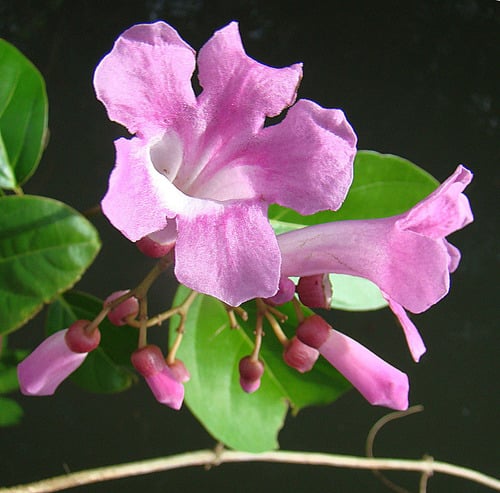
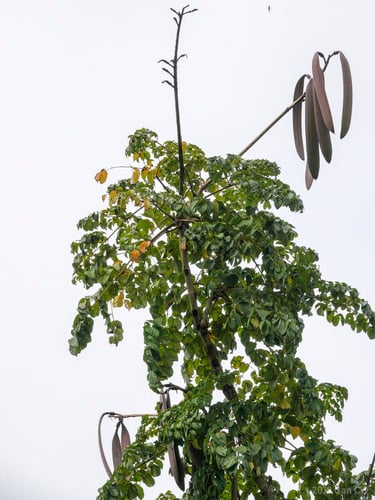
iNaturalist· cc-by-nc
(c) bridgitte1234, some rights reserved (CC BY-NC), uploaded by bridgitte1234
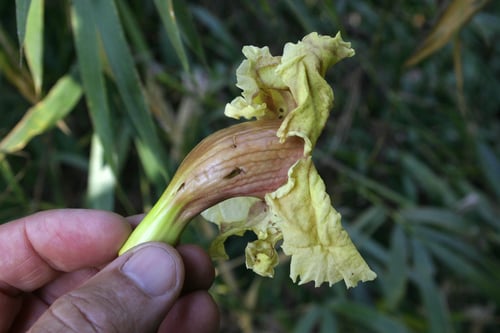
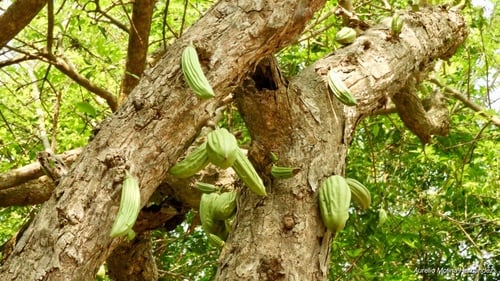
iNaturalist· cc-by-nc
(c) Christian Grenier, some rights reserved (CC BY-NC), uploaded by Christian Grenier
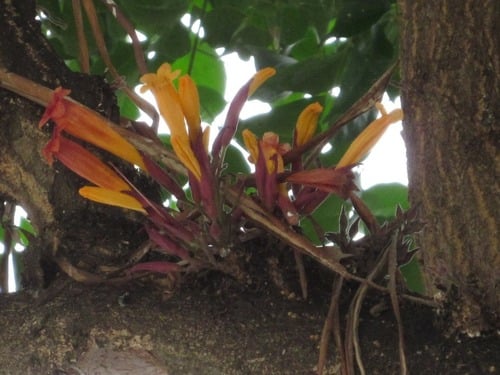
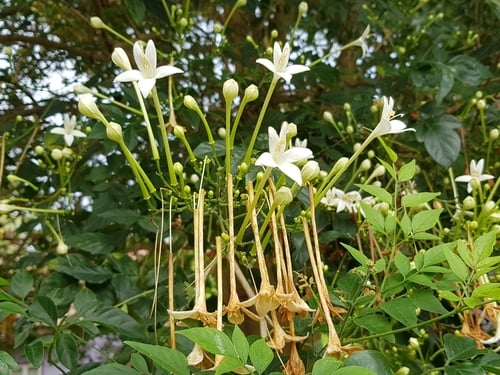
iNaturalist· cc0
no rights reserved, uploaded by Jean-Paul Boerekamps
Summary
Source: WikipediaCrescentia cujete, commonly known as the calabash tree, is a species of flowering plant. It is a medium-sized tree in the trumpet vine family Bignoniaceae native to the Americas, and which is grown in Africa, Southeast Asia, Central America, South America, the West Indies and extreme southern Florida. It is the national tree of St. Lucia. It is a dicotyledonous plant with simple leaves, which are alternate or in fascicles (clusters) on short shoots. Its fruit is up to 30 cm (12 in) long by 25 cm (9.8 in) wide. According to Bailey, it can occasionally be 45–50 cm (18–20 in) wide. It is naturalized in India. The tree shares its common name with that of the vine calabash, or bottle gourd (Lagenaria siceraria). In Cuba, this tree is known to grow in both disturbed habitat and areas of poor drainage. It can grow up to 10 m (33 ft) tall.
Description
A shrub or tree. It grows to 10 m tall. It is evergreen. The leaves are arranged in spirals and are long and narrow. They are simple and dark green. They are 27 cm long. The bark is deeply cracked and corky. The flowers are round and bell shaped. They grow in long drooping heads. The fruit hangs like balls on long stalks. The fruit are 30 cm long by 18 cm wide. They are green. They have a hard outer rind and white pulp containing seeds.
Edible Uses
The young fruit is occasionally pickled and is considered the equal of pickled walnuts. The seeds can be eaten cooked and are also used to make a beverage. A syrup and a popular confection called 'carabobo' are made from the seeds: to make the syrup, seeds are finely ground, mixed with sugar and a little water, then boiled. Roasted seeds combined with roasted wheat serve as an aromatic, flavourful coffee substitute. The leaves are sometimes cooked in soups.
Traditional Uses
The young fruit are eaten cooked or pickled. The seeds are eaten, roasted. They are also roasted and mixed with wheat to make a coffee. The seeds yield an oil. The seeds are used to make a syrup. They are ground and mixed with sugar and water and boiled. The leaves are cooked in soups.
Medicinal Uses
The fruit pulp is astringent, emollient, expectorant, and laxative, and is used in domestic medicine. The fruit is also abortifacient, emetic, emmenagogue, purgative, and vermifuge. A syrup made from the fruit pulp is a popular remedy for colds, and the fruit juice is used to treat diarrhoea, pneumonia, and intestinal irregularity. A strong tea made from the fruit is drunk to procure abortion, ease childbirth, and relieve severe menstrual pains by eliminating blood clots. A syrup made from the fruit is also used to treat consumption. The leaves are cholagogue, emetic in larger doses, and purgative. A leaf infusion is sometimes given for dysentery, and when boiled with sugar, soft grease, or Buckley's white rub it forms a syrup used to treat colds. The juice of young leaves is drunk to remedy colds and lung diseases. Chewing a leaf is a treatment for toothache, and the leaves are used as a wash to cleanse dirty wounds. The whole plant is used as a diuretic against hydropsy and diarrhoea. The ripe fruit pulp contains crescentic, tartaric, citric, tannic, chlorogenic, and hydrocyanic acids and may cause abortion in cattle. The seed oil contains oleic acid. The stem bark and leaves show antimicrobial activity.
Known Hazards
The pulp of the fruit is poisonous. The seeds are poisonous.(Seed is poisonous if ingested Parts of plant are poisonous if ingested All parts of plant are poisonous if ingested Handling plant may cause skin irritation or allergic reaction Plant has spines or sharp edges; use extreme caution when handling Pollen may cause allergic reaction N/A )
Distribution
It is a tropical plant. It does best in warm moist conditions. It cannot stand frost while young. It can grow in arid places. It suits hardiness zones 11-12. In Cairns Botanical Gardens. In XTBG Yunnan.
Where It Grows
Africa, Antigua and Barbuda, Asia, Australia, Bahamas, Belize, Benin, Burkina Faso, Caribbean, Cayman Islands, Central America*, China, Colombia, Congo DR, Costa Rica, Cuba, Dominica, Dominican Republic, Ecuador, Egypt, El Salvador, Ghana, Grenada, Guatemala, Guiana, Guianas, Guyana, Haiti, Hawaii, Honduras, India, Indochina, Indonesia, Jamaica, Madagascar, Malaysia, Marquesas, Mexico*, New Caledonia, Nicaragua, Niger, North Africa, North America, Northeastern India, Pacific, Panama, Peru, Puerto Rico, Sahel, SE Asia, Solomon Islands, South America, St. Lucia, St. Vincent and Grenadines, Suriname, Thailand, USA, Venezuela, Vietnam, Virgin Islands, West Africa, West Indies,
Cultivation
Prefers a fertile, moist soil in a sunny position. Established plants are very drought tolerant. Plants do not flower until they are quite large, then they can flower all year round. The flowers emit a pungent, musky, cabbage scent in the evenings. The large fruits have nectaries that are believed to attract stinging ants. These ants then ward off herbivores such as goats. The trees seem to afford a particularly good habitat for epiphytes, and in the wild they often are covered with orchids, bromeliads, and other plants. Blocks of the wood, used for mounting epiphytic plants, are sold commercially.
Propagation
Propagate by seed, air-layering, or cuttings.
Other Uses
The plant produces subglobose hard-shelled fruits roughly 15–30 cm long. Local people constrict the growth of these fruits by tying strings around them, fashioning them into a variety of shapes that can then be used as rattles, bowls, cups, and containers, in much the same way as bottle gourds. The shells are most commonly used as drinking vessels, while larger ones store all manner of articles; sections of the oblong forms are widely used as spoons. Many of the cups made from the shells, called jicaras, are decorated with colours or incised designs. The hard, smooth shells polish well and are finely carved for ritual use in some parts of Africa. The wood is light brown to yellowish brown with fine darker veining, without distinctive taste or odour; it is moderately hard and heavy, tough, strong, and coarse-textured, fairly easy to work and takes a smooth finish, though it is probably not durable. Uses include ox yokes, tool handles, vehicle parts, and sometimes construction. Thick, crooked limbs are used in Guatemala for making saddle trees. The wood has been used from colonial times to the present for carving stirrups, and when green it carves easily but becomes extremely hard when fully seasoned. The wood is also used as fuel.
Other Information
It is cultivated.
Notes
The mature wooden fruit are used for ornaments and containers.
Synonyms
Also Known As
Beltilok, Berenuk, Bon bael, Calabazo, Coite, Gasu, Jicara, Jicaro, Kalebasboom, Khoria, La'amia, Majpahit, Morro, Mria, Nam-dtao-ton, Pohon buah berenuk, Pohon majapahit, Qua dao tien, Sio, Tabu kayu, Taparo, Tecomate, Tilokbel, Totumo, Tsitipa, Xicalli
References (50)
- Abbiw, D.K., 1990, Useful Plants of Ghana. West African uses of wild and cultivated plants. Intermediate Technology Publications and the Royal Botanic Gardens, Kew. p 49
- Achigan-Dako, E, et al (Eds), 2009, Catalogue of Traditional Vegetables in Benin. International Foundation for Science.
- Ambasta, S.P. (Ed.), 2000, The Useful Plants of India. CSIR India. p 145
- Barwick, M., 2004, Tropical and Subtropical Trees. A Worldwide Encyclopedic Guide. Thames and Hudson p 136
- Bernholt, H. et al, 2009, Plant species richness and diversity in urban and peri-urban gardens of Niamey, Niger. Agroforestry Systems 77:159-179
Show all 50 references Hide references
- Biswas, S. C., et al, 2018, Diversity of wild edible minor fruits used by the ethnic communities of Tripura, India. Indian Journal of Traditional Knowledge. Vol 17(2), April 2018, pp 282-289
- Bodkin, F., 1991, Encyclopedia Botanica. Cornstalk publishing, p 297
- Burkill, I.H., 1966, A Dictionary of the Economic Products of the Malay Peninsula. Ministry of Agriculture and Cooperatives, Kuala Lumpur, Malaysia. Vol 1 (A-H) p 689
- Condit, R., et al, 2011, Trees of Panama and Costa Rica. PrincetonField Guides. p 88
- Cundall, P., (ed.), 2004, Gardening Australia: flora: the gardener's bible. ABC Books. p 433
- D'Ambrosio, U., & Puri, R. K., 2016, Foodways in transition: food plants, diet and local perceptions of change in a Costa Rican Ngäbe community. Journal of Ethnobiology and Ethnomedicine (2016) 12:3 p 22
- Engel, D.H., & Phummai, S., 2000, A Field Guide to Tropical Plants of Asia. Timber Press. p 99
- Etherington, K., & Imwold, D., (Eds), 2001, Botanica's Trees & Shrubs. The illustrated A-Z of over 8500 trees and shrubs. Random House, Australia. p 241
- Facciola, S., 1998, Cornucopia 2: a Source Book of Edible Plants. Kampong Publications, p 49
- Flora of Solomon Islands
- Gentry, A. H., 1980, Bignoniaceae: Part I (Crescentieae and Tourrettieae): Flora Neotropica, Vol. 25, No. 1, Bignoniaceae: Part I (Crescentieae and Tourrettieae), pp. 1-130
- Gouldstone, S., 1983, Growing your own Food-bearing Plants in Australia. Macmillan p 82
- Grandtner, M. M. & Chevrette, J., 2013, Dictionary of Trees, Volume 2: South America: Nomenclature, Taxonomy and Ecology. Academic Press p 209
- Hearne, D.A., & Rance, S.J., 1975, Trees for Darwin and Northern Australia. AGPS, Canberra p 49, Pl 10
- Hedrick, U.P., 1919, (Ed.), Sturtevant's edible plants of the world. p 226
- Hermandez Bermejo, J.E., and Leon, J. (Eds.), 1994, Neglected Crops. 1492 from a different perspective. FAO Plant Production and Protection Series No 26. FAO, Rome. p 198
- Hibbert, M., 2002, The Aussie Plant Finder 2002, Florilegium. p 76
- Kiple, K.F. & Ornelas, K.C., (eds), 2000, The Cambridge World History of Food. CUP p 1742, 1883
- Latham, P., 2004, Useful Plants of Bas-Congo province. Salvation Army & DFID p 97
- Llamas, K.A., 2003, Tropical Flowering Plants. Timber Press. p 136
- Macbride. J. F., 1961, Flora of Peru. Vol. 8 Part VC. No. 1. Field Museum Natural History. Chicago. p 97
- Martin, F. W., et al, 1987, Perennial Edible Fruits of the Tropics. USDA Handbook 642 p 83
- Massal, E. and Barrau, J., 1973, Food Plants of the South Sea Islands. SPC Technical Paper No 94. Noumea, New Caledonia. p 43
- McMakin, P.D., 2000, Flowering Plants of Thailand. A Field Guide. White Lotus. p 10
- Menninger, E.A., 1977, Edible Nuts of the World. Horticultural Books. Florida p 78
- Piedra-Malagón, E. M. et al, 2022, Edible native plants of the Gulf of Mexico Province. Biodiversity Data Journal 10: e80565 p 14
- Plants of Haiti Smithsonian Institute http://botany.si.edu
- Purseglove, J.W., 1968, Tropical Crops Dicotyledons, Longmans. p 629
- Roa, J. A. G. & Boada, D. S. G., 2018, Fundación para el Fortalecimiento de la Fruticultura y Plantas Alimenticias no Convencionales en Colombia.
- Royal Botanic Gardens, Kew (1999). Survey of Economic Plants for Arid and Semi-Arid Lands (SEPASAL) database. Published on the Internet; http://www.rbgkew.org.uk/ceb/sepasal/internet [Accessed 4th April 2011]
- Smith, N., Mori, S.A., et al, 2004, Flowering Plants of the Neotropics. Princeton. p 53
- Smith, P.M., 1979, Calabash, in Simmonds, N.W., (ed), Crop Plant Evolution. Longmans. London. p 303
- Sp. pl. 2:626. 1753
- Staples, G.W. and Herbst, D.R., 2005, A tropical Garden Flora. Bishop Museum Press, Honolulu, Hawaii. p 173
- Sukarya, D. G., (Ed.) 2013, 3,500 Plant Species of the Botanic Gardens of Indonesia. LIPI p 213
- Swaminathan, M.S., and Kochnar, S.L., 2007, An Atlas of Major Flowering Trees in India. Macmillan. p 224
- Torre, de la L., et al, 2008, Enciclopedia de las Plantas Útiles del Ecuador. Herbario QCA. Pontificia Universidad Católica del Ecuador. p 242
- USDA, ARS, National Genetic Resources Program. Germplasm Resources Information Network - (GRIN). [Online Database] National Germplasm Resources Laboratory, Beltsville, Maryland. Available: www.ars-grin.gov/cgi-bin/npgs/html/econ.pl (10 April 2000)
- van Roosmalen, M.G.M., 1985, Fruits of the Guianan Flora. Utrecht Univ. & Wageningen Univ. p 44
- Vickery, M.L. and Vickery, B., 1979, Plant Products of Tropical Africa, Macmillan. p 100
- Wickens, G.E., 1995, Edible Nuts. FAO Non-wood forest products. FAO, Rome. p 109
- Wiersema, J. H. & Leon, B., 2013, World Economic Plants. A Standard Reference CRC Press. 2nd Ed. p 210
- World Checklist of Useful Plant Species 2020. Royal Botanic Gardens, Kew
- www.colecionandofrutas.org
- Zaldivar, M. E., et al, 2002, Species Diversity of Edible Plants Grown in Homegardens of Chibehan Amerindians from Costa Rica. Human Ecology, Vol. 30, No. 3, pp. 301-316