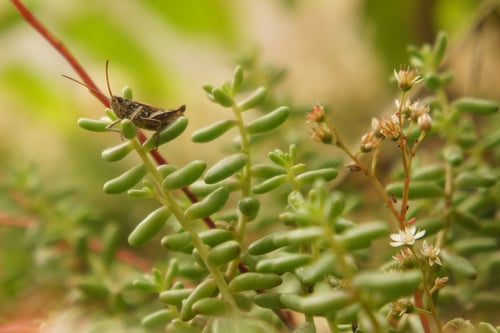
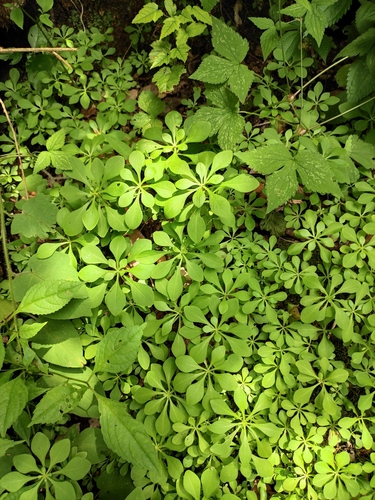
Umbilicus horizontalis
(Guss.) DC.
Horizontal navelwort
iNaturalist· cc-by-nc
(c) Σάββας Ζαφειρίου (Savvas Zafeiriou), some rights reserved (CC BY-NC), uploaded by Σάββας Ζαφειρίου (Savvas Zafeiriou)
iNaturalist· cc0
no rights reserved, uploaded by Peter de Lange
iNaturalist· cc-by
(c) Karim Haddad, some rights reserved (CC BY), uploaded by Karim Haddad
Summary
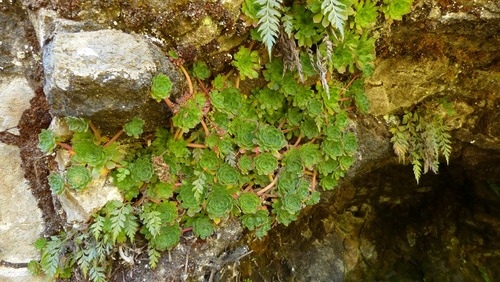
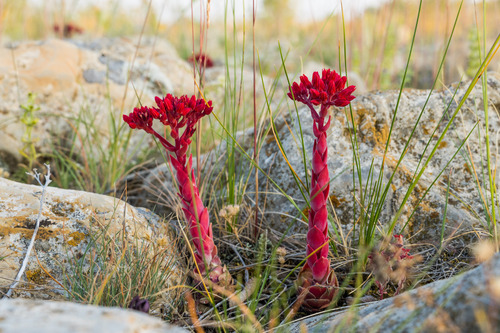
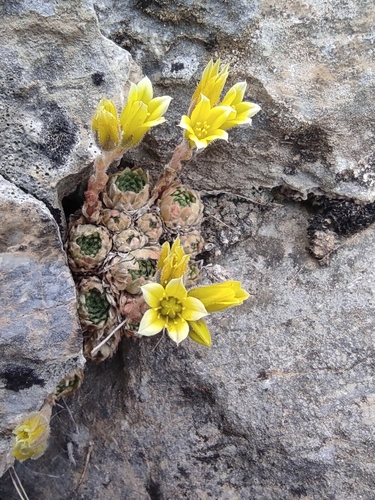
Source: WikipediaUmbilicus horizontalis, the horizontal navelwort, is a fleshy perennial flowering plant in the family Crassulaceae (in the genus Umbilicus) native to the Mediterranean Basin and Middle East, from the Azores in the west to Oman in the east in rocky habitats. Horizontal navelwort grows to an average of 25 cm (10 in) high. The thickly clustered, bell-shaped flowers are pale green, and grow in a raceme perpendicular to the spike, unlike common navelwort, whose flowers droop (thus the term "horizontal"). The plant often grows on shady walls or in damp rock crevices that are sparse in other plant growth, where its succulent, dark green leaves develop in rosettes that are about 7 cm (3 in) wide. Horizontal navelwort is similar to common navelwort in many respects, but is noticeably more succulent.
Description
A fleshy herb. It keeps growing from year to year. It has a fattened root stock. It grows 25 cm tall. The leaves are succulent and strap shaped. They are 7 cm wide and grow in rings. The flowers are bell-shaped and in thick clusters. They are pale green.
Edible Uses
The leaves are eaten raw.
Traditional Uses
The leaves are eaten raw.
This uses section is brief — help expand it
Distribution
It is a Mediterranean plant.
Where It Grows
Africa, Albania, Algeria, Bulgaria, Crete, Egypt, Eritrea, Europe, Greece, Iran, Italy, Lebanon, Libya, Malta, Mediterranean, Middle East, Morocco, Oman, Saudi Arabia, Sicily, Sinai, Socotra, Somalia, Spain, Syria, Tunisia, Turkey, Türkiye,
Synonyms
Also Known As
Aricchia di vecchia, Campanitas, Paracqua
References (4)
- Al-Sodany, Y. M., et al, 2013, Medicinal Plants in Saudi Arabia: I. Sarrwat Mountains at Taif, KSA. Academic Journal of Plant Sciences 6 (4): 134-145
- Blanco-Salas, J., et al, 2019, Wild Plants Potentially Used in Human Food in the Protected Area “Sierra Grande de Hornachos” of Extremadura (Spain). Sustainability 2019, 11, 456 (As Umbilicus gaditanus)
- Geraci, A., et al, 2018, The wild taxa utilized as vegetables in Sicily (Italy): a traditional component of the Mediterranean diet. Journal of Ethnobiology and Ethnomedicine (2018) 14:14
- Pasta, S., et al, 2020, An Updated Checklist of the Sicilian Native Edible Plants: Preserving the Traditional Ecological Knowledge of Century-Old Agro-Pastoral Landscapes. Frontiers in Plant Science. Volume 11|Article 388