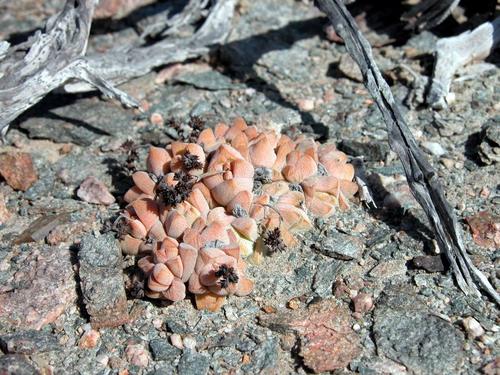
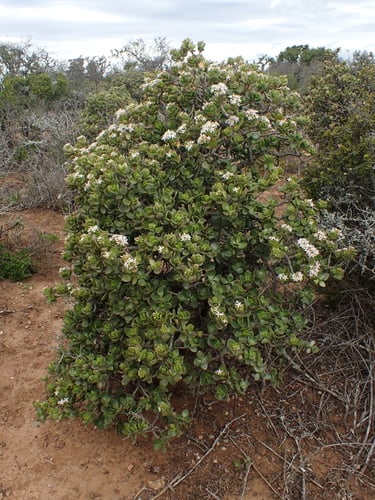
Rhodiola tibetica
(Hook. f. & Thomson) S. H. Fu
iNaturalist· cc-by-nc
(c) Jennifer Chandler, some rights reserved (CC BY-NC), uploaded by Jennifer Chandler
iNaturalist· cc-by-nc
(c) Jennifer Chandler, some rights reserved (CC BY-NC)
Summary
A 0.3 m tall perennial, hardy to UK zone 6. Dioecious species flowering July to August with seeds maturing August to September, pollinated by insects but not self-fertile; both male and female plants required for seed production. Suits light sandy, medium loamy, and heavy clay soils with good drainage, tolerating mildly acid to basic pH. Full sun necessary; tolerates both dry and moist conditions including drought.
Description
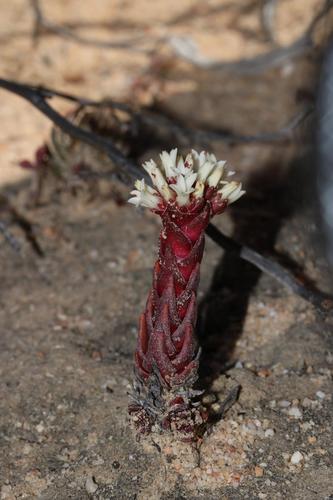
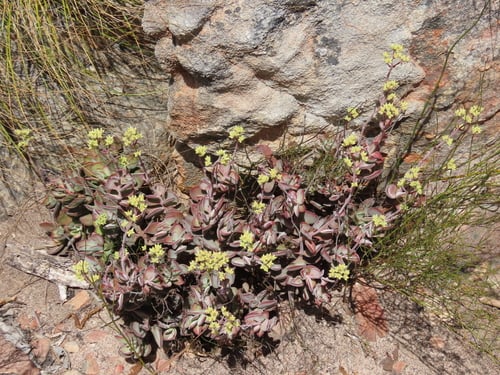
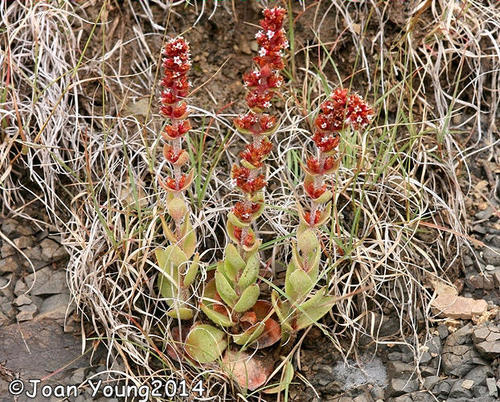
A herb. It keeps growing from year to year. It has a large underground stem or rhizome. This has scaly leaves. There are many flowering stems on each rhizome. They are 7-25 cm long and 1-2 mm wide. The young leaves are red and succulent. The leaves on the stems are alternate and do not have leaf stalks. They are 5-13 mm long by 2-4 mm wide. Plants are separately male and female. The fruit are dry and have many seeds.
Edible Uses
The leaves can be eaten raw or cooked.
Traditional Uses
The young leaves and stem are boiled in some changes of water to remove bitterness then dried and used as a vegetable.
This uses section is brief — help expand it
Medicinal Uses
None known
Known Hazards
None known
Distribution
It is a subtropical and temperate plant. It grows at high altitudes. In Pakistan it grows between 3,000-4,800 m altitude. In Tibet in China it grows between 4,100-5,400 m above sea level. It grows on rocks and hilly slopes.
Where It Grows
Afghanistan, Asia, China, Himalayas, India, Pakistan, Tibet,
Propagation
Surface sow seed in spring into well-drained soil in a sunny position in a greenhouse, keeping the soil moist at all times. Prick seedlings out into individual pots once large enough to handle and overwinter them under glass. Plant out in early summer the following year. Division in spring or early summer is very easy — larger divisions can go straight into their permanent positions. Smaller divisions are better potted up and grown on in light shade in a cold frame until well established, then planted out in late spring or early summer.
Other Uses
None known
Nutrition
| Part | Moisture | kJ | kcal | Protein | Vit A | Vit C | Iron | Zinc |
|---|---|---|---|---|---|---|---|---|
| Leaves - dry wt | — | — | 11.5 | — | — | 17 | — | — |
Synonyms
Also Known As
Kindut, Shrolo-marpo, Shrolu
References (7)
- Ambasta, S.P. (Ed.), 2000, The Useful Plants of India. CSIR India. p 564 (As Sedum tibeticum)
- Dobriyal, M. J. R. & Dobriyal, R., 2014, Non Wood Forest Produce an Option for Ethnic Food and Nutritional Security in India. Int. J. of Usuf. Mngt. 15(1):17-37
- Dorjey, K., et al, 2012, Ethnobotanical observations in Trans-Himalayan Region of Ladakh. Journal of Plant Development Sciences Vol. 4 (4): 459-464.
- Flora of Pakistan. www.eFloras.org
- Kaul, M.K. et al, 1985, Ethno-botanic studies in North-West and Trans-Himalaya - contribution to the wild food plants of Ladakh. J.Econo. Tax. Bot. Vol. 6 No. 3 pp 523-527 (As Sedum tibeticum)
Show all 7 references Hide references
- Plants for a Future database, The Field, Penpol, Lostwithiel, Cornwall, PL22 0NG, UK. http://www.scs.leeds.ac.uk/pfaf/
- Singh, H.B., Arora R.K.,1978, Wild edible Plants of India. Indian Council of Agricultural Research, New Delhi. p 37 (As Sedum tibeticum)