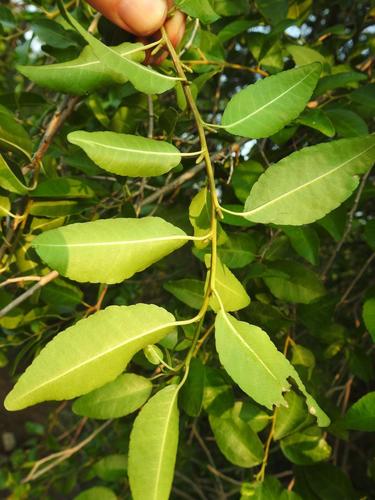
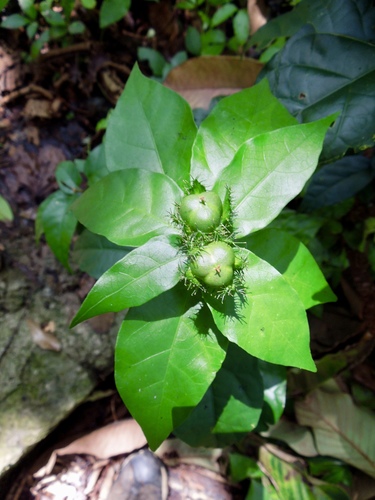
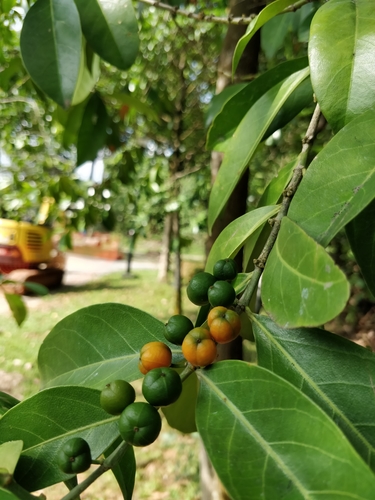
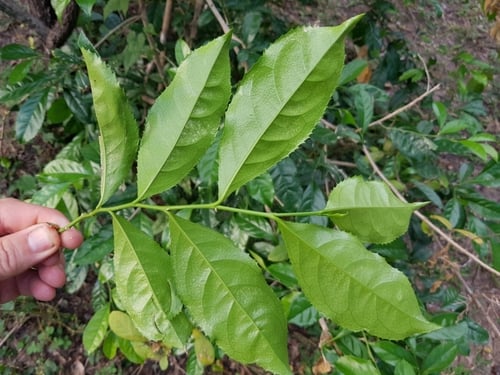
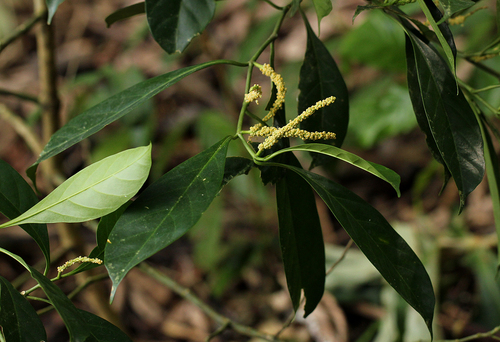
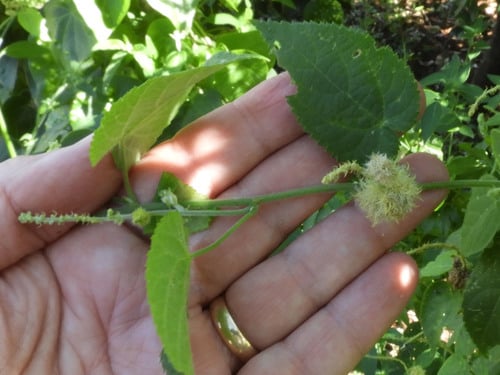
Melanolepis multiglandulosa
(Reinw. ex Blume) Rchb. & Zoll.
iNaturalist· cc-by-nc
(c) kevinlin2022, some rights reserved (CC BY-NC)
iNaturalist· cc-by-nc
(c) kevinlin2022, some rights reserved (CC BY-NC)
iNaturalist· cc-by-nc
(c) kevinlin2022, some rights reserved (CC BY-NC)
Summary
Source: WikipediaMelanolepsis multiglandulosa is a species of plant in the family Euphorbiaceae, first described in 1826. It is native to Japan (Ryukyu Islands), the Mariana Islands, the Solomon Islands, the Bismarck Archipelago, New Guinea, the Philippines, Indonesia (Maluku, Sulawesi, Lesser Sunda Islands, Java, Sumatra, Borneo), Thailand, Malaysia and Taiwan.
Description
Check. A shrub or small tree. It grows 4-10 m tall. The trunk can be 30 cm across.
This description is brief — help expand it
Edible Uses
The leaves are mixed with tapé (a product of fermented flour from cereals) to sweeten the taste of the tapé.
Medicinal Uses
A decoction of the leaves, often in a mixture with other plants, is used as a vermifuge. A tea of the leaves is also used as a treatment for cough. The crushed, dried leaves, mixed with cold water, are drunk to treat constipation, chest complaints and tuberculosis. The leaves, sometimes in combination with ginger (Zingiber officinale), are used as a poultice as a remedy for different kinds of scurf. The bark is taken as a tea in the treament of cough. The bark, leaves, and flowers, either fresh or slightly heated, are applied to the skin as a sudorific in the treatment of chest pain and fever.
Distribution
It is a tropical plant.
Where It Grows
Asia, Philippines, SE Asia,
Cultivation
Often found in the wild on poorly drained and/or temporary inundated: alluvial sand, clay, vulcanic soil, coral (sand), red loam; Andesite bedrock. This species is considered to be monoecious, but usually inflorescences of only one sex can be found on any plant at any one time. It is not known whether both sexes can occur at the same time on the same plant or not. A distinct flowering or fruiting season is unknown; flowering and fruiting specimens may be encountered during the whole year. Leaves can be collected all year round, except in drier areas where the plants may be deciduous and leaves can only be collected in the wet season.
Propagation
Seed - it shows canopy-induced facultative dormancy, but it germinates readily under sunny conditions, completing germination within 5 weeks.
Other Uses
The ashes of old leaves are used as an additive to tinder made from Arenga pinnata. The ashes of old leaves have been used as an additive to Bixa orellana when dyeing. The wood is used for making shoes. The wood makes good firewood. Growing mainly in areas of secondary forest regrowth, and considered to be an invader of cut forest, this species should be a good choice within its native range as a pioneer species when restoring native woodland and also for establishing woodland gardens.
References (2)
- Unsure Philippines - Description of Trees and Shrubs at PATOM Watershed, Barangay Colongulo, Surallah, South Cotabato
- See Ferns Tropical