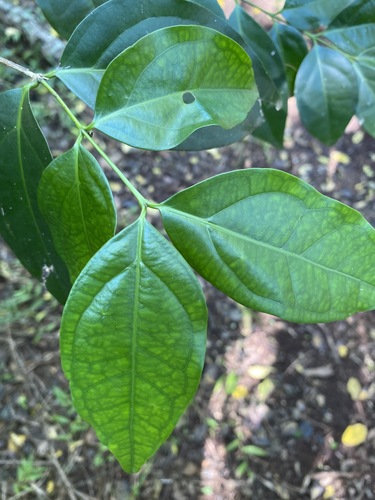
Strychnos mitscherlichii
M. R. Schomb.
wikimedia· cc0
Wikimedia Commons - Unknown
gbif· cc-by-nc
I. Huamantupa : Universidad Nacional San Antonio Abad de Cusco
gbif· cc-by-nc
C. Dennis : Field Museum of Natural History - Botany Department
Description
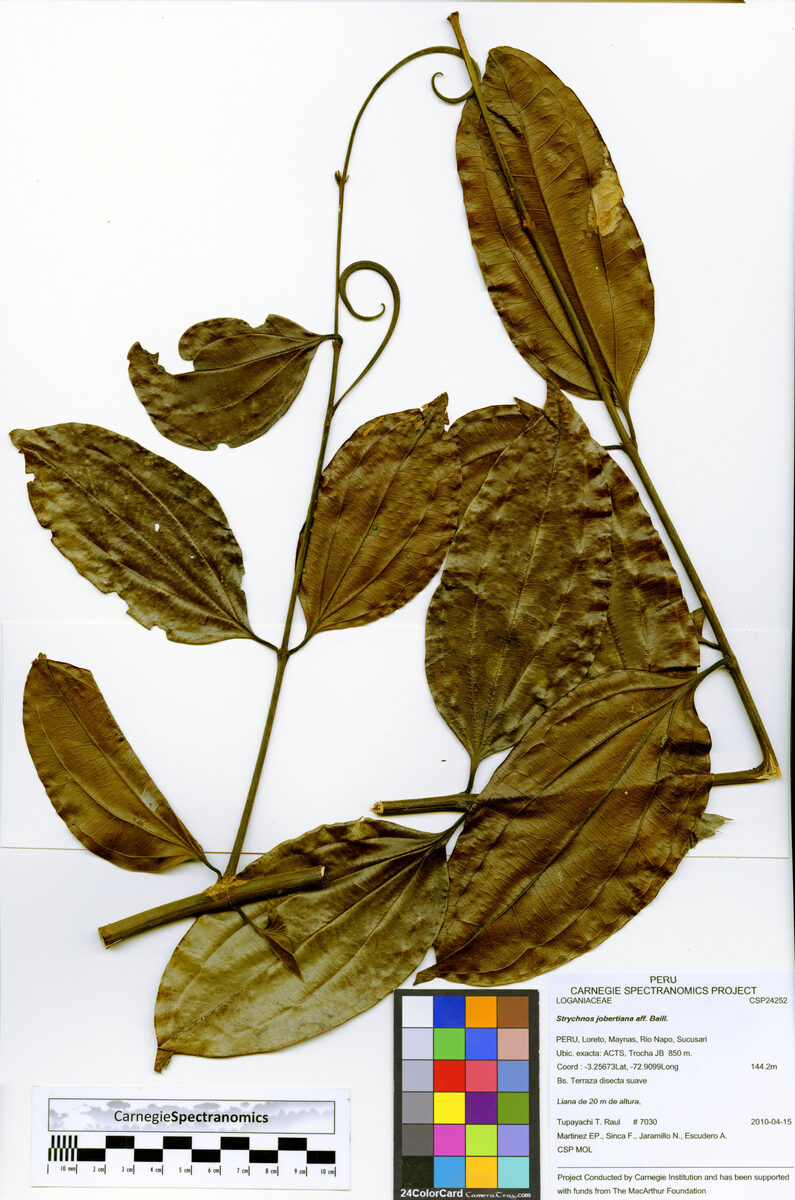
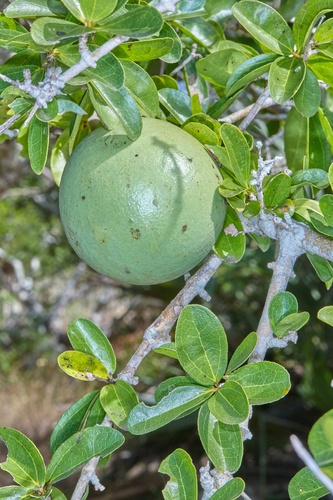
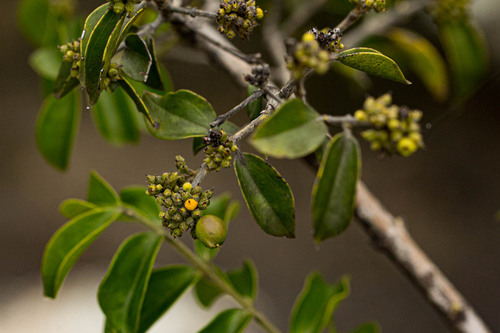
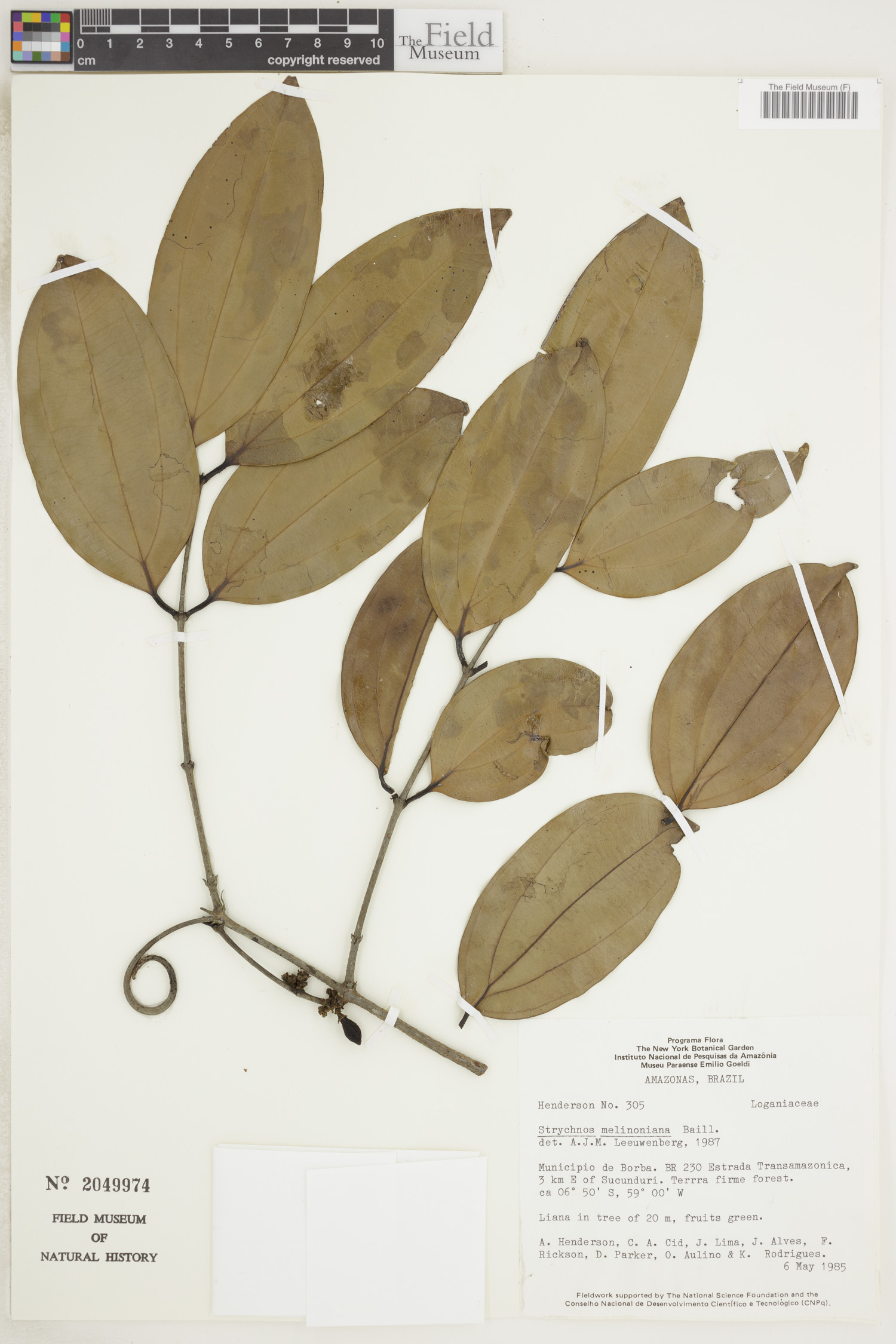
A creeper. The stem is 10 cm across. The branches have strong curved hook like tendrils opposite the leaves. The leaves are opposite and simple. They are broadly oval and 20 cm long by 9 cm wide. They fruit is a berry that is grey to green and turns orange when ripe. They are round and 4.5 cm across. The flesh is orange to grey and sweet. There are several seeds.
Edible Uses
The tough fruit shell is cracked open and the pulp is eaten.
Traditional Uses
The tough fruit shell is broken open and the pulp eaten.
This uses section is brief — help expand it
Medicinal Uses
The whole plant is used as an aphrodisiac when mixed with species of Doliocarpus, Philodendron, Lygodium, Clusia grandiflora, Smilax schomburgkiana, and Bauhinia scala-simiae. Chips of bark are employed in an aphrodisiac tonic. The plant contains a number of active alkaloids that give the plant its paralyzing action - these alkaloids include curarine, calebassine, alkaloids B, C, D, I, fluorocurarine and fluorocurarinine. Curare, obtained from the bark of the stems, is a very toxic substance used in the Amazon as an arrow poison. It does also have medicinal applications; as a sedative, anticonvulsive etc. However, the toxic does is very near the pharmacological does and so it has to be used with great care. Curare is a powerful paralyzing agent of the motor nerves. Its active principle is Curarin. Toxic doses cause death by paralysis of the organs of respiration. Curare has been reported effectual in two cases of hydrophobia, and has been successful in the treatment of tetanus. The bark, applied externally, is said to be a good remedy for foul ulcers. The bark is one of the most potent sedatives in nature and, could it be safely managed, would no doubt become a valuable remedial agent in the treatment of convulsive and spasmodic disorders.
Known Hazards
Various parts of Strychnos plants, especially the seeds and bark, contain toxic alkaloids such as strychnine and brucine. The fleshy pulp of the ripe fruits, however, is often edible. The bark is a sources of 'Calabash curare', an arrow poison produced in the jungles of the Amazon. Curare has a number of applications in modern medicine. The bark contains the alkaloid curarine, which paralyses the peripheral nerves so voluntary muscles for respiration cease action and asphyxiation occur.
Distribution
It is a tropical plant. It grows in forests and along riverbanks.
Where It Grows
Amazon, Brazil, Central America, Costa Rica, Guianas, Guyana, South America, Venezuela,
Synonyms
Also Known As
Aritya wokuru, Devildoer, Big devildoer, Kwabanaro
References (1)
- Maas, P.J. M., Non-Timber Forest Products of the North-West District of Guyana Part 2. The 85 most important NTFP species. p 226