Astrocaryum confertum
H. Wendl. ex Burret
iNaturalist· cc-by-nc
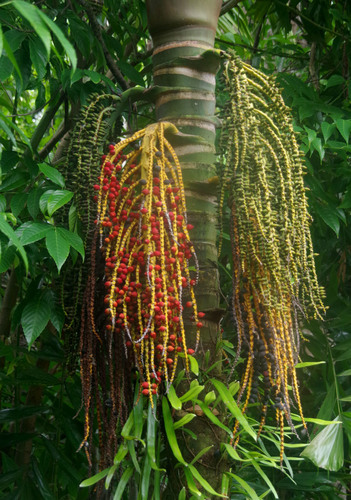
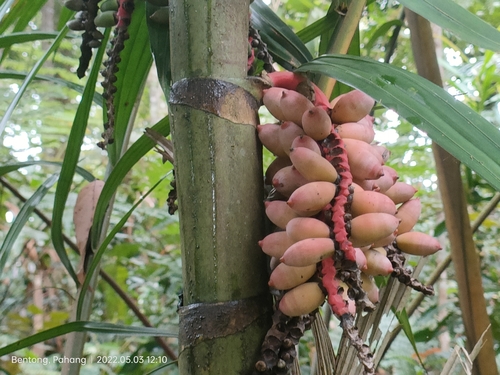
(c) Jan Meerman, some rights reserved (CC BY-NC), uploaded by Jan Meerman
iNaturalist· cc-by-sa
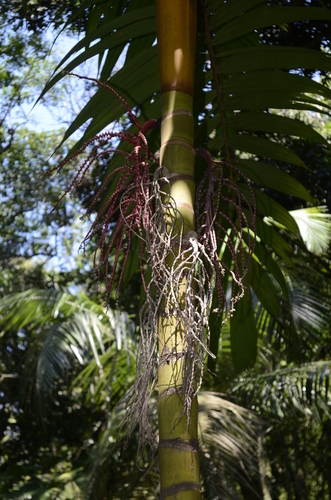
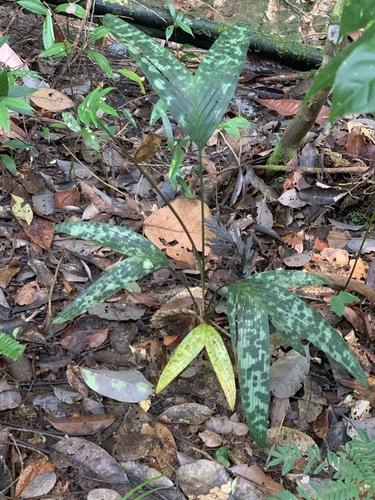
(c) Lena Struwe, some rights reserved (CC BY-SA)
Summary
Source: WikipediaAstrocaryum confertum is a species of spiny palm in the family Arecaceae. It is native to the tropical lowlands of northwestern South America, where it occurs in humid forests and riverine habitats. The species is characterized by its densely clustered spines, pinnate leaves, and globose to ovoid fruits, and is locally important as a source of edible fruit and plant material.
Description
A palm. It grows 10-20 m tall. The fruit are 2.8-3.2 cm tall and 1.4-1.8 cm wide.
This description is brief — help expand it
Edible Uses
Fruit. The fruits are about 3cm in diameter, held in long racemes on the plant. Turning orange when fully ripe, the thin, leathery skin of the fruit covers a fibrous layer of softer, orange flesh, and a single, central seed. The palm heart (the inner core and growing bud of the plant) is harvested from various species in this genus. It provides a crispy food, rich in nutrients, that can be eaten raw or cooked. Harvesting the heart will lead to the death of the plant, however, since it is unable to produce new shoots. We have no specific information for this species, but the fruits and seeds of various species in this genus are reported to be used for oil production in the Amazon region. Existing analyses of fruit fat content show a relatively homogeneous composition among the different species, with around. 20% of fat content in the mesocarp, mostly composed of oleic and palm itic acids, and 20 - 35% of fat content in the endosperm, with a predominance of lauric acid.
Distribution
It is a tropical plant.
Where It Grows
Central America, Costa Rica, Panama, Nicaragua, South America,
Other Uses
The spines are flammable and possibly useful as kindling. The hard endocarp of various Amazonian species is commonly used to make beads and ornaments for necklaces The black wood is hard. It is used for canes, ornamental boxes, archery bows etc.
Synonyms
Also Known As
Coyolillo, Coyolito, Peijibaye de montana, Surubre, Zurube
References (1)
- De Nevers G.C., M.H. Grayum & B.E. Hammel. 1988. Astrocaryum confertum, an enigmatic Costa Rican palm rediscovered. Principes, 32: 91–95.