Pinanga batanensis
Becc.
Dapiau
iNaturalist· cc-by-nc
(c) Russell Cumming, some rights reserved (CC BY-NC), uploaded by Russell Cumming
iNaturalist· cc-by-nc
(c) Russell Cumming, some rights reserved (CC BY-NC), uploaded by Russell Cumming
iNaturalist· cc-by-nc
(c) galanhsnu, some rights reserved (CC BY-NC), uploaded by galanhsnu
Description
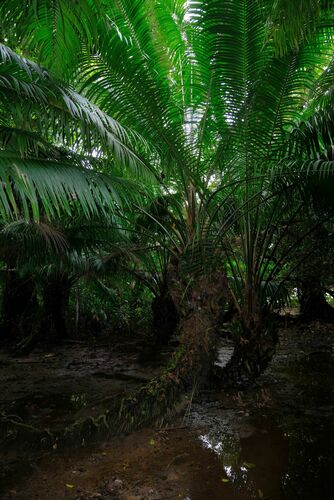
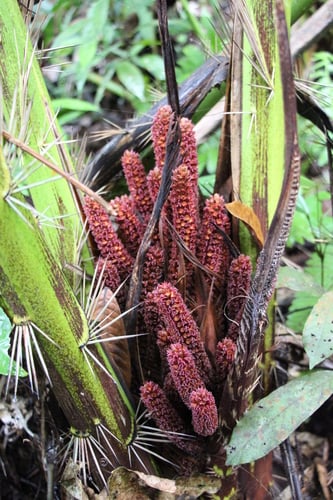
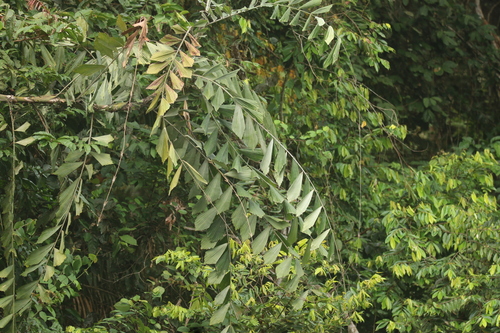
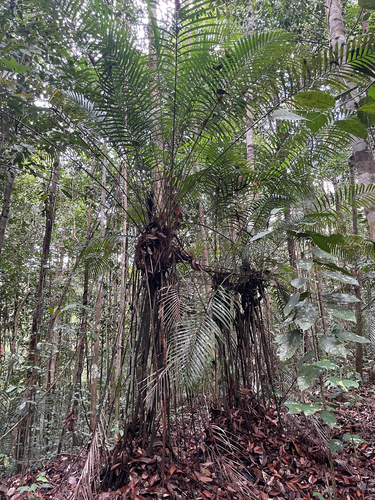
A small and slender palm with a single trunk. It grows about 7 m high. The fronds arch over and are 2.5 m long. The leaves have numerous segments. They are 1-ribbed and quite straight and very much tapering to a point. They are papery and stiff. They are 80 cm long by 3 cm wide. They are dull dark green above and paler underneath. They have dense small scales on the veins. The fruit stalk is branched. It can be 70 cm long and carries flowers in two rows. The fruit are oval and broad at the base. They are 20 mm by 12 mm. The seeds are oval and blunt.
Edible Uses
The unopened bud is cooked and eaten as palm cabbage or heart.
Traditional Uses
The bud is cooked and eaten.
This uses section is brief — help expand it
Distribution
A tropical plant. They are found along mountain streams in the forests of Batanes Island in the Philippines. It suits the tropics.
Where It Grows
Asia, Australia, Pacific, Philippines, SE Asia,
References (5)
- Jones, D.L., 2000, Palms of Australia 3rd edition. Reed/New Holland. p 200
- Monsalud, M.R., Tongacan, A.L., Lopez, F.R., & Lagrimas, M.Q., 1966, Edible Wild Plants in Philippine Forests. Philippine Journal of Science. p 518
- Philipp. J. Sci., C 3:340. 1908
- Riffle, R.L. & Craft, P., 2003, An Encyclopedia of Cultivated Palms. Timber Press. p 411
- World Checklist of Useful Plant Species 2020. Royal Botanic Gardens, Kew