Pinanga crassipes
Becc.
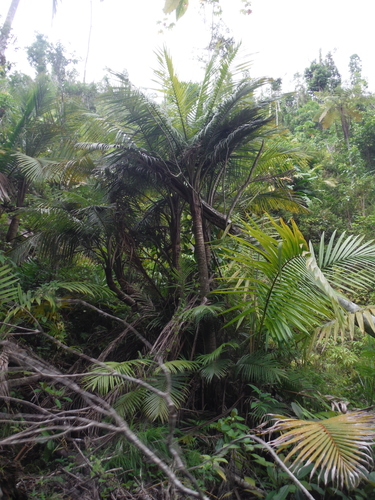
iNaturalist· cc-by-nc
(c) Tinus Oberholzer, some rights reserved (CC BY-NC), uploaded by Tinus Oberholzer
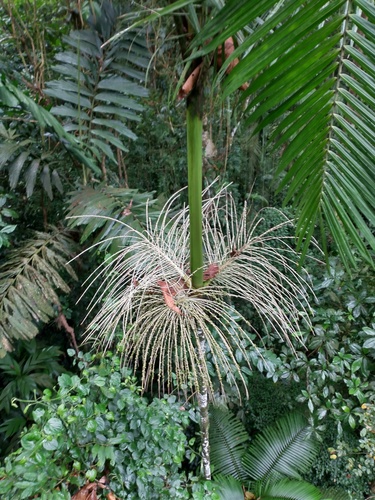
iNaturalist· cc-by-nc
(c) Rohan Chakravarty, some rights reserved (CC BY-NC)
Summary
Source: WikipediaPinanga crassipes is a species of palm tree in the family Arecaceae. It is endemic to Borneo.
Description
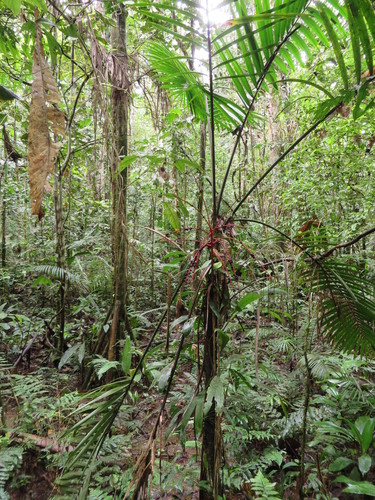
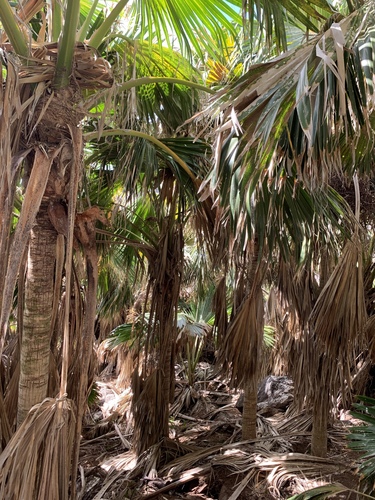
A small palm. It has a short thick trunk. The trunk is 6-7 cm across. The fronds have leaflets along the stalk. They have a thick leathery base which sheaths the trunk. The leaflets are slightly curved and 40 cm long by 2.5 cm wide. They are dark green above and with a bluish green bloom underneath. They have long pointed tips. The fruiting stalks are branched. The fruit are oblong and 16 mm long by 9 mm wide. Flowers and fruit can be on the palm at the same time.
Edible Uses
The nuts are used as a masticatory (betel substitute). The cabbage is also an edible portion.
Traditional Uses
The nut is sometimes used as a betel substitute.
This uses section is brief — help expand it
Distribution
A tropical plant.
Where It Grows
Asia, Malaysia, Sarawak, SE Asia,
Cultivation
Pinanga crassipes is a tropical lowland plant requiring high humidity and a minimum temperature of 20°c for good growth. A shade-loving plant, it prefers rich but well-drained soil that is slightly acidic
Other Uses
The leaves are used for thatching. The tough outer portions of the stems are used as laths.
Also Known As
Pinang mureng
References (3)
- Chai, P. P. K. (Ed), et al, 2000, A checklist of Flora, Fauna, Food and Medicinal Plants. Lanjak Entimau Wildlife Sanctuary, Sarawak. Forestry Malaysia & ITTO. p 164
- Johnson, D.V., 1998, Tropical palms. Non-wood Forest products 10. FAO Rome. p 48
- Jones, D.L., 1994, Palms throughout the World. Smithtonian Institution, Washington. p 296