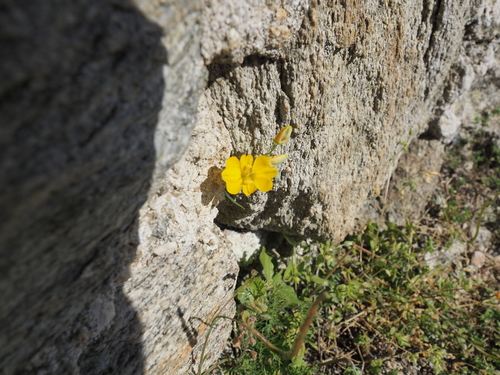
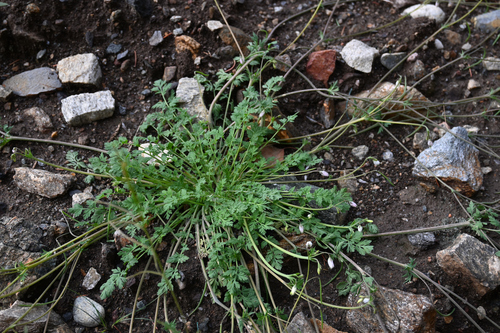
Papaver bracteatum
Lindl.
Iranian poppy, Persian poppy
iNaturalist· cc-by-nc
(с) Mahbod Mehrin, некоторые права защищены (CC BY-NC), загрузил Mahbod Mehrin
iNaturalist· cc-by-nc
(с) Mahbod Mehrin, некоторые права защищены (CC BY-NC), загрузил Mahbod Mehrin
iNaturalist· cc-by-nc
(c) Михаил Калагин, some rights reserved (CC BY-NC)
Summary
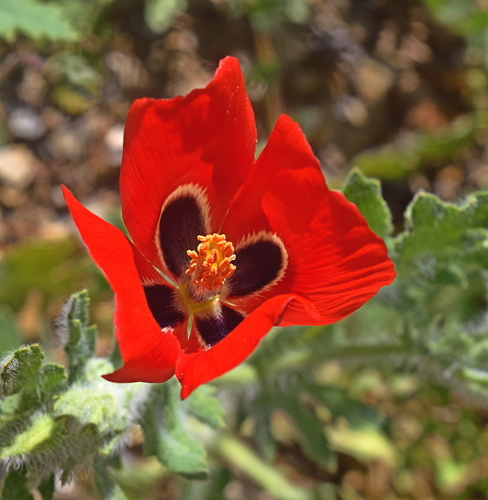
Source: WikipediaPapaver bracteatum, also known as the Iranian poppy or Persian poppy and the great scarlet poppy (first described by Dr. N. Saharghi and Iraj Lalezari Nature 213, 1244, 1967 doi:10.1038/2131244a0 ) is a sturdy hardy perennial poppy with large deep red flowers up to 8 inches (20 cm) in diameter on stiff stalks up to 4 feet (1.22 metres) high with a prominent black spot near the base of the petals. It is closely related to the commonly cultivated oriental poppy, Papaver orientale and is sometimes recorded as the varietal form Papaver orientale var. bracteatum.
Description
A herb. The flowers are dark red. The flower stalks are 1.2 m. The flowers are 13-18 cm across.
This description is brief — help expand it
Edible Uses
The leaves are eaten.
Known Hazards
The plant is rich in thebaine, an alkaloid.
Distribution
It is a temperate plant. It grows between 1,775 - 2,400 m above sea level in Iran.
Where It Grows
Iran, Turkey, Türkiye,
Notes
It is rich in thebaine.
Synonyms
Also Known As
Adamugusu
References (1)
- Ertug, F, Yenen Bitkiler. Resimli Türkiye Florası -I- Flora of Turkey - Ethnobotany supplement